 Protected Spring
 Rehabilitation Project









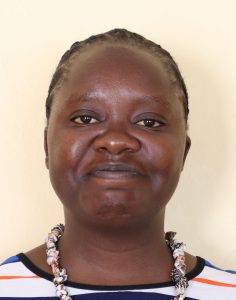

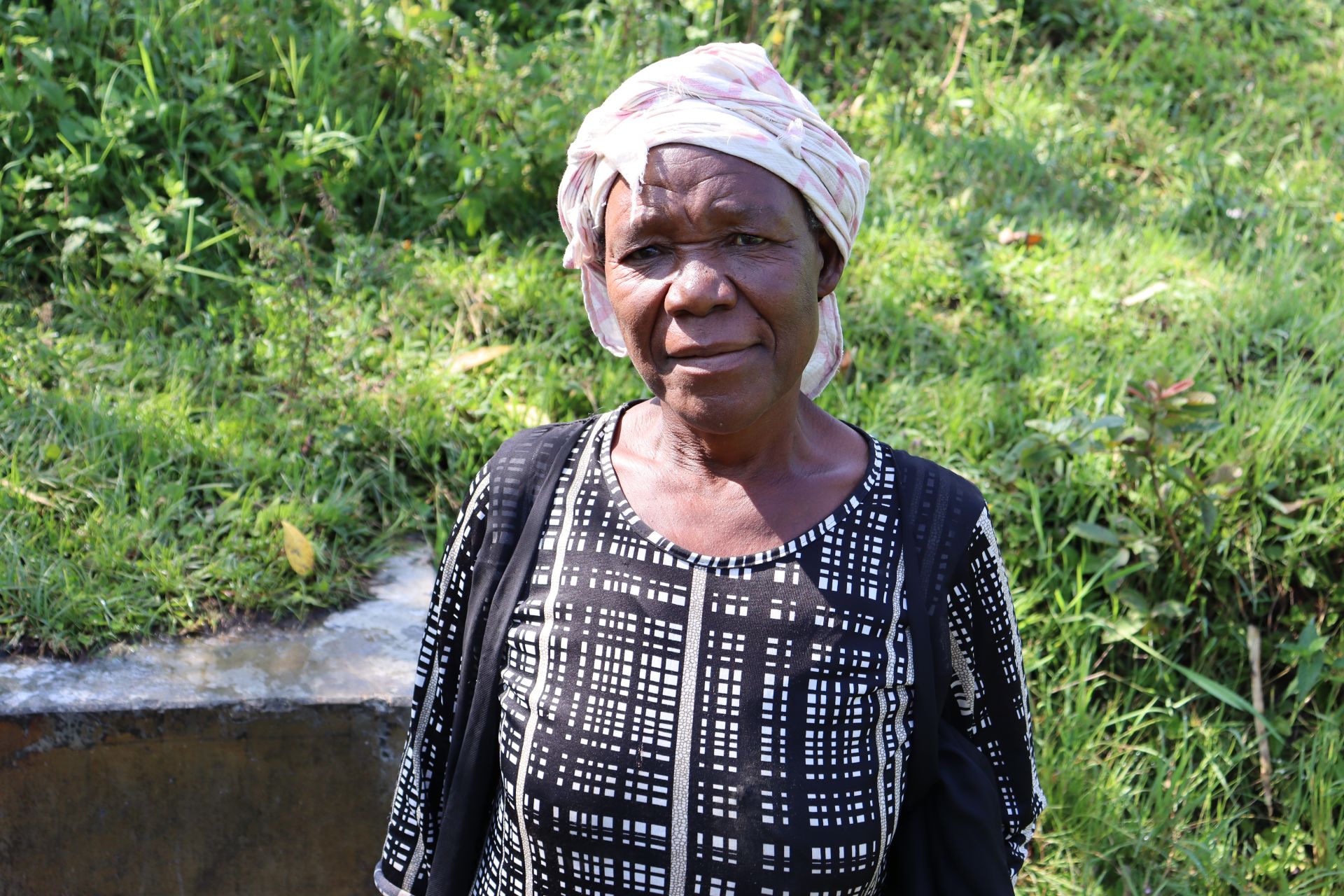
Rose Imbusi is 65 and has farmed in the Shidodo Community her whole life. She has watched this community go without a safe, reliable water source for 20 years. Her 139 neighbors depend on a spring that was only ever partly protected and is now falling apart.
"Water is the keeper of my time and energy," Rose said. "For me, every time I think of water, I think of my back, knees, and the journey to the water point. Right now, the water I carry feels heavier than it did twenty years ago."
The path down to the spring is muddy and steep, and it gets slippery in the rainy season. People fall on it, and the climb back up is hardest on young children and older women like Rose. The stairs at the spring are broken. The spring box is cracked because people keep stepping on it, and dirty water leaks in from above. People have to stand in a pool of standing water just to fill their containers.
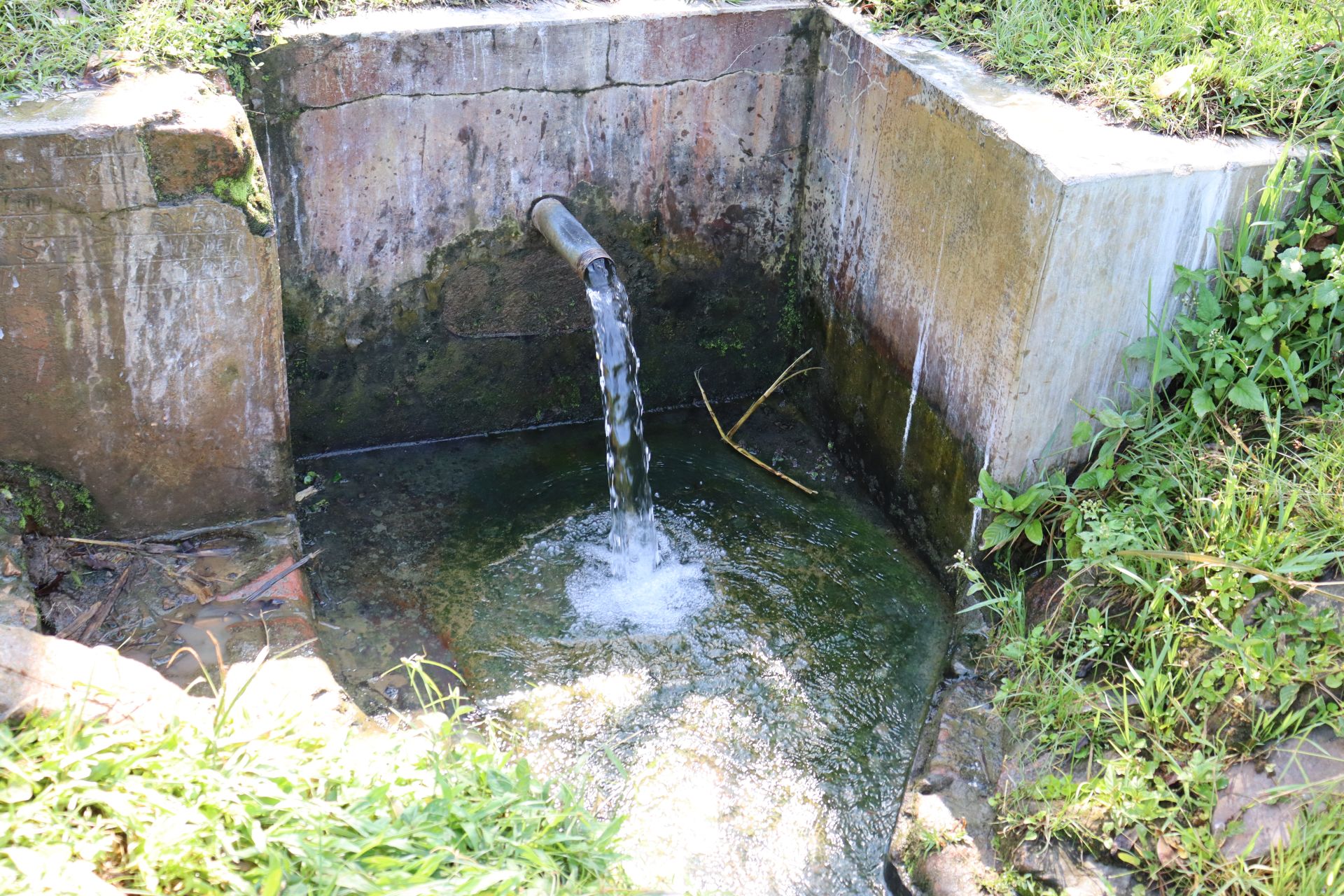
"When the water point worked, my mornings were peaceful. Now, the old path to the spring has reclaimed me," Rose said. "Because I cannot carry the heavy 20-liter jerricans as I used to when I was younger, I have to make multiple trips with smaller containers, or wait until my grandchildren can help me after school. My whole day is stolen by the road, going for trips of water."
Rose's family goes to the spring about five times a day. On a normal day, they wait about 45 minutes in line. The community once pooled its money to build the structure that is there now, and later tried to repair it. "We came together as the community and tried doing some repairs at the water point, but it did not last," Rose said.
The other option is a hand-dug well, but it's no better. It's where people wash clothes, and its water is so cloudy that families only use it for chores. Families say they have gotten sick from both sources.
A few months ago, Rose's seven-year-old grandson got sick in the middle of the night.
"His stomach was twisting. Within hours, he was vomiting violently and running to the pit latrine every few minutes. By morning, he could not even stand. His eyes were sunken, his lips were dry and cracked, and when he looked at me, he was too weak to even cry," she said.
"His skin felt hot like a clay pot fresh from the fire. I quickly took him up and ran with him outside as I called for help. Luckily, I found a good Samaritan who took us on his bike to the hospital, where we were immediately admitted for further investigations and tests."
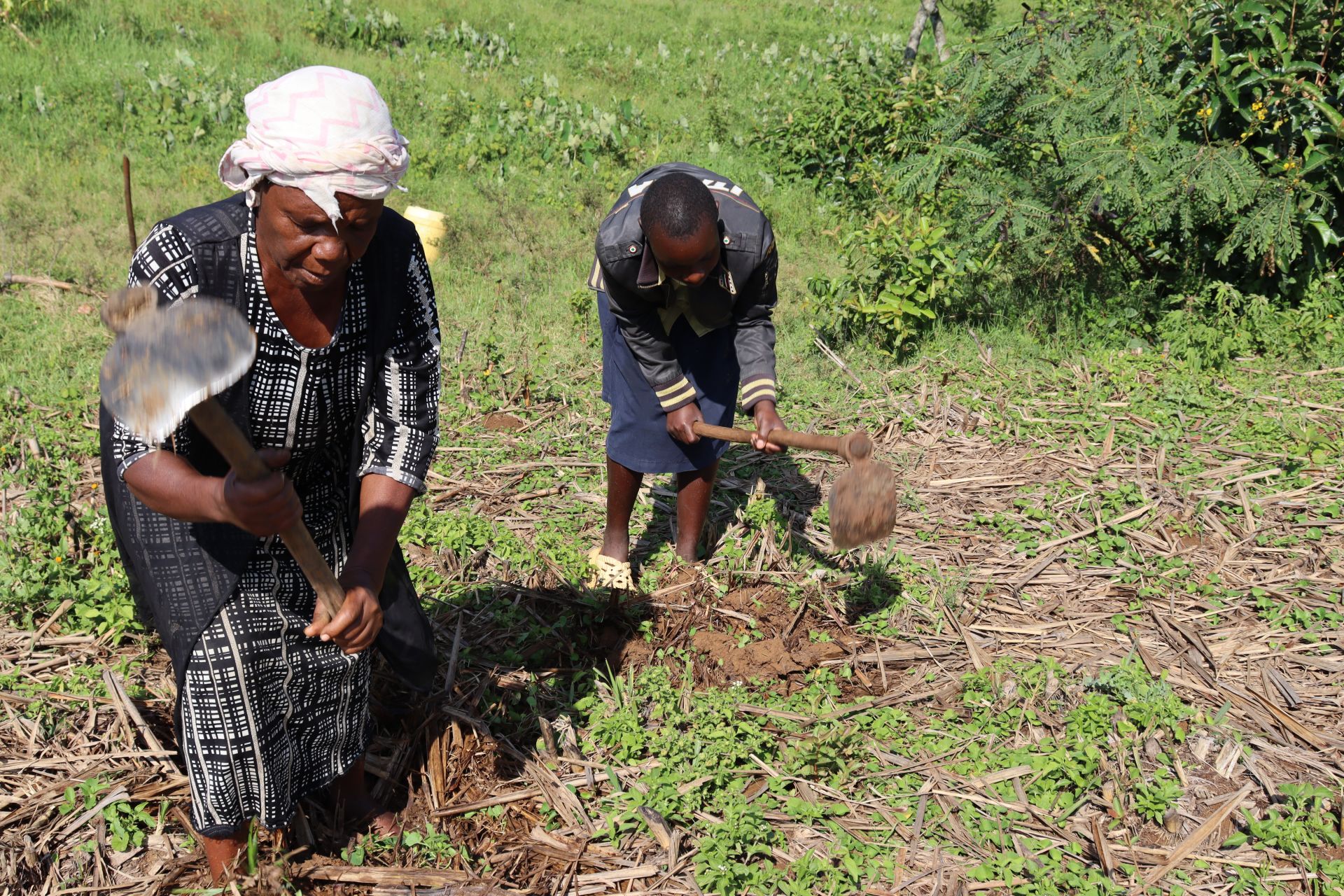
Every illness costs the family time on the farm, and that means less food to eat and less to sell.
"In the village, our hands are our capital," Rose said. "The weeds do not wait for you to get well; they take over the maize and the beans. If we miss the critical days for weeding or harvesting because we are sick, our yields drop, and that means we will have less food to eat and less surplus to sell at the market later in the year."
She carries a fear she can't get away from. "When I hand my grandchild a cup of water, I should feel peace. Instead, I feel fear," she said. "It feels like a cruel trap—you cannot live without it, but drinking it harms the people you love most."
The long lines cause trouble between neighbors, too. "When the water point has low discharge or [is] crowded, the queue becomes a battlefield," Rose explained. "After a fight at the water point, you walk past that neighbor on the village path and look down at the dirt. You stop borrowing sugar from each other. You stop greeting each other at church. The peace of the village is broken over a single bucket of water."
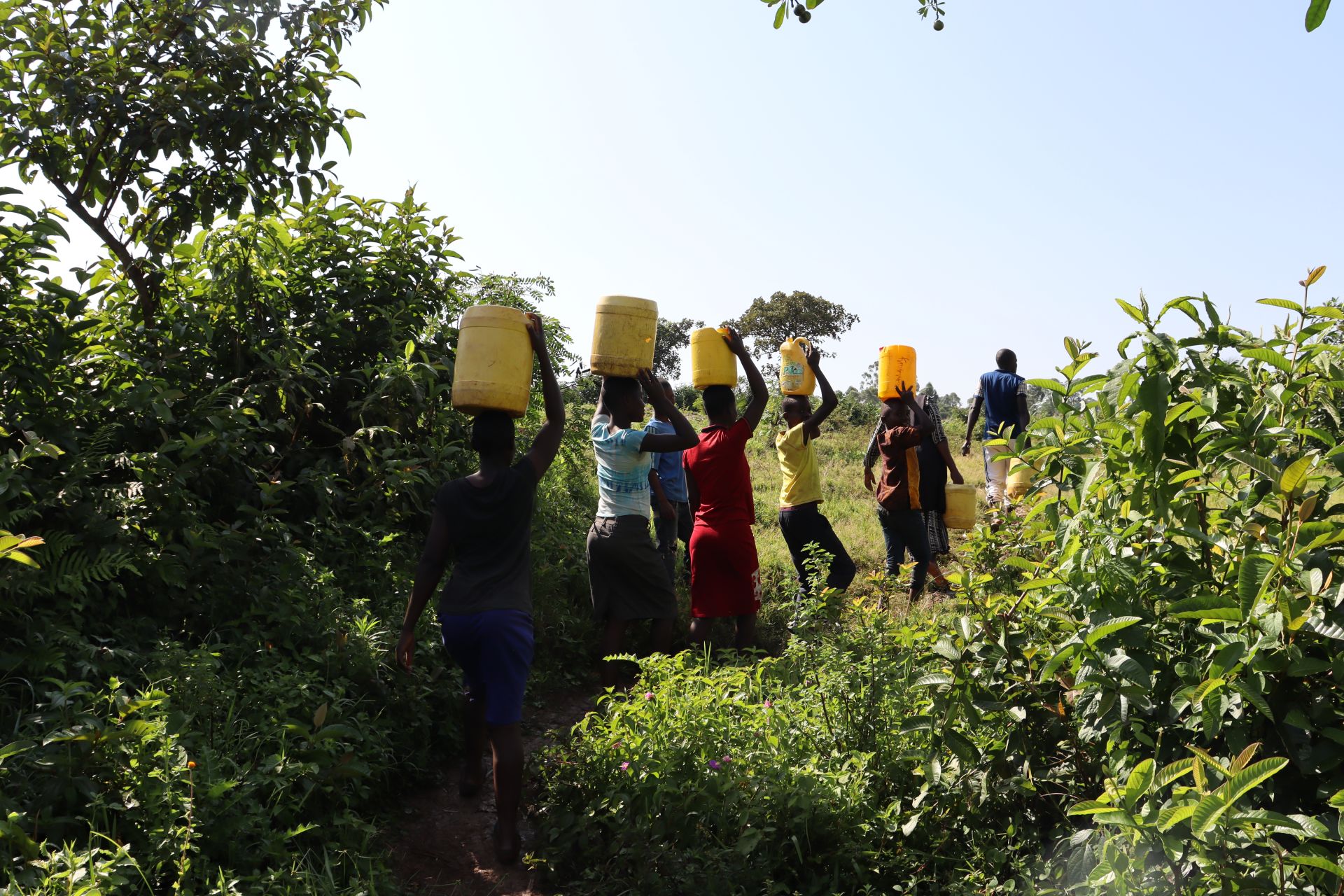
The waits also keep the girls and young women in her family out until dark. This is dangerous, as women have been harmed in the past.
"What if something happens to them? Will I be able to forgive myself? How will I move on?" she asked.
A new protected spring would change what water means in Rose's home. "It means when I give my grandchildren a cup of water, I am giving them life, not a poison that will send them to the clinic," she said. Money now spent on clinic visits "can stay in the house to buy food, seeds for the shamba, or to keep the children in school."
She knows exactly what she would do with the time she got back. She would plant kale, spinach, amanya, and managu beside her house. She would go to her chama meetings without being too tired to take part. And she would sit with her grandchildren after school.
"I would tell them the stories of our ancestors, help them with their small chores, and teach them our language and culture," Rose said. "I want to be a grandmother who has the energy to laugh with them, not a grandmother who is always crying from back pain and exhaustion. I would finally have peace, and I would finally be able to rest."
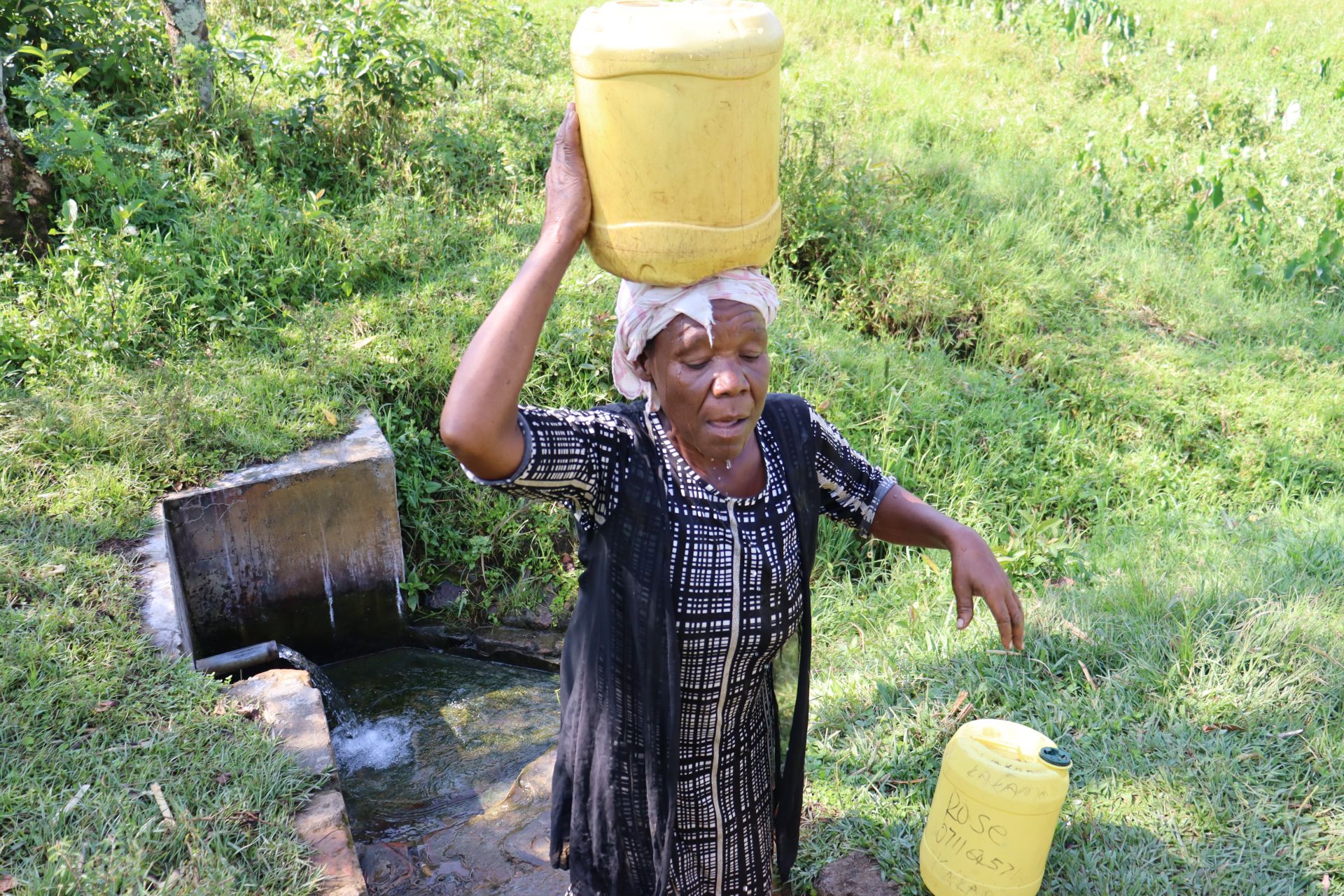
She is thinking of the next generation, too. "To me, water is security for the generation coming after me. When I see reliable water in this village, I know my daughters and granddaughters will not have to suffer the way we did. It means the roots of our family can stay strong right here in the soil."
Steps Toward a Solution
Our technical experts worked with the local community to identify the most effective solution to their water crisis. They decided to safeguard the existing flowing spring.
Spring Protection
Springs are natural water sources that originate from deep underground. As water travels through various layers of the earth, it undergoes a natural filtration process, making it cleaner and safer to drink. To protect these spring sources from contamination, we construct a waterproof cement structure around layers of clay, stone, and soil. This design channels the spring water through a discharge pipe, facilitating easier, faster, and cleaner water collection.
Chlorine Dispenser
As an extra measure towards water quality safety, uniquely engineered chlorine dispensers are installed at all of our spring protection projects so community members can treat their water with pre-measured doses of chlorine. The chlorine treats any possible contamination and stays active for two to three days, ensuring water stays safe to use even when stored at home. Chlorine delivery and maintenance of the dispensers are part of our ongoing community support.
Community Education & Ownership
Hygiene and sanitation training are integral to our water projects. Training is tailored to each community's specific needs and includes key topics such as proper water handling, improved hygiene practices, disease transmission prevention, and care of the new water point. Safe water and improved hygiene habits foster a healthier future for everyone in the community.
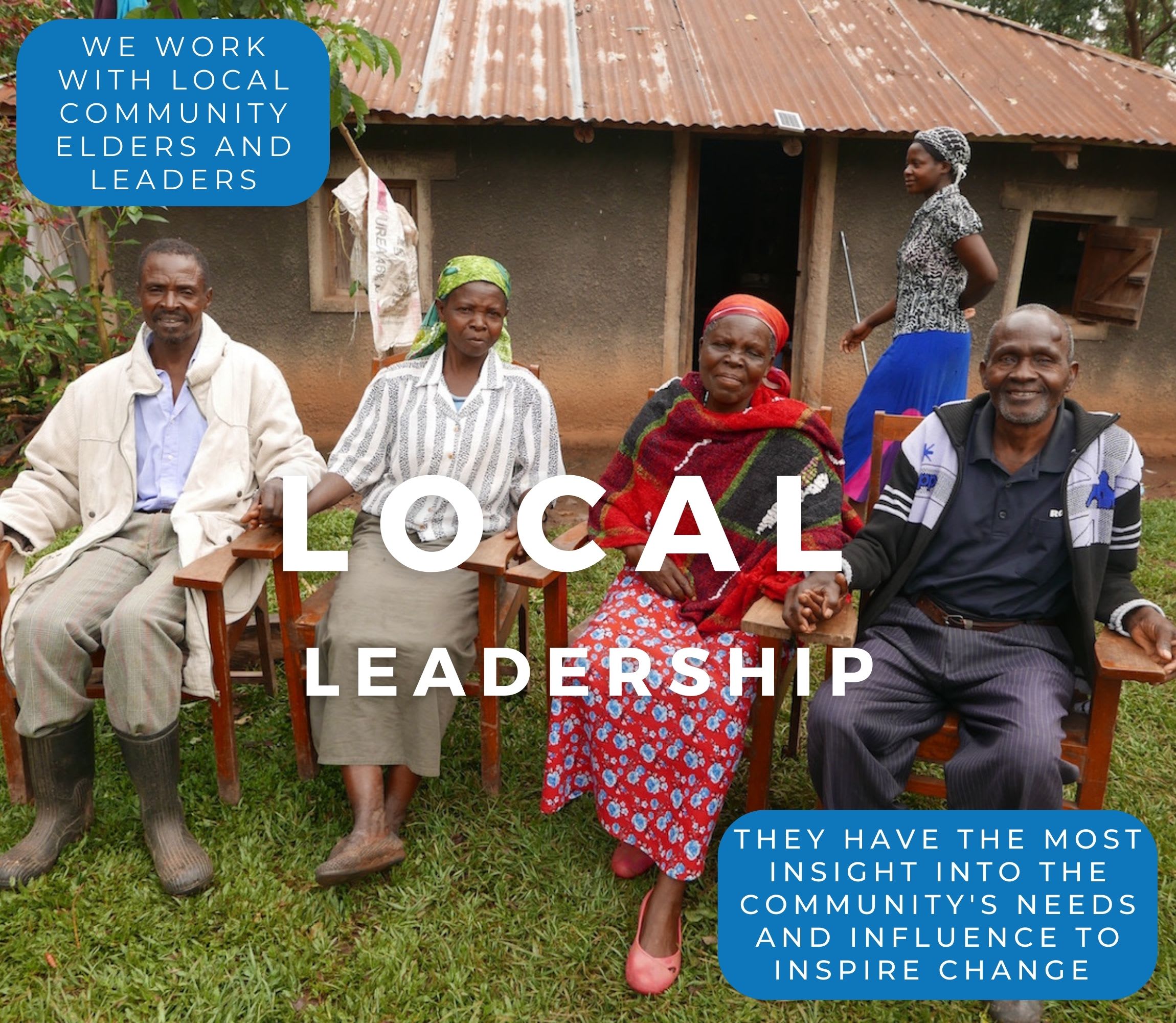
Encouraged and supported by our team's guidance, the community elects a water user committee representative of its diverse members. This committee assumes responsibility for maintaining the water point, organizing community efforts, and gathering fees to ensure its upkeep.