 Protected Spring
 Rehabilitation Project










Eleven-year-old Catherine starts most days the same way: waking early to join the line at the broken spring before she can even think about school. Water-related illness, long waits, harassment, dangerous terrain — Catherine's list of daily water challenges reads like a catalogue of things no child should have to navigate before breakfast.
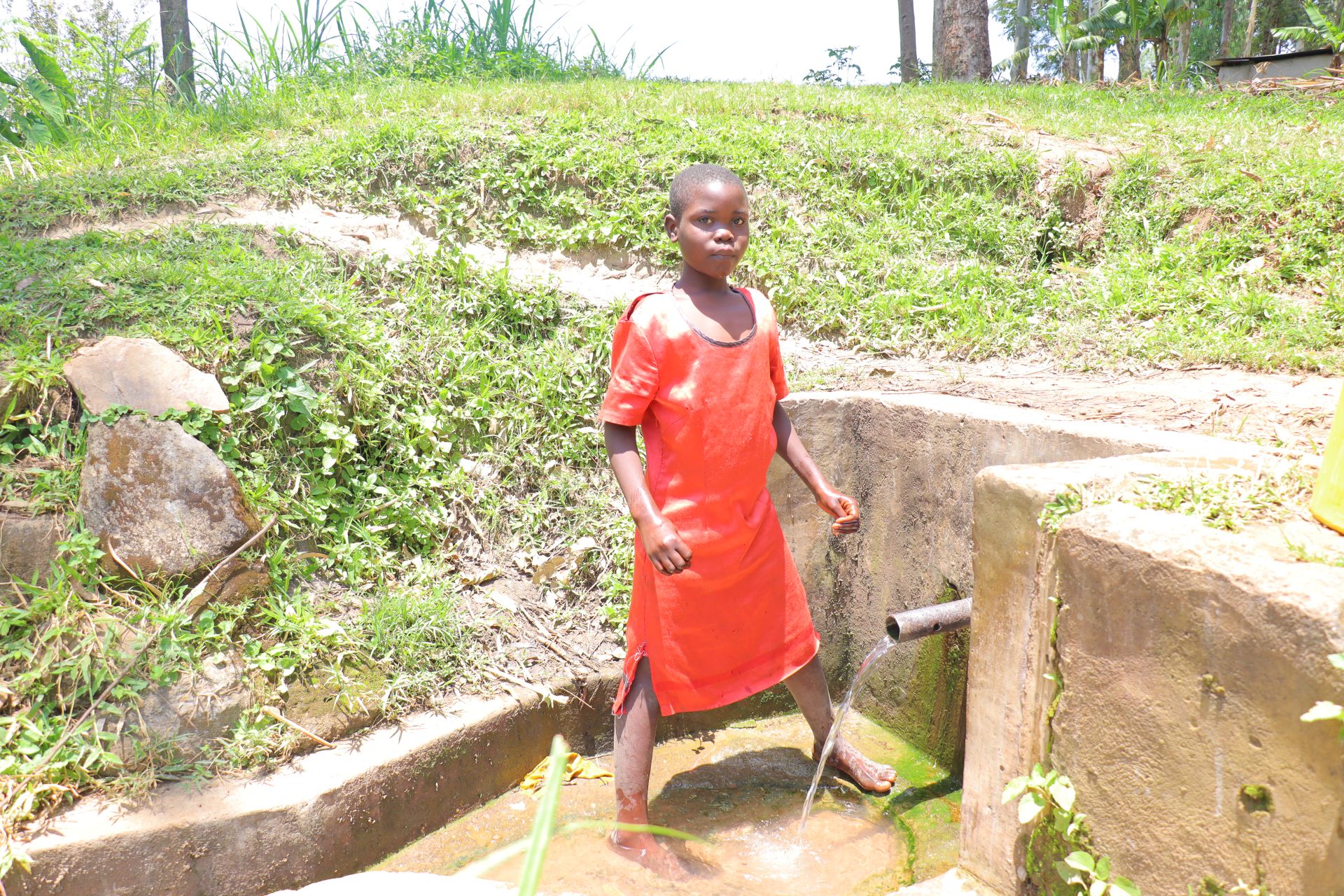
Catherine.
She knows the sickness firsthand. "I get sick very often and my parents take me to the hospital," Catherine said. One bout in particular stands out to her: "My stomach was hurting badly and I couldn't go to school for a week," she said. Her parents did what they could. "My parents took me to the hospital and the doctor gave me some medicine to take and I felt better after a while," Catherine said. But recovery doesn't undo the missed lessons. "Yes, sometimes I can't even stand up when Iam very sick so I stay home and miss school and when I go back I ask my friends what they learnt," she said.
Even on days she isn't sick, the water point costs her time she can't get back. Fetching water takes about 30 minutes each trip, and the wait is often the longest part. "Most of the time I fetch in the morning and evening and that time people are in line and some even sitting down waiting to fetch water, so I wait," Catherine said. Asked what she'd do with that time instead, her answer was simple: "I would spend that time reading and also helping my parents with daily routines, playing with my friends more," she said.

A long wait for unsafe water.
The spring itself is not a safe place for her. "There are leeches and snails at the waterpoint, and leeches get stuck on my feet when I am fetching water. I also fall down trying to get water," Catherine said. And being a child at the water point comes with its own indignities. "Adults push me to the back of the line, and harass me that I am a child and that I can wait," she said. She has learned not to push back. "Most of the time I get pushed I get late for school and it's disrespectful to argue will adults so I never complain," Catherine said.
The ripple effects reach into her classroom performance. "Most of the time I get late to school because of waking up to go for water first before school and I miss some classes and I end up failing those subjects," she said. Still, Catherine holds onto a clear vision for her future: "I want become a doctor so that I can treat people in the hospitals like doctors do," she said — a goal made harder to reach every time water gets in the way. Even the act of being sent to fetch water weighs on her: "I feel exhausted when I think of the line and also adults push me to the back of the line and I waste a lot of time," Catherine said.
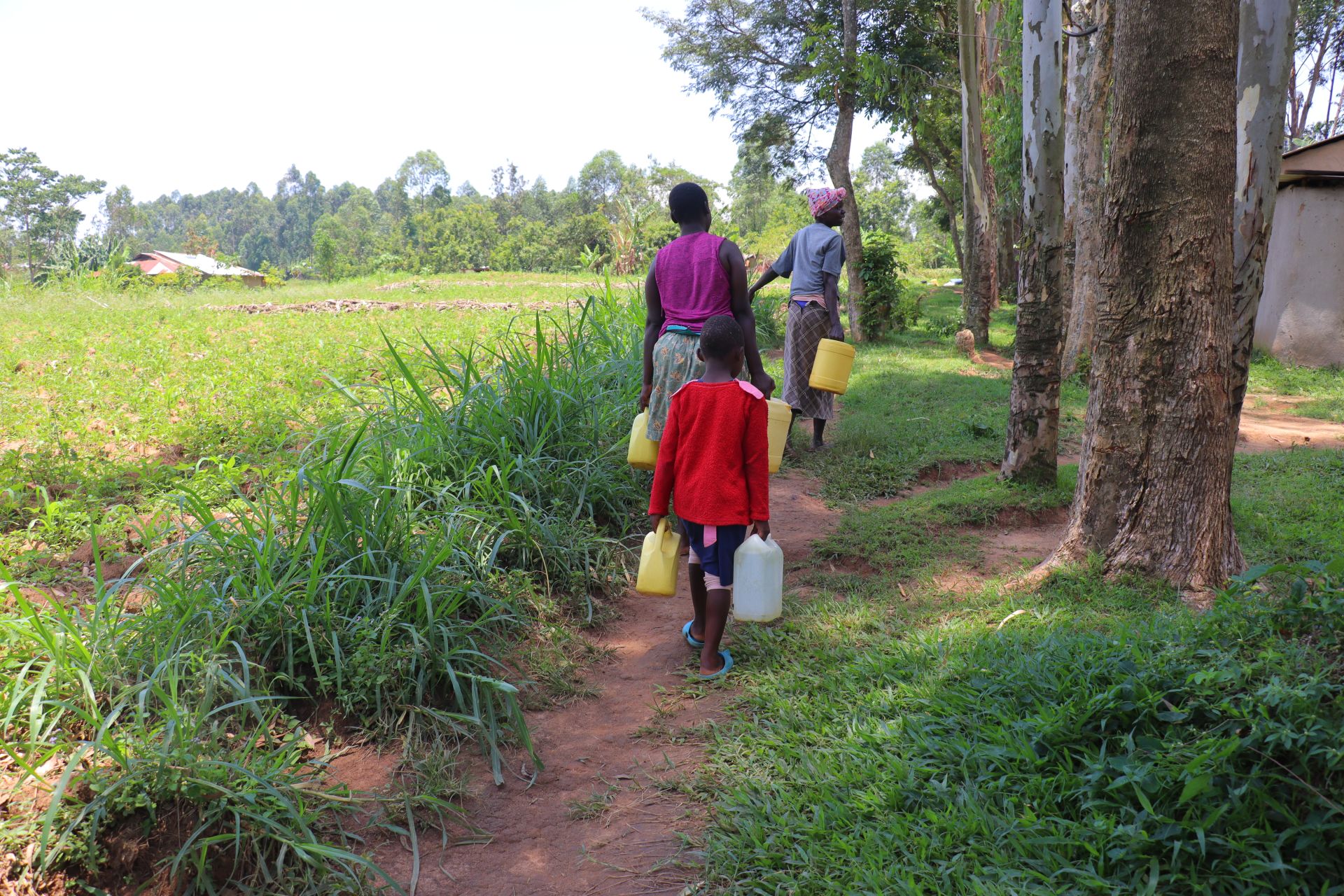
She is hopeful about what a repaired waterpoint could mean. "The leeches at the spring will go away and also the water will be easy to fetch without buckets getting destroyed by wires, and I won't fall down and injure myself anymore," Catherine said. And she is honest about how much has already been lost. "Life hasn't been easy since the waterpoint broke down, starting from the congestion to being bitten by leeches, adults also push me to the back of the line," she said.
For our field officer, Mercy Odongo, it was Catherine's account of the physical toll that lingered longest: the moment she explained how leeches and wires make it really hard to fetch water because you come out of water bleeding with a jerrican, which is already pricked by wires and can't hold water anymore.
A safe, reliable water point would mean more than clean water for Catherine — it would mean school days that start on time, a body free of leech bites and cuts, and a childhood no longer spent negotiating for her place in line.
Steps Toward a Solution
Our technical experts worked with the local community to identify the most effective solution to their water crisis. They decided to safeguard the existing flowing spring.
Spring Protection
Springs are natural water sources that originate from deep underground. As water travels through various layers of the earth, it undergoes a natural filtration process, making it cleaner and safer to drink. To protect these spring sources from contamination, we construct a waterproof cement structure around layers of clay, stone, and soil. This design channels the spring water through a discharge pipe, facilitating easier, faster, and cleaner water collection.
Chlorine Dispenser
As an extra measure towards water quality safety, uniquely engineered chlorine dispensers are installed at all of our spring protection projects so community members can treat their water with pre-measured doses of chlorine. The chlorine treats any possible contamination and stays active for two to three days, ensuring water stays safe to use even when stored at home. Chlorine delivery and maintenance of the dispensers are part of our ongoing community support.
Community Education & Ownership
Hygiene and sanitation training are integral to our water projects. Training is tailored to each community's specific needs and includes key topics such as proper water handling, improved hygiene practices, disease transmission prevention, and care of the new water point. Safe water and improved hygiene habits foster a healthier future for everyone in the community.
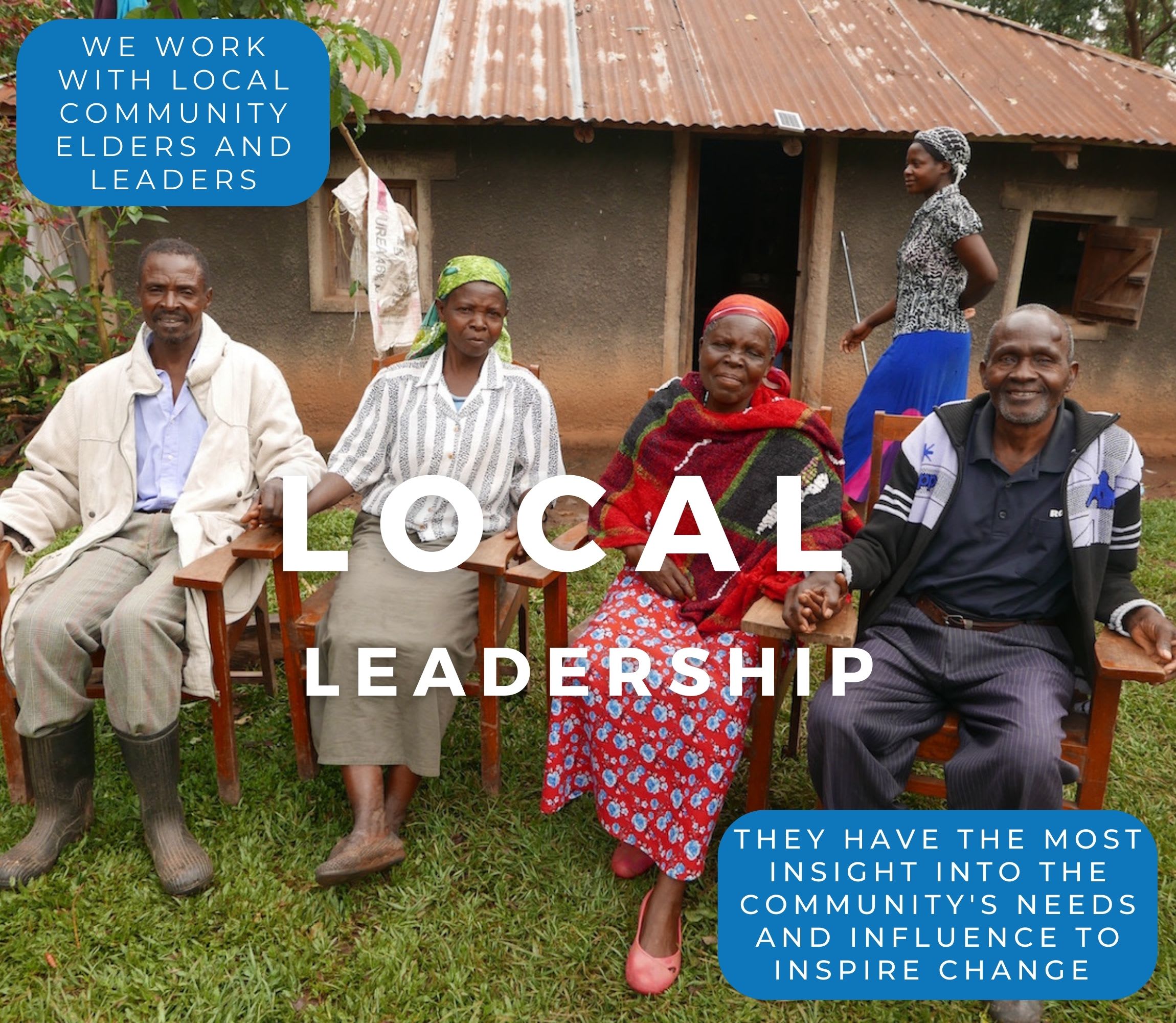
Encouraged and supported by our team's guidance, the community elects a water user committee representative of its diverse members. This committee assumes responsibility for maintaining the water point, organizing community efforts, and gathering fees to ensure its upkeep.