
Project Status


Project Type:  Borehole Well and Hand Pump

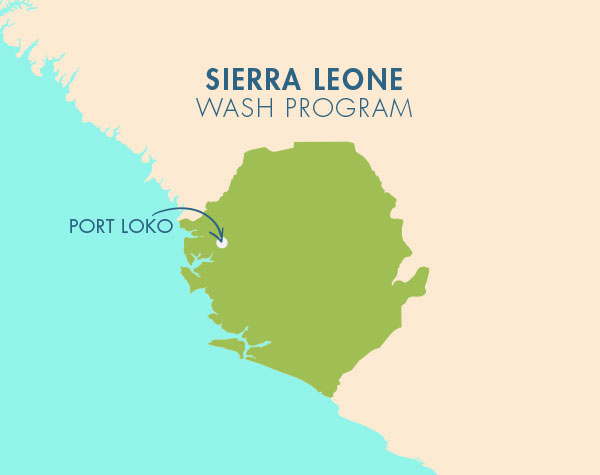
Regional Program: Port Loko, Sierra Leone WaSH Program

Impact: 112 Served

Project Phase:  Reserved

Functionality Status:  Functional

Last Checkup: 07/02/2026

Project Features


Click icons to learn about each feature.


Community Profile

The 112 people of Bundalai struggle to access sufficient water. Community members spend a large portion of each day trying to find and collect enough water to meet their basic needs, so much so that they cannot make noticeable progress in other areas of their lives.

The community members in Bundulai have no protected water source to rely on when they need it. Their options are to collect water from the local swamp or use the well at the Maternal Child Health Post, but both are far away, leaving people with little time to do other things.

"This part of the community is not near any protected water well. The community people trek [a] long distance to fetch drinking water from the protected dug well with [a] hand pump at the Maternal Child Health Post (MCHP). They can't fetch water from that source during the dry season when the well gets dry," said field officer Philip James Allieu.

The well at the MCHP not only goes dry at certain times of the year, but it is also overcrowded and understandably restricted throughout the year because its primary purpose is to serve the patients and staff of the center.

Therefore, community members rely on the swamp to meet their daily water needs, but it presents several issues. It is seasonal, so collecting water becomes more difficult during the dry season. It is overcrowded and serves multiple functions such as bathing, laundry, drinking, etc. The water is murky, and its quality is questionable at best, leaving people vulnerable to water-related illnesses.

"I am a student, and I am a resident of Bundulai Community. I fetch water from the stream for domestic work before going to school. I have to walk long distances to fetch water from the stream or the water well at the MCHP. There [is] overcrowding at the stream or the water well, which usually keeps me waiting to fetch water for a long time. I normally go to school late because of the water crisis. I usually receive punishment from my schoolteachers for going to school late," said 14-year-old Kadiatu J. (shown below).

"The stream water gets low during the dry season. Also, the stream water is not clean. I would fetch the water and place it down for the particles to settle underneath before I could drain the water from the dirt particles," concluded Kadiatu.

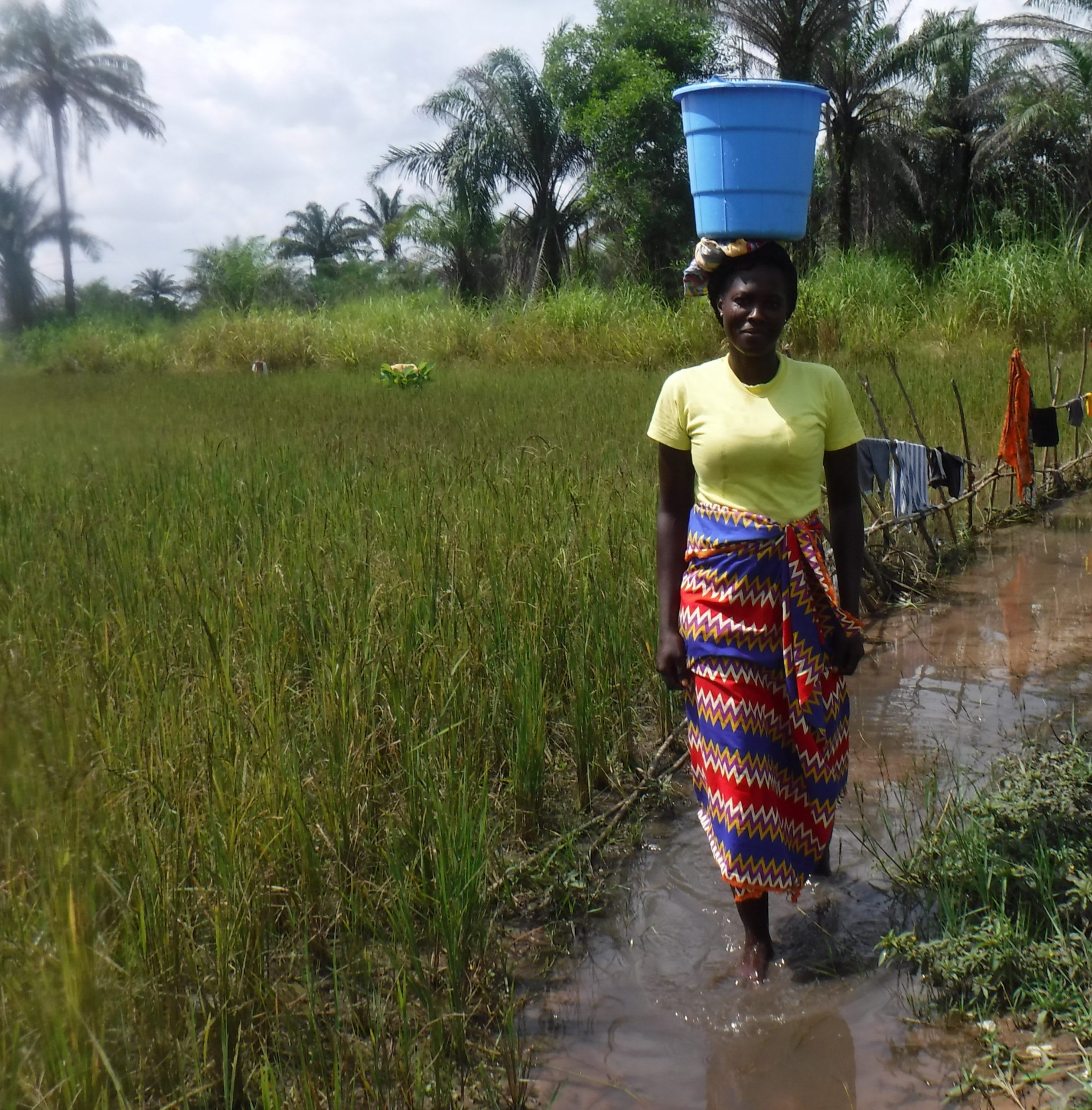
"I have so many constraints on accessing water. I am a petty trader. The only water source that I frequently fetch water from is the stream. The distance from my house to the stream is far and not safe for me. It is hard for me to fetch enough water to do all the domestic activities completely during the dry season. It is also not easy for me to fetch drinking water during that time, especially when the water well at the MCHP gets dry," said 27-year-old Isatu Kamara, shown below carrying water from the swamp.
"I also work on my farming every day. The crops that I cultivate do not yield enough harvest. I do not have enough time to do the farm work because I must have spent more time fetching water to do other activities at home before going to the farm to work," concluded Isatu.

Installing a new well in this section of Bundalai will enable people like Isatu and students like Kadiatu to focus on quickly and efficiently collecting safe water so they have the time and health to improve other areas of their lives.

The Proposed Solution, Determined Together...

At The Water Project, everyone has a part in conversations and solutions. We operate in transparency, believing it benefits everyone. We expect reliability from one another as well as our water solutions. Everyone involved makes this possible through hard work and dedication.

In a joint discovery process, community members determine their most advantageous water solution alongside our technical experts. Read more specifics about this solution on the What We're Building tab of this project page. Then, community members lend their support by collecting needed construction materials (sometimes for months ahead of time!), providing labor alongside our artisans, sheltering and feeding the builders, and supplying additional resources.

Water Access for Everyone

This water project is one piece in a large puzzle. In Kenya, Sierra Leone, and Uganda, we're working toward complete coverage of reliable, maintained water sources that guarantee public access now and in the future within a 30-minute round trip for each community, household, school, and health center. One day, we hope to report that this has been achieved!

Training on Health, Hygiene & More

With the community's input, we've identified topics where training will increase positive health outcomes at personal, household, and community levels. We'll coordinate with them to find the best training date. Some examples of what we train communities on are:

  • Improved hygiene, health, and sanitation habits
  • Safe water handling, storage & treatment
  • Disease prevention and proper handwashing
  • Income-generation
  • Community leadership, governance, & election of a water committee
  • Operation and maintenance of the water point

Project Updates


December, 2024: Bundulai Community Well Complete!

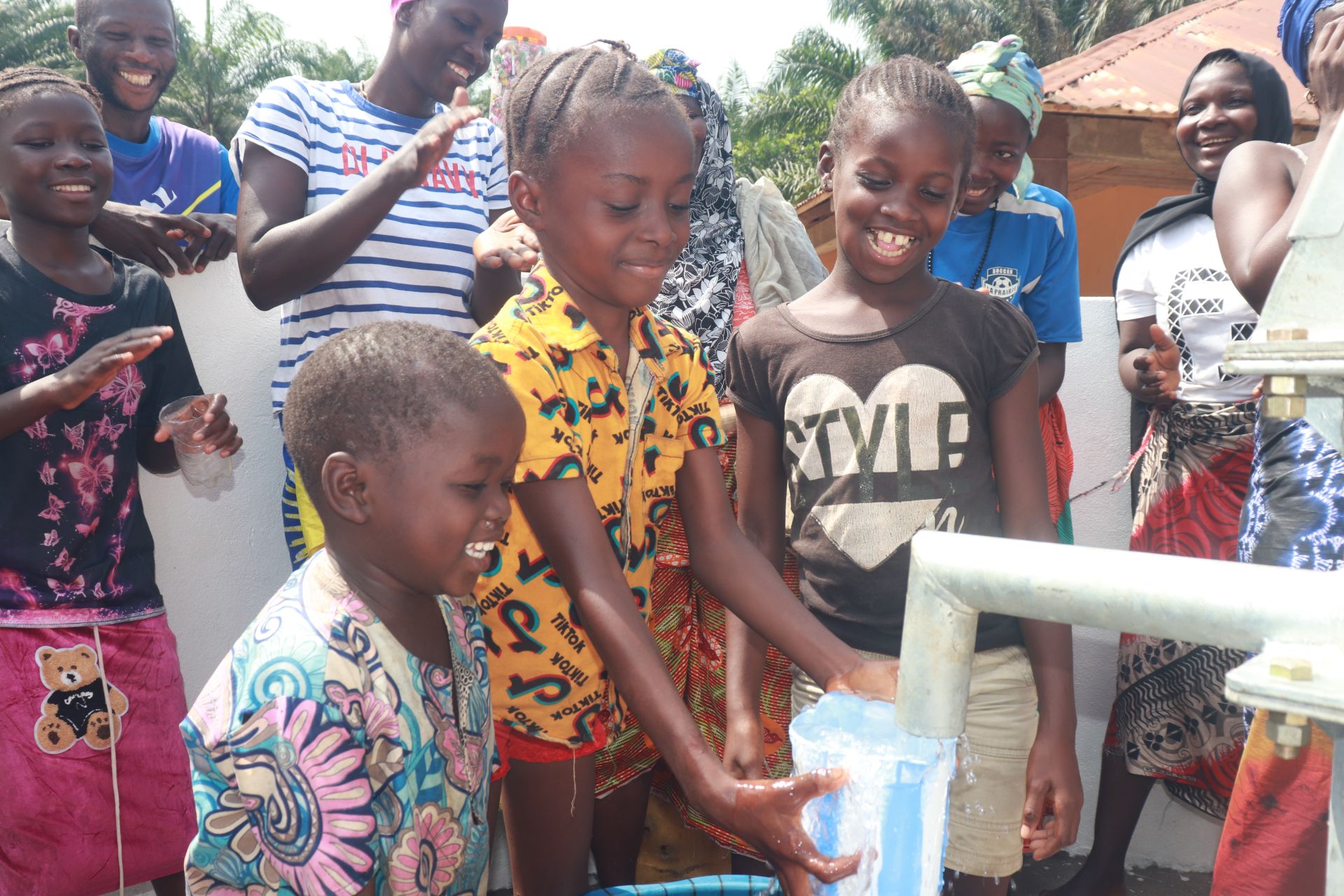
We are excited to share that your donation provided a safe, reliable well at Bundulai Community. As a result, community members no longer rely on unsafe water to meet their daily needs. We conducted hygiene and sanitation training, which focused on healthy practices such as handwashing and using latrines.

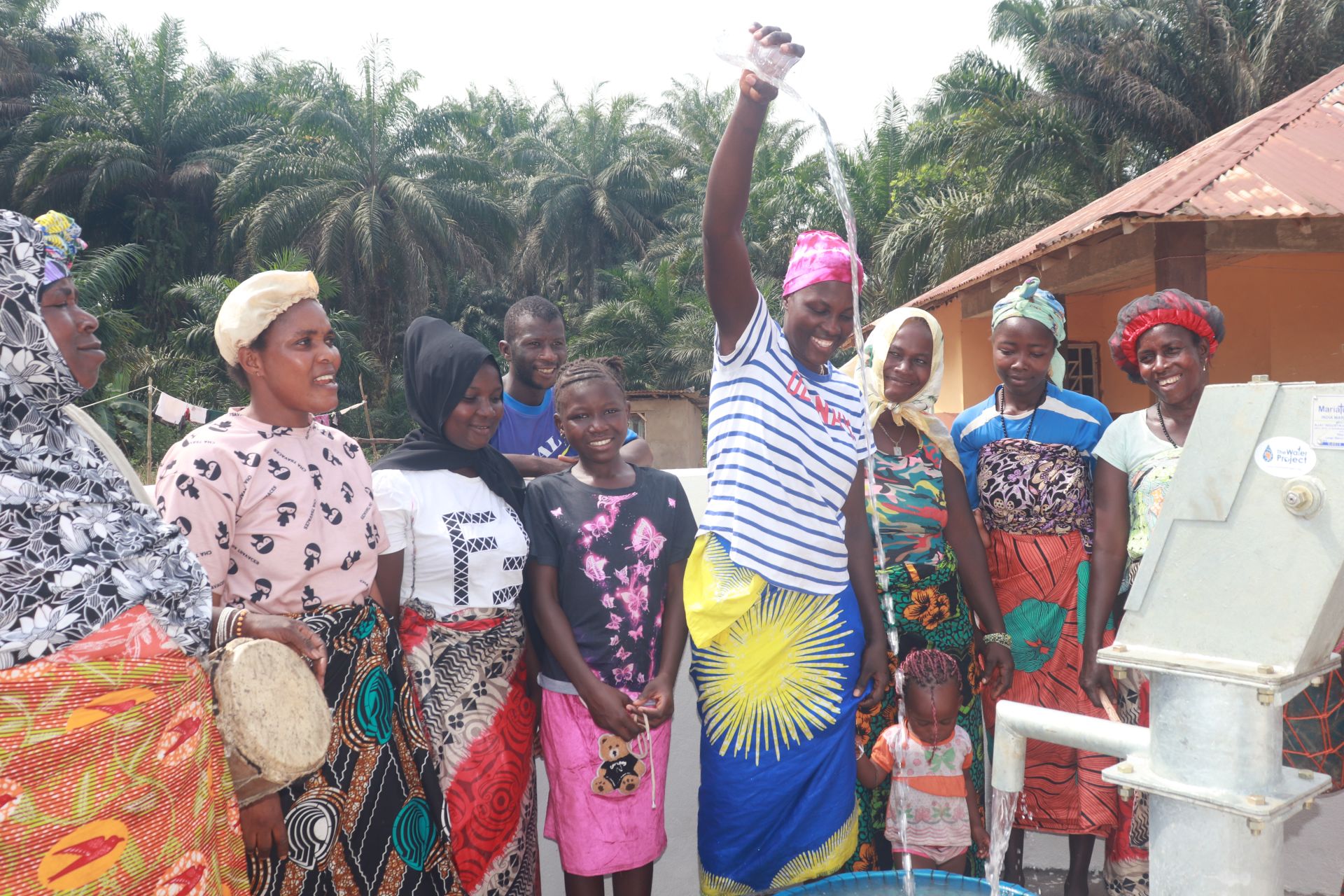
Celebrating clean water!

"I will be able to drink safe and pure drinking water from this water point, and there will also be enough water for cooking and washing of household utensils. Moreover, practicing hygiene will improve due to the sufficient water that is close to me. Water will always be available for handwashing and also to use at the restroom. The water point will prevent me from waterborne illnesses," said 29-year-old Isatu Kamara.

Isatu pours clean water.

She continued noting the benefits to her children, too.

"The completed water point will make a dramatic difference in the lives of my children. The new water point will have an influence on their life by providing safe and pure drinking water for them, which will improve their health. They will also improve their academic performance. From now onwards, I strongly believe that they will improve in their school work as they will go to school on time without any obstacles to getting water," Isatu said.

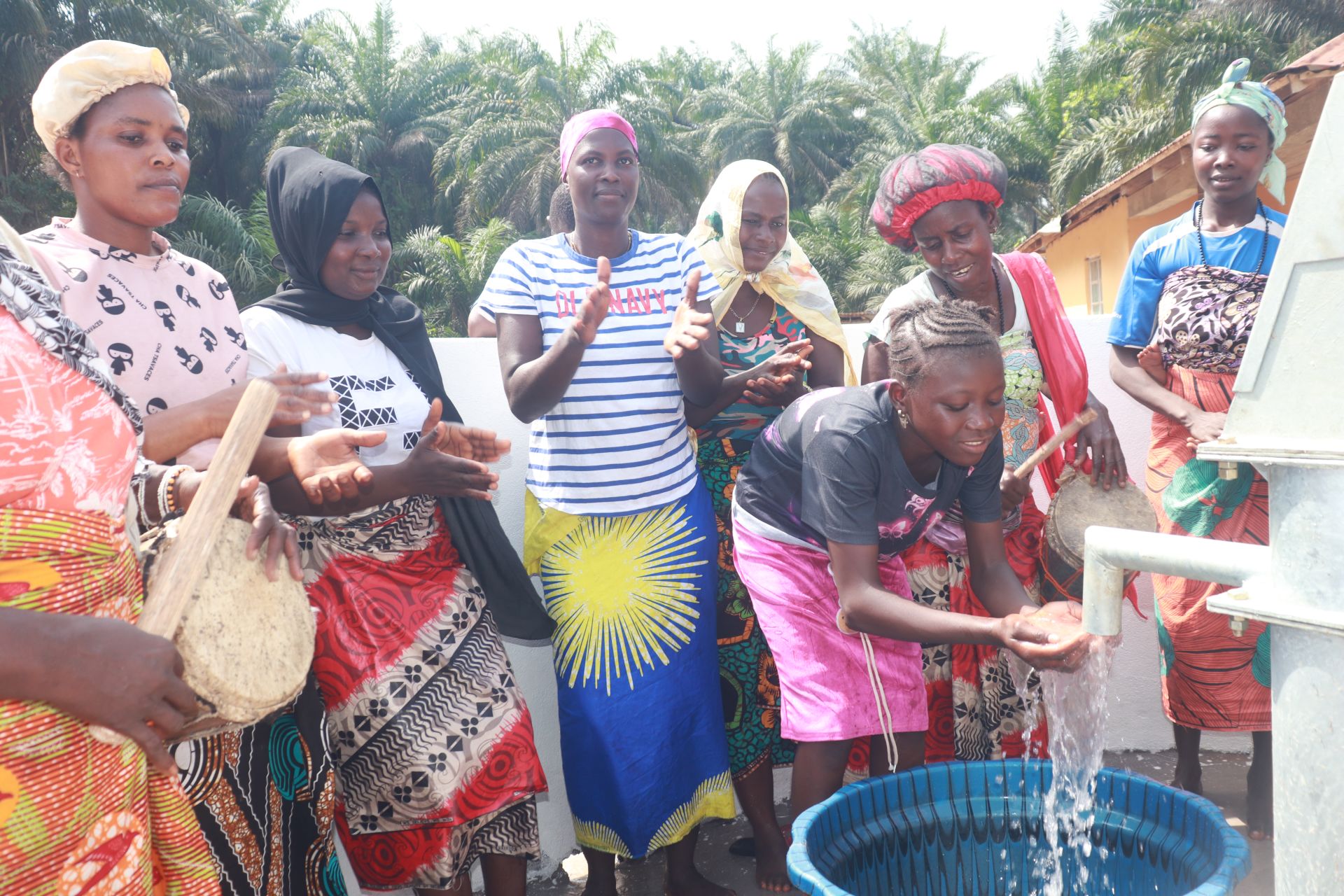
"The availability of reliable water will improve things for me," said 10-year-old Mariatu. "With the completion of this project, I will always go to school on time, and things will improve when it comes to academic work."

Mariatu, enjoying clean water.

After construction was complete, we held a dedication ceremony to officially give responsibility for the well to the water users. Several local dignitaries attended the ceremony, including representatives from TKTK. Each official gave a short speech thanking those who contributed to this water project and reminding everyone to care for it. Then, Isatu and Mariatu made statements on their community's behalf. The ceremony concluded with celebration, singing, and dancing.

New Well

The community provided space for the drill team to store their belongings and meals for the duration of their stay. We were ready to begin drilling!

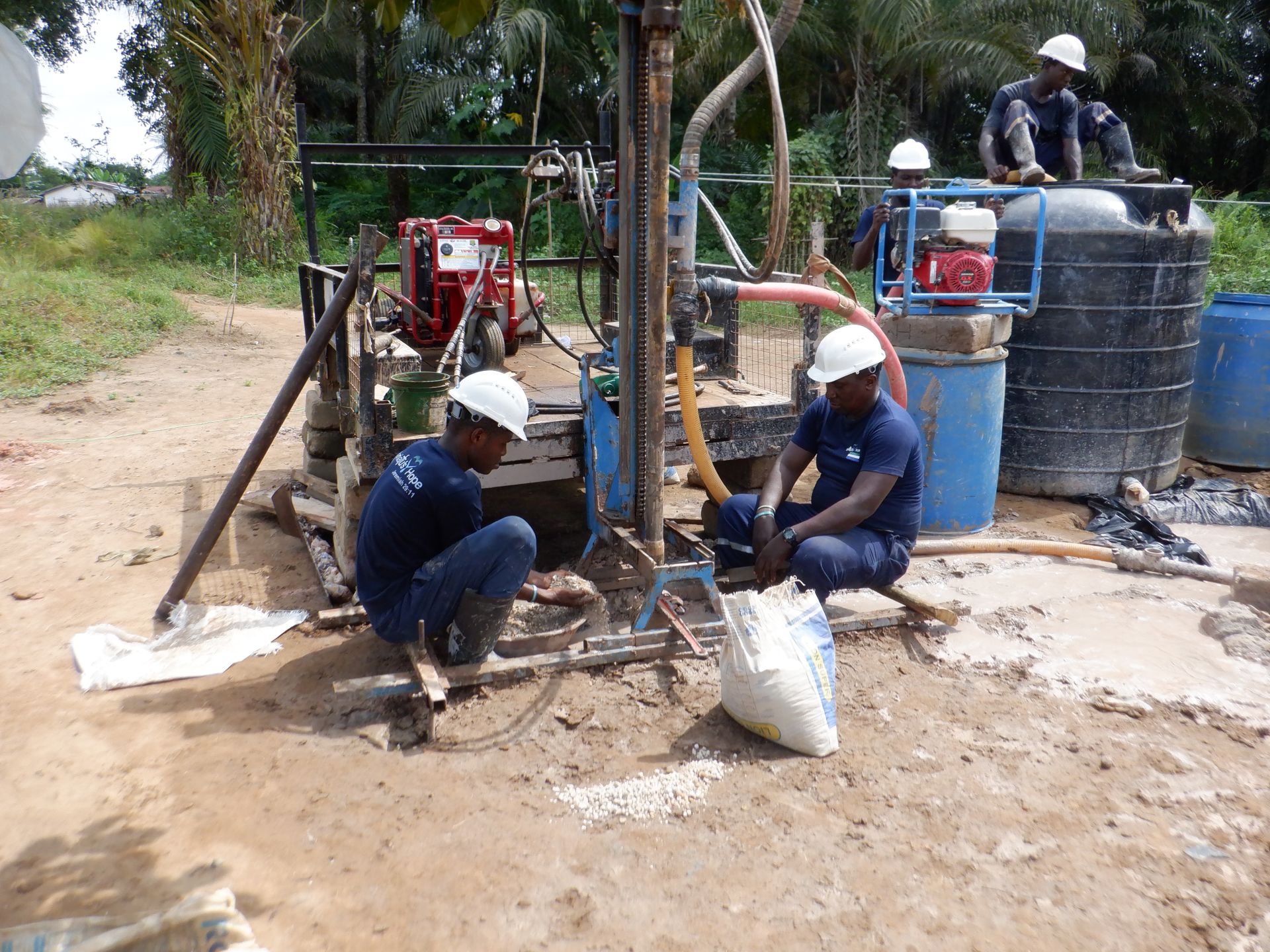
Drilling.

We drilled until we reached a final depth of 20 meters. The team did a soil test, bailed the well and flushed it, clearing any debris generated by the drilling process. This well has a static water level of seven meters. Finally, we tested the water flow to ensure the well would provide clean water with minimal effort at the pump.

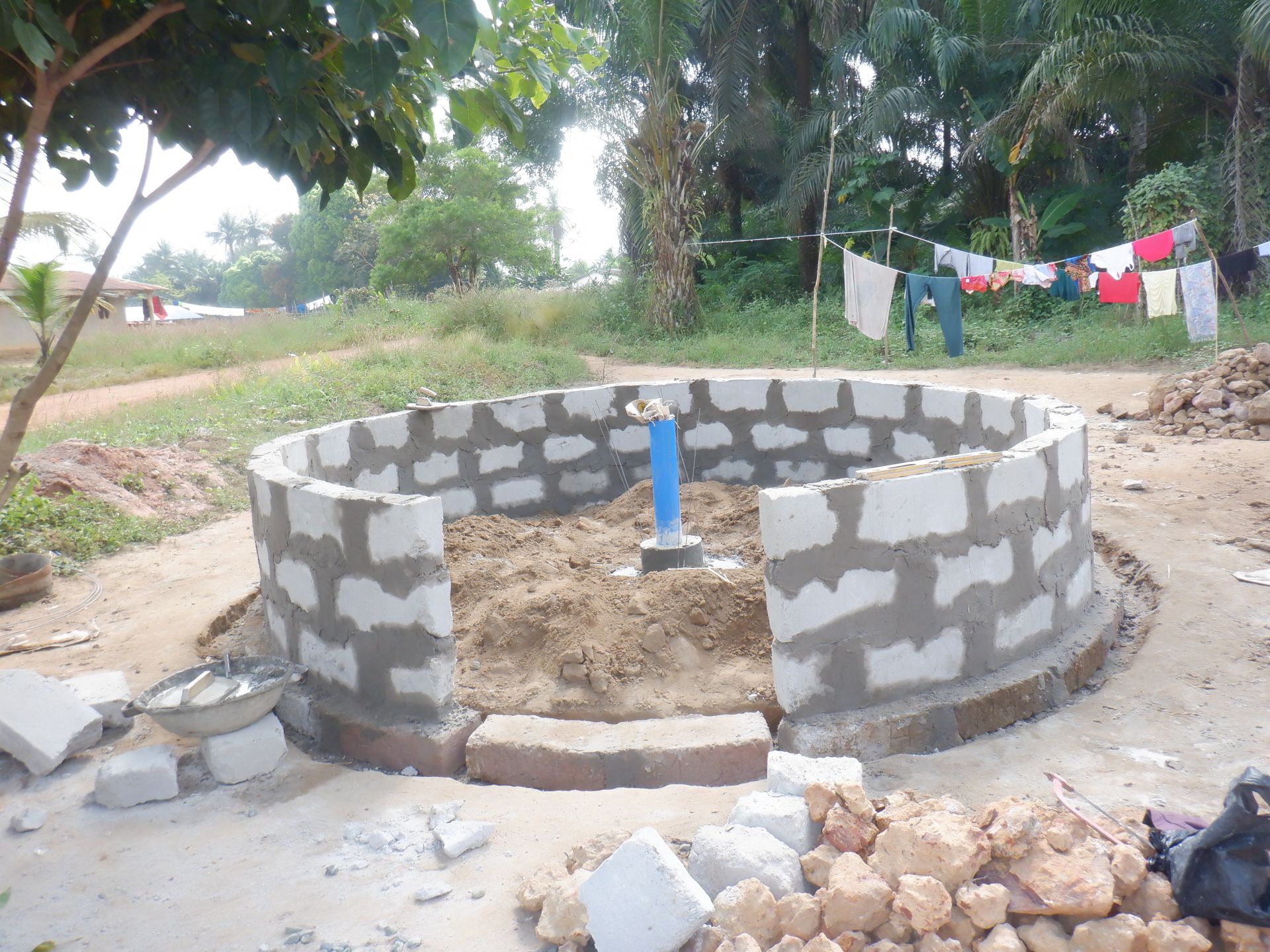
Building the well pad.

As the project neared completion, we built a cement platform, walls, and drainage system around the well to seal it from surface-level contaminants. The drainage system helps to redirect spilled water to help avoid standing water at the well, which is unhygienic and a breeding ground for disease-carrying mosquitoes.

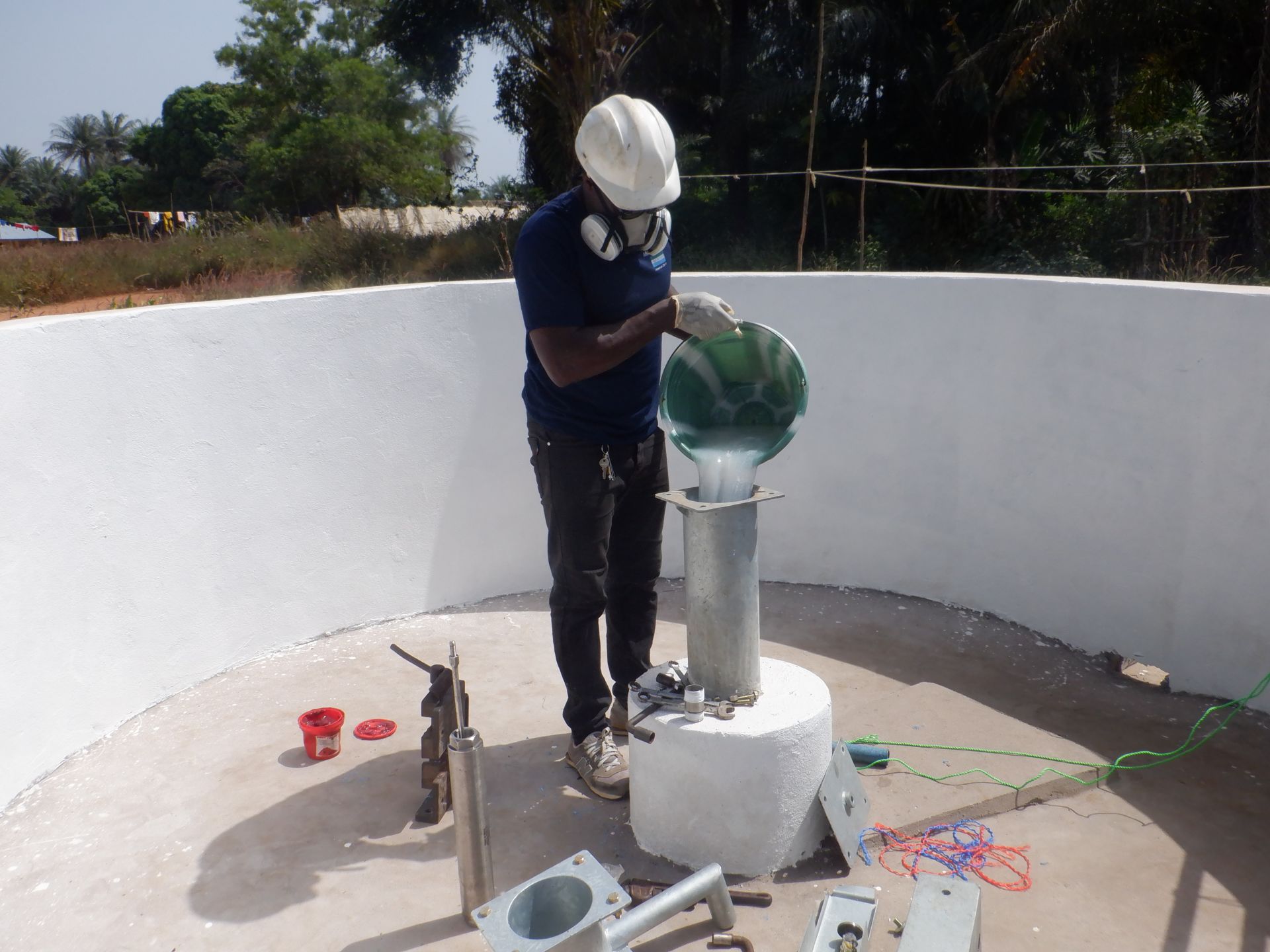
Chlorinating the well.

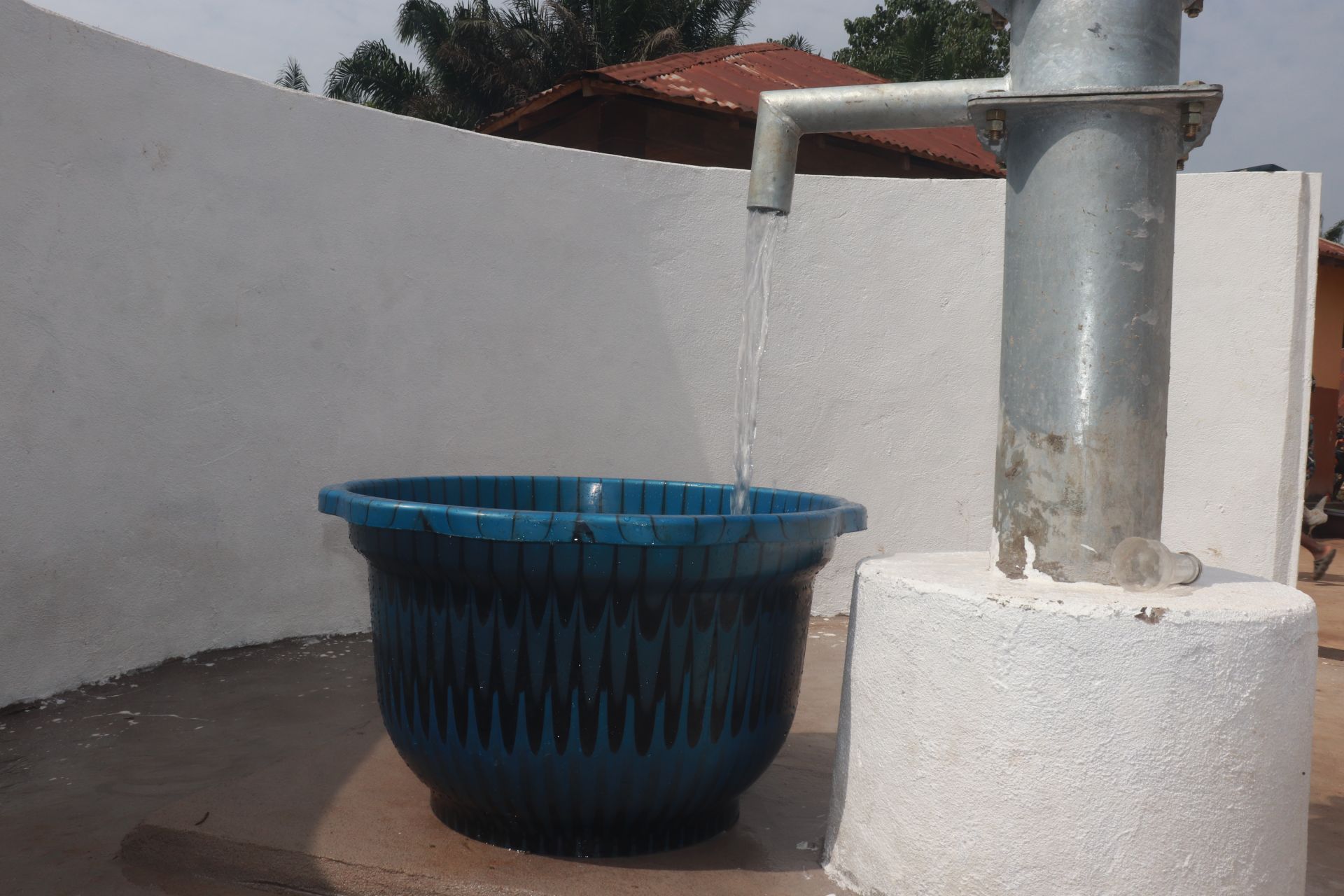
Finally, we installed the pump and conducted a water quality test. The results showed the water was fit for drinking!

Clean water flowing!

Community Education

Before conducting any hygiene training, we collaborated with the local water user committee to understand the community’s challenges. We identified households without handwashing stations. With this information, community members worked together to improve hygiene and sanitation at home before the training.

We also invited a community health worker from the local clinic to help explain some topics and spread awareness about Sierra Leone's free vaccinations for children under five. Hassan Kamara was instrumental in reinforcing each lesson.

We scheduled a time when members from each household using the waterpoint could attend a three-day hygiene and sanitation training and dispatched our teams to hold the meeting.

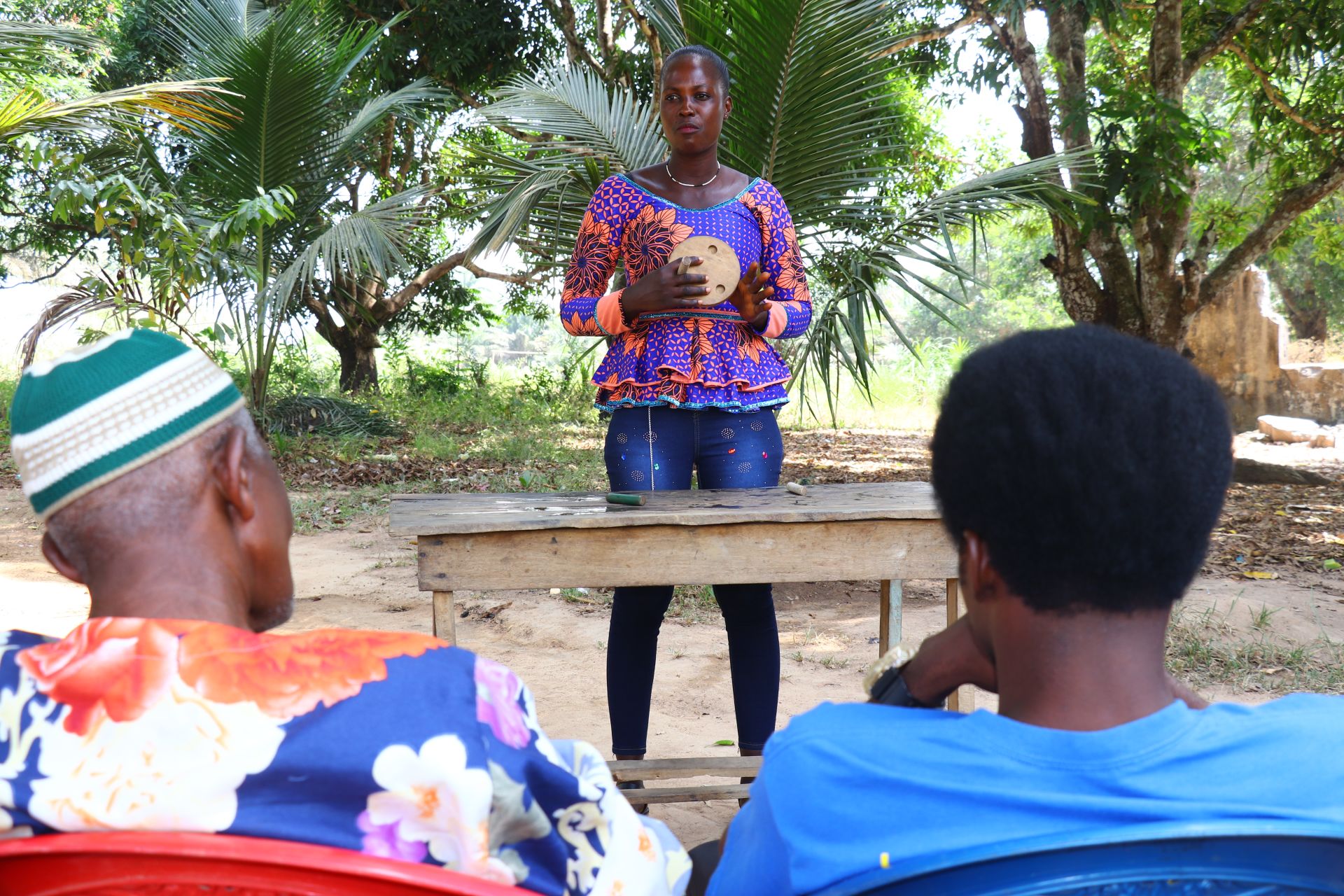
We taught the participants about proper handwashing, personal and menstrual hygiene, and healthy habits such as using latrines and maintaining a balanced diet. We discussed how disease transmission and water hygiene are crucial to community health. We emphasized the importance of maintaining and caring for the well pump and the cost recovery system.

Oral hygiene session.

"Good and bad hygiene was the most memorable discussion of the hygiene training. The poster that drew the attention of many participants is the one where a mother is going to a toilet and her son is not wearing slippers. One of the participants raised her hand and explained to the others the dangers of going to a latrine without wearing slippers. She said if a person enters a latrine without slippers, he/she will contract diseases that may lead to illness. She also advised those who always took their children to different places without wearing slippers it would affect their health, and in the rainy season, it would lead to fever. She pleaded with other members to take care of themselves so they may be free from illnesses," reported Field Officer Alimamy Kanu.

Isatu, quoted earlier, shared about her experience during the training.

Isatu participates in the training.

"The hygiene and sanitation training will help me a lot as a trader and a housewife. The new ideas I have gained here will help me to prevent myself from certain sicknesses. In this training, I have been able to know the importance of constructing a latrine and having a dish rack in our various homes. From now onwards, I will always try hard to put all my household utensils on top of a dish rack to prevent domestic animals from altering them. I will also encourage those who are not here to construct a proper latrine in their house to prevent open defecation. Therefore, I want to thank you for imparting the new knowledge in my life, as this will help me to improve in my hygiene practice, especially in cleaning my environment," Isatu said.

Thank you for making all of this possible!


Update photo


Project Photos


Project Type

Abundant water is often right under our feet! Beneath the Earth’s surface, rivers called aquifers flow through layers of sediment and rock, providing a constant supply of safe water. For borehole wells, we drill deep into the earth, allowing us to access this water which is naturally filtered and protected from sources of contamination at the surface level. First, we decide where to drill by surveying the area and determining where aquifers are likely to sit. To reach the underground water, our drill rigs plunge through meters (sometimes even hundreds of meters!) of soil, silt, rock, and more. Once the drill finds water, we build a well platform and attach a hand pump. If all goes as planned, the community is left with a safe, closed water source providing around five gallons of water per minute! Learn more here!


Contributors