 Borehole Well and Hand Pump
 Rehabilitation Project







Wonders Primary School has grown from a small private venture into one of the area's most trusted schools. It was founded under the God's Glorious Righteous Ministry by Pastor Daniel Y. Conteh, who started the school in a private building with just three teachers and fourteen pupils.
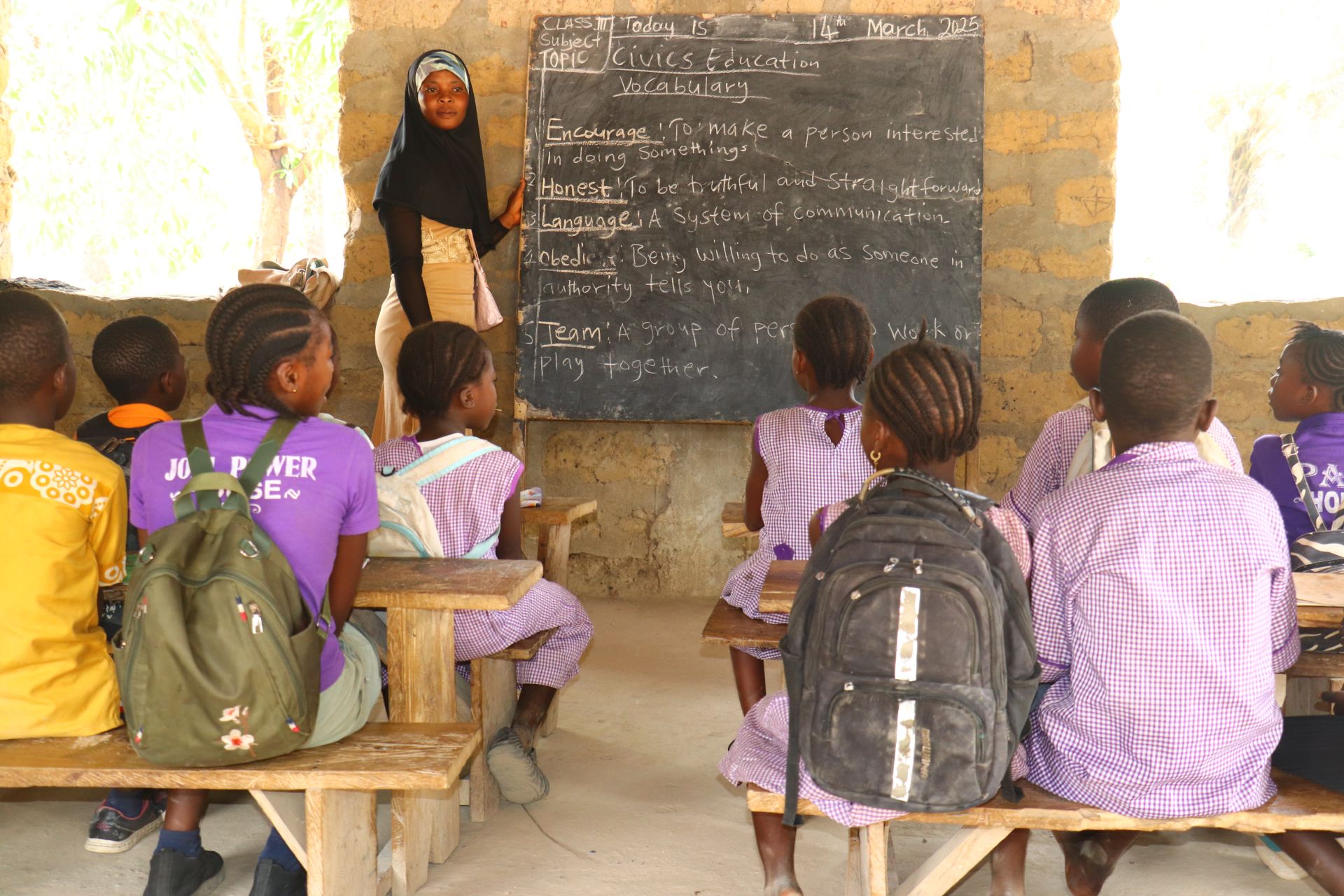
When Pastor Conteh passed away late last year, his wife, Mrs. Magdalene Conteh, stepped into leadership as head of the school. What had once been a single classroom has become two permanent buildings with five classrooms, staffed by six teachers, now operating as a government-assisted school under the Ministry of Basic and Secondary School Education. Two hundred and two pupils now walk through its doors each day.

Current students playing at school.
But growth has outpaced the one resource every classroom depends on. Wonders Primary School has no water point of its own, and it has been eleven years since anyone here has had reliable access to safe water. The school's primary source is an unprotected dug well across the busy main road — a crossing that means every trip for water requires weaving through the frequent motorbike traffic along that route.
The well itself is seasonal, and during the dry months, it runs low, muddy, and hard to draw from. When it fails, the school turns to a second source: a privately owned well tucked behind houses near a swamp, reached only by a rough, sloped path with no direct route from the school grounds. That well sits close to a household latrine, and its water darkens and turns brackish whenever the water level drops. Across both sources, barely a quarter of people in the area can reach water within a thirty-minute round trip.
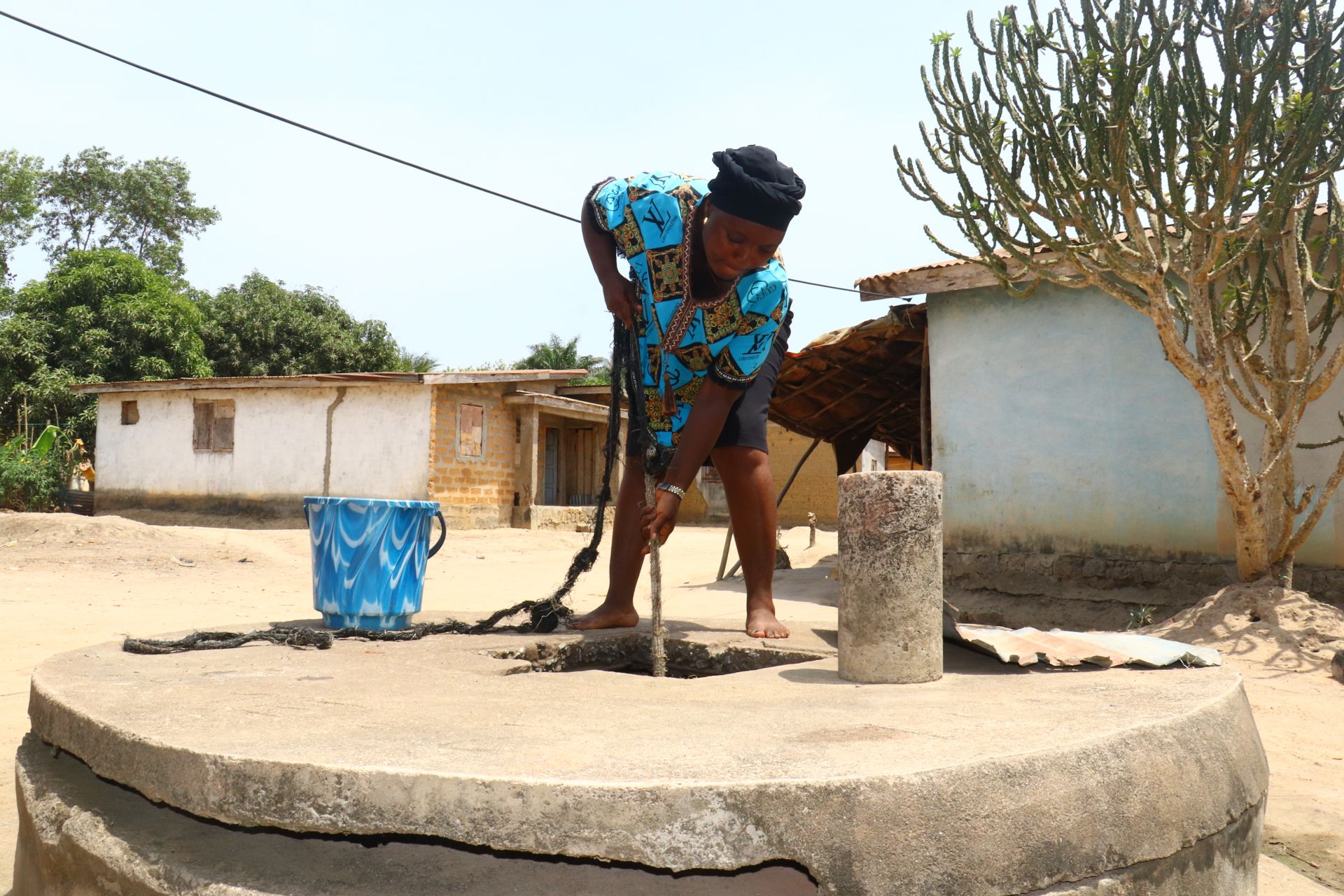
Ms. Conteh hauls water up from the community well.
It is against this backdrop that eleven-year-old Isatu shared what her days actually look like.
Isatu spends about three hours every day fetching water — some in the morning before school, more again after classes end. "I spend more time fetching water for school in the morning, especially when I meet people at the water well," she said. "Sometimes, if there is not enough water, it becomes difficult to fetch, or the water is dirty."
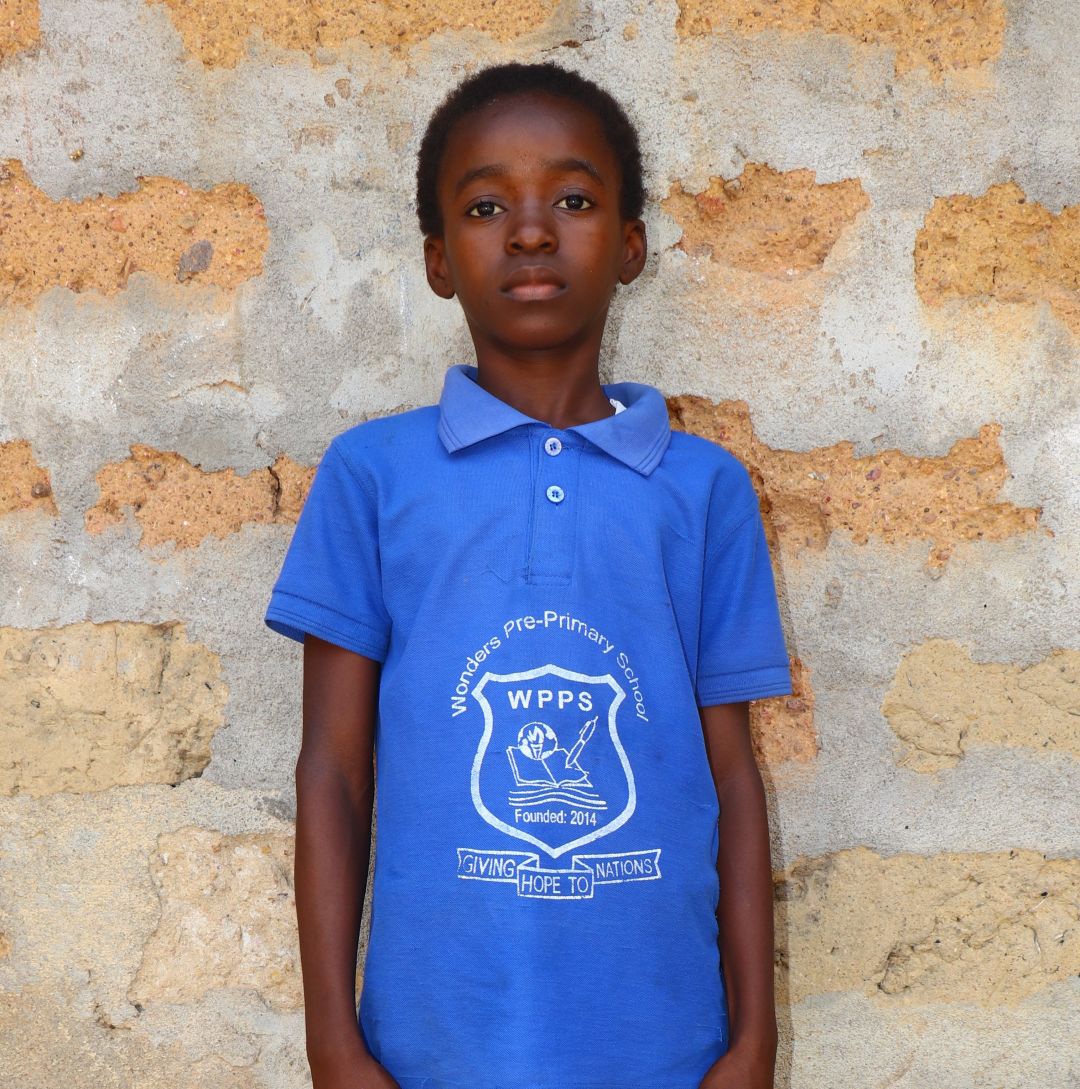
Isatu.
"The road to the well, which is near a swamp, is far and rough, so it becomes even more difficult to bring the water to school. When the water wells are also locked, it will be difficult for me to fetch water."
Her routine leaves little room for anything else. "I fetch water for home use after school and fetch water early in the morning to carry to school," she explained. "On weekends or holidays, I help my mother do house chores if there is water at home."
"When I am not required to fetch water when in school, I can stay in class and have extra time doing my class work. I will not miss lessons or be late if there is enough water in school. I am also happy going home from school when I know that there is already water at home."
The walk itself worries her. Between the traffic on the main road and the terrain around the alternate well, Isatu is genuinely afraid for her safety. "I am afraid of being hurt by a fall or hit by a motorbike while carrying water from school," she said. "The path to the water well is rough and hilly."
"It is hard and scary for me to collect water from the open well since the container is heavy and the well is wide. My friends help me when we are heading to get water from school by filling my bucket with water from the well."
Even when she makes the trip, there's no guarantee it pays off. "I am sad when I walk to the water well and fail to get water," Isatu said. "Sometimes the well runs dry or [is] locked by the owner. Everyone living around the school also fetches water from the same sources we use, and the high number of people taking water reduces the level of water in the well."
"The water we get for school is not enough to drink or use, so I sometimes go out to get water. Every evening, I also go in search of water from home. It is also not easy to fetch enough water at this moment because there is not enough water from all the wells."
She feels the cost of all that time when it comes to her schoolwork. "The time I spend fetching water affects the time I spend studying and doing other daily activities," she said. "I fetch water in the evening at home after school hours and morning in school before classes."
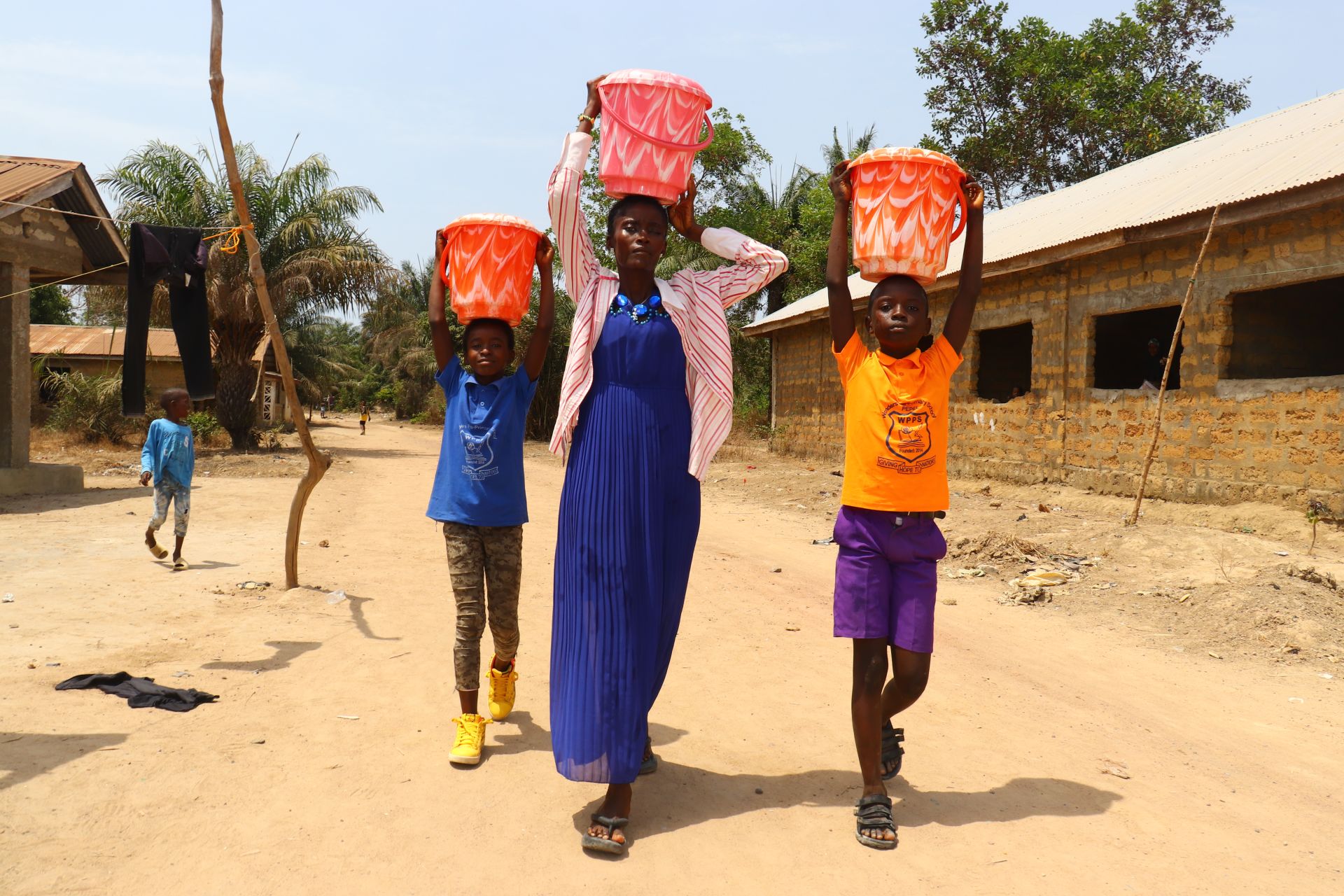
Hauling heavy buckets of water back to school.
"When I spend too much time fetching water every day, I have little time to read, and this affects my performance. Spending too much time fetching water also exhausts me, and I find it hard to study for hours."
Isatu is clear about the task she wishes she didn't have to do. "Fetching water from home and school is not a task that I like undertaking every time," she said. "It is difficult to carry water from the well. When the well is locked, I get even more upset because it is difficult to move further in search of water. I am not happy with walking long distances to fetch water at any time."
And yet, she still holds onto what she wants for her own future. "I want to complete my education and become a teacher," she said. "I believe that if I am a teacher, I will work harder because a teacher must know the subject well before he can educate other people. I also want to own a school in the future where I can employ other teachers to help me."
A water point on the school grounds would change what her days look like. "I shall be glad if there is a water well within school," Isatu said. "I will not need to step out of class to go to fetch water for consumption, and there will be enough water to use the latrine."
"I will not need to cover long distances seeking water, particularly to the water well near the swamp. I will be safe staying in school all day because I will not need to cross the road to fetch water. With water in this school, I will be safe, and I will have a happy moment with my friends."

Steps Toward a Solution
Schools without reliable, on-premises water access often rely on students to fetch and carry water, leading to rationing and uncertainty about water quality. The water is typically poured into a communal storage tank and used by the entire school. With children carrying water from all different sources, it is also impossible for teachers and staff to know exactly where the water comes from and how safe it is to drink.
A new water point will be located on-premises at the school to ensure accessibility, reliability, and safety for students, teachers, and staff while meeting our school coverage goals. Having water available at the school allows children to drink, wash hands, and use sanitation facilities without leaving school grounds, preventing disruptions to lessons and reducing safety risks. A dedicated source increases water availability, reduces reliance on stored water, minimizes rationing, and ensures confidence in the safety of the water. This means staff and students are healthier, and their lessons aren’t disrupted, contributing to a better education!
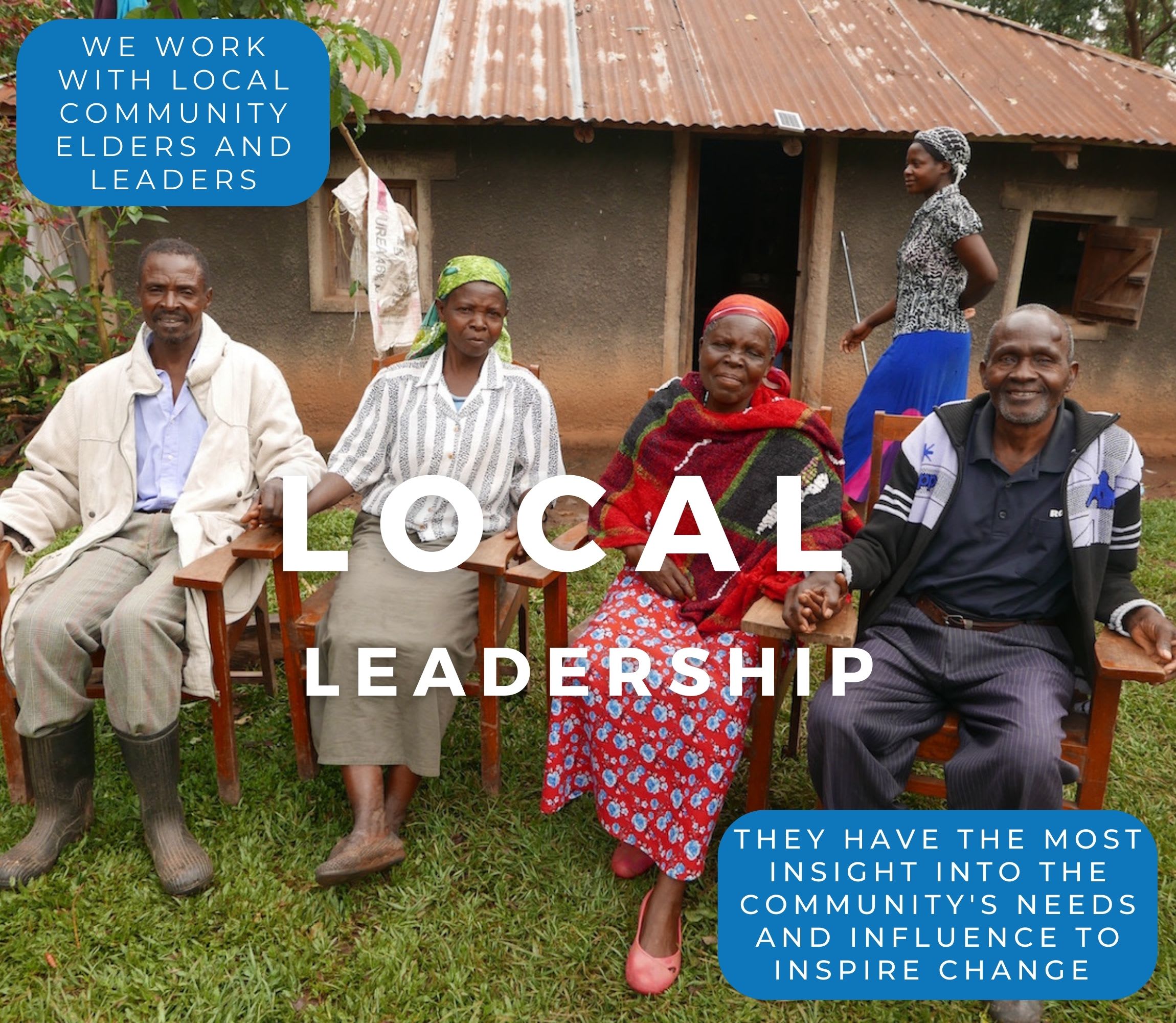
Our technical experts worked with the school leadership and local community to identify the most effective solution to their water crisis. They decided to drill a borehole well, construct a platform for the well, and attach a hand pump.
Well
Abundant water often lies just beneath our feet. Aquifers—natural underground rivers—flow through layers of sediment and rock, offering a constant supply of safe water. A borehole well is drilled deep into the earth to access this naturally filtered and protected water. We penetrate meters, sometimes even hundreds of meters, of soil, silt, rock, and more to reach the water underground. Once found, we construct a platform for the well and attach a hand pump. The community gains a safe, enclosed water source capable of providing approximately five gallons of water per minute. Learn more here!
School Education & Ownership
Hygiene and sanitation training are integral to our water projects. Training is tailored to each school's specific needs and includes key topics such as proper water handling, improved hygiene practices, disease transmission prevention, and care of the new water point.
To ensure a lasting impact, we support forming a student health club composed of elected student representatives and a teacher. These clubs promote hygiene practices schoolwide and keep handwashing stations well-stocked. This student-led model encourages a sense of ownership and responsibility.
Safe water and improved hygiene habits foster a healthier future for everyone in the school and the surrounding community.