 Borehole Well and Hand Pump

 Rehabilitation Project








The 205 people in the Masorie Community often start and end every day the same way: by climbing a hill to get water. The community’s only water source is outside the village. It’s an open spring under a large rock, ringed by big trees. The path there is steep and rough. People stand on the rock to fill their containers, and the water they bring home carries sand and pebbles. When it flows in from the main river, it also changes in color, smell, and taste.
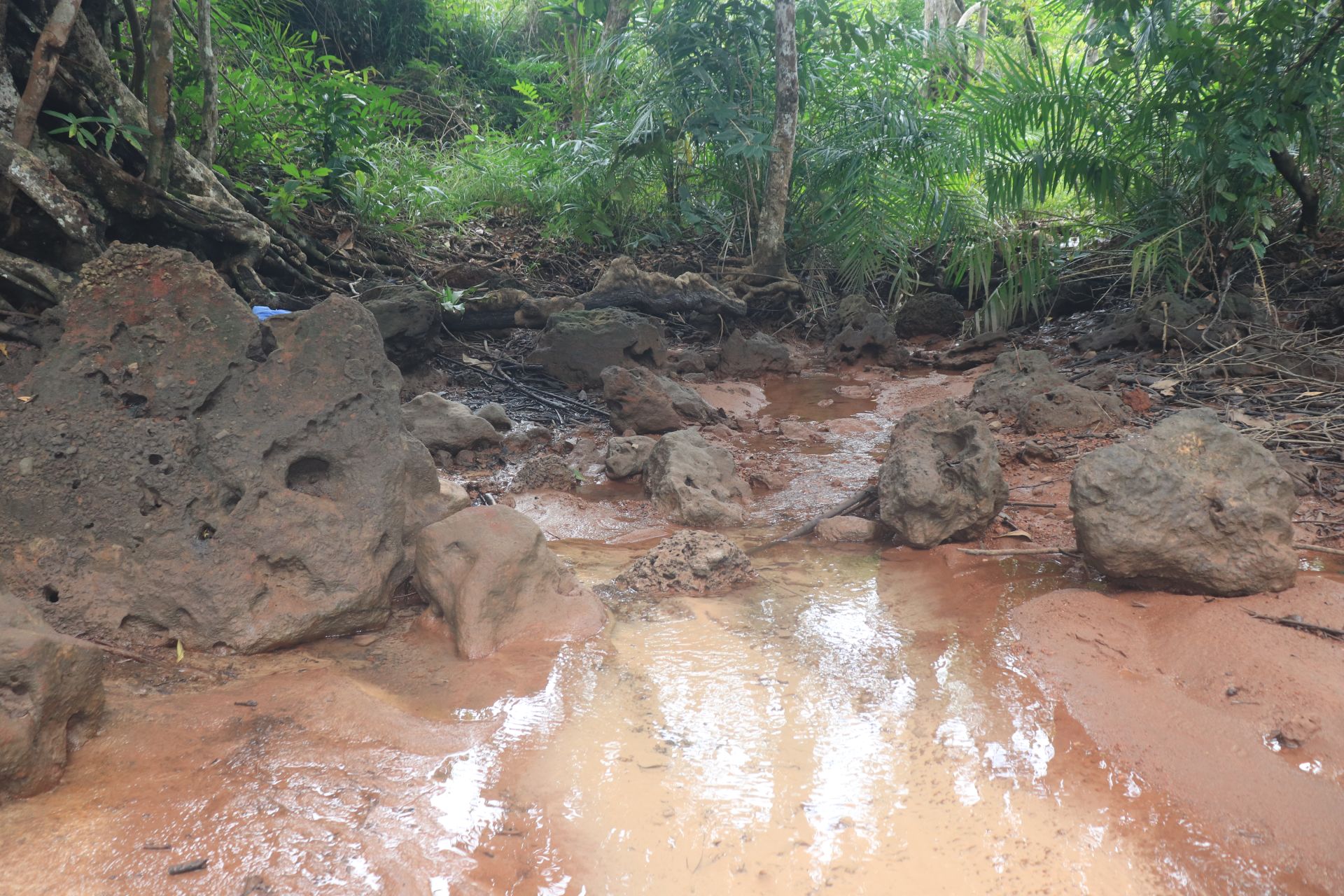
The community's water source.
Eighteen-year-old Mariatu makes this trip several times a day, and the hours add up.
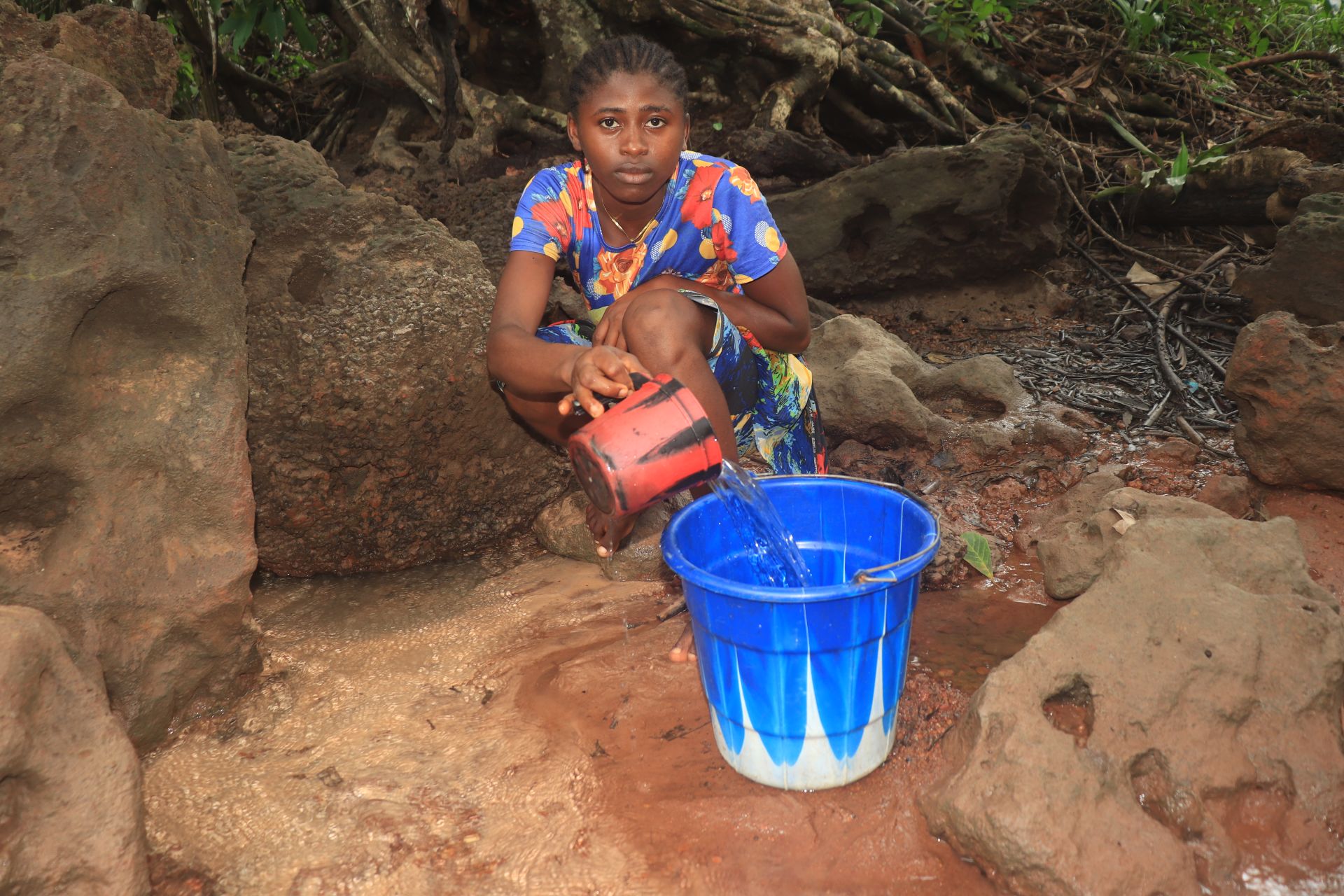
Mariatu fetches the surface water to haul home.
“The long walking distance makes fetching water take so long. Another thing is that the crowd at the water source makes fetching water take so long as the population keeps increasing, especially in the morning and evening hours.”
The hill is the hardest part, especially on the way home with a full container. Mariatu knows the path well and how risky it is.
“I am worried about the safety of the current water source because it is hilly, and the road leading to it is bad. Walking through it is difficult and time [is] wasted. I may get injured when walking along that road, if I [am] not careful.”
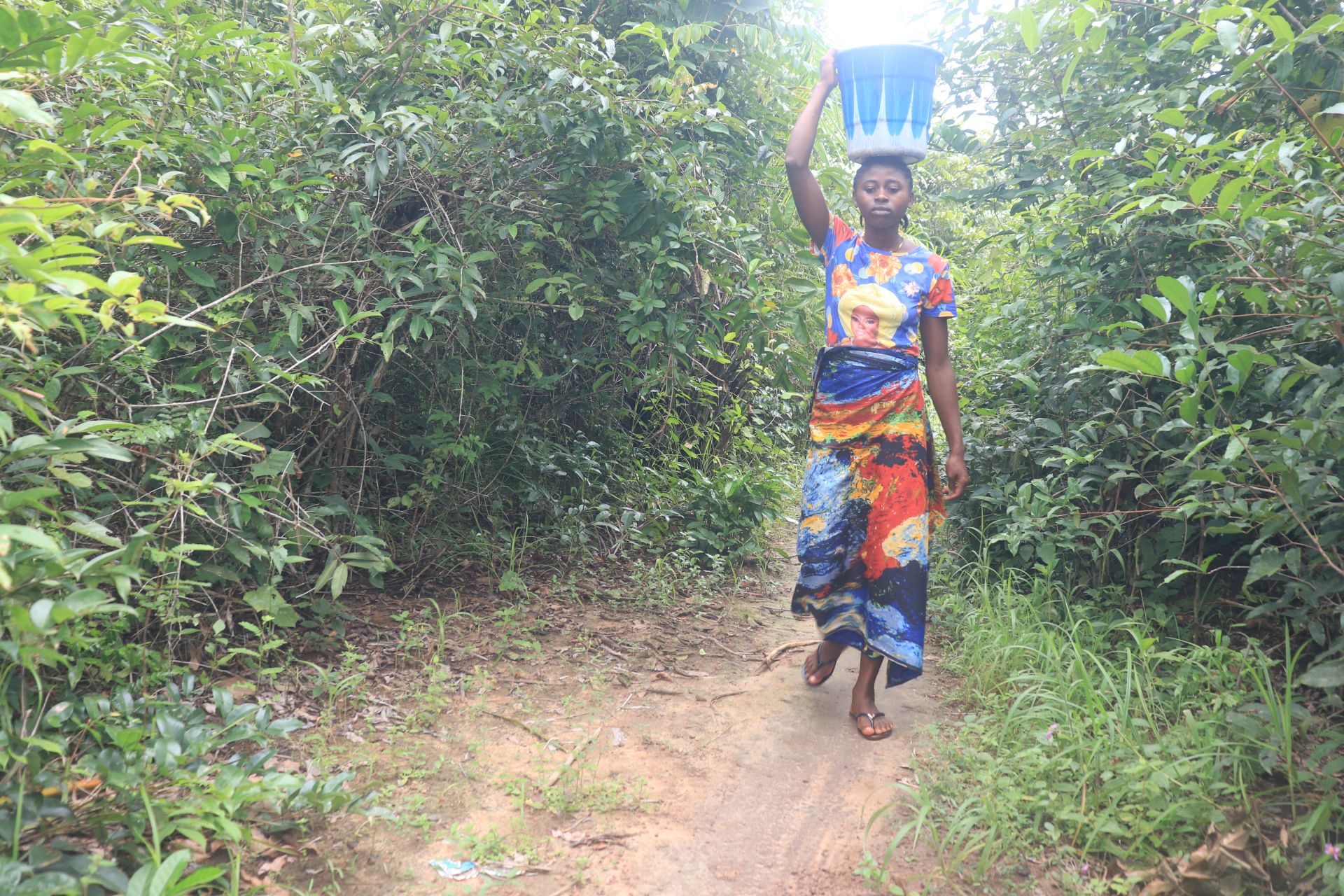
Mariatu makes the long walk home.
In the dry season, the spring shrinks while demand grows. As more people come to the source, the water level drops and the waits get longer. Mariatu understands exactly why the water runs low and how it feels.
“Continuous fetching of water at the source affects the quantity of water. In the dry season, the need for water always increases, and that will make more people fetch water from this source. The more people fetch water from the source, the more the level of water reduces to a lower quantity. It makes me feel unhappy as a result of insufficient water at the source.”
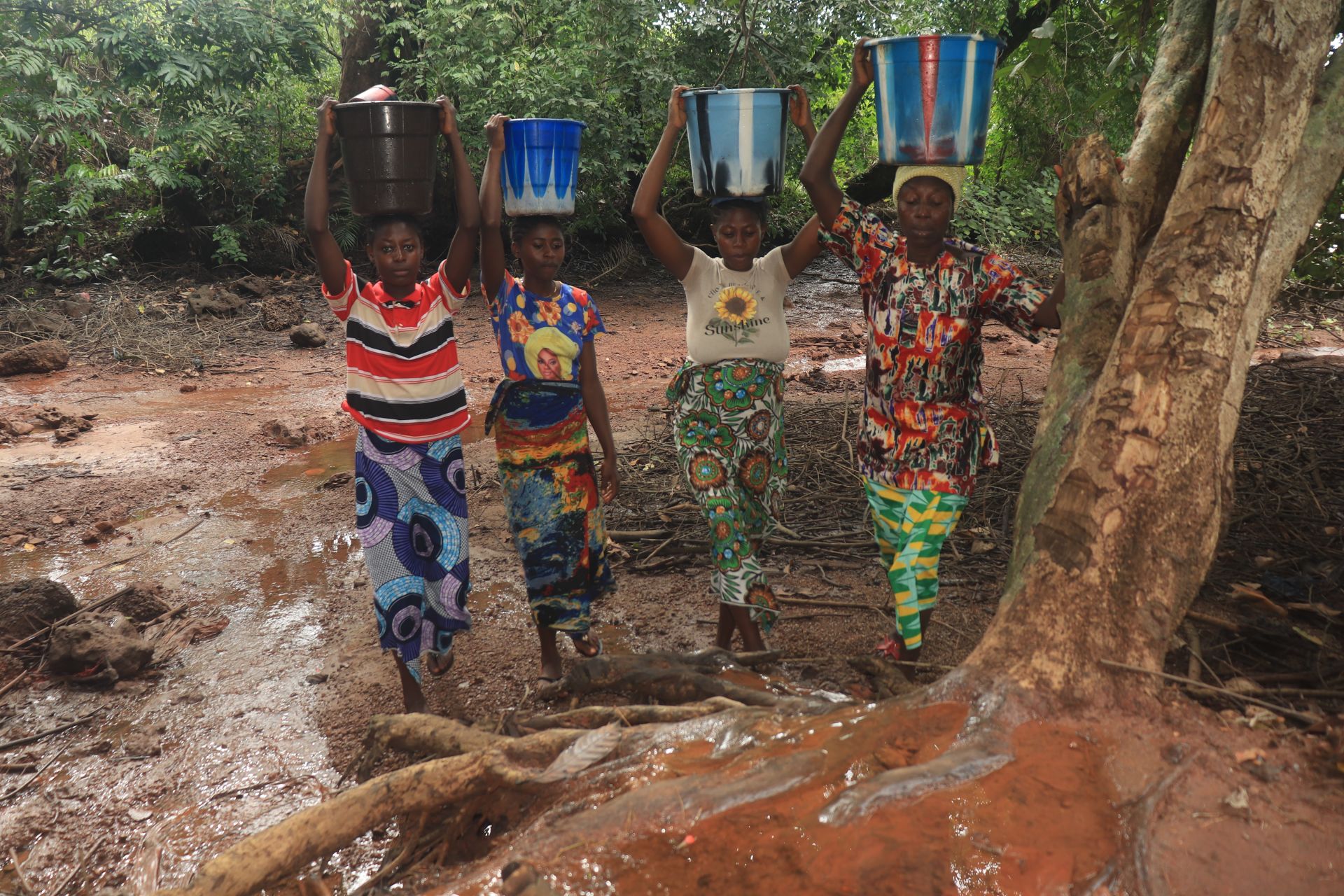
Mariatu and other community women fetch water.
Those hours come straight out of her education.
“Fetching water, especially in the dry season, affects my time at school. I am unable to go to school on time as a result of insufficient water in the dry season. I spent so much time at the water source just to get the quantity of water I needed for my daily use. This challenge affects my exam scores, and also at the end of the academic year.”
“I feel unhappy when I am sent to go and fetch water. This is especially [true] when the water source is far away from the community and when there is a total crowd at the water source. It takes up my time and delays my other activities.”
Still, Mariatu knows where she’s going.
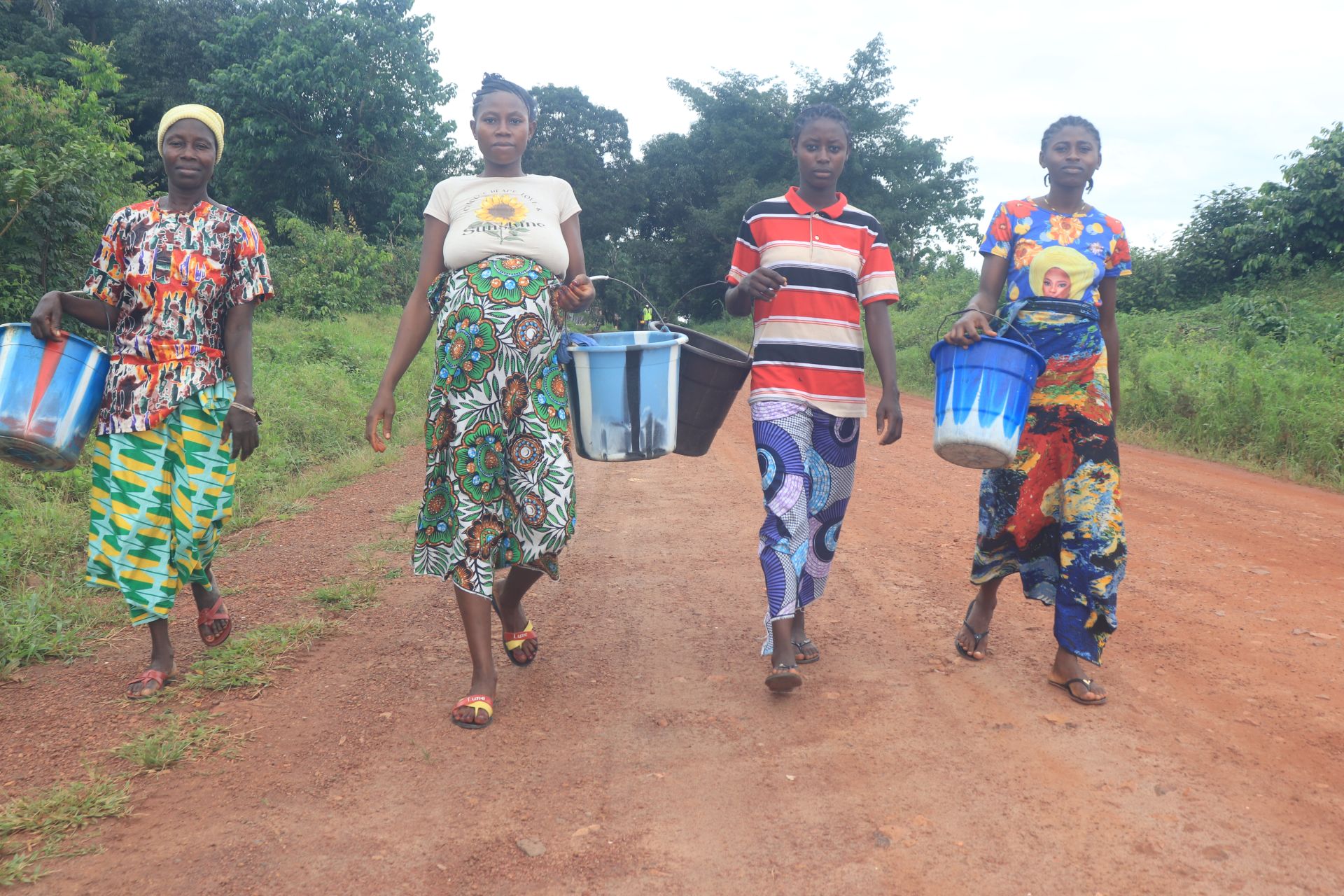
Mariatu and other community women begin their journey to the water source.
“I want to be a successful person in the future. With this ambition, I will be able to help my parents and also build my dream career (nurse) that will be beneficial to me and my family.”
She also knows what she’d do with her time back. She’d spend it on her studies and on helping her family.
“In the evening hours, I will go for extra classes if [I] do not have to spend all [my] time trying to get water. There will be enough time for me to study and work on my assignment, which will help me in my studies at the end of the academic year. My parents are too busy to undertake all household chores, so I will help in doing them if [I] do not have to spend so much time fetching water”
Masorie has already tried to fix this. Community members set out to drill their own water point, but couldn’t secure the resources to complete it. The village is growing, with new houses going up and plans to widen the road. Without a reliable water source, though, each new household means a longer line on the hill.
A new borehole inside Masorie would change Mariatu’s days. It will include a ramp so people living with disabilities can reach it easily.
“Having a new water point simply means I will no longer go out of the community to fetch water. It will also mean that I will no longer climb the rough hill to fetch water. So having a new water point will make me safer by getting water within my community and also provide safe water for me and my family.”
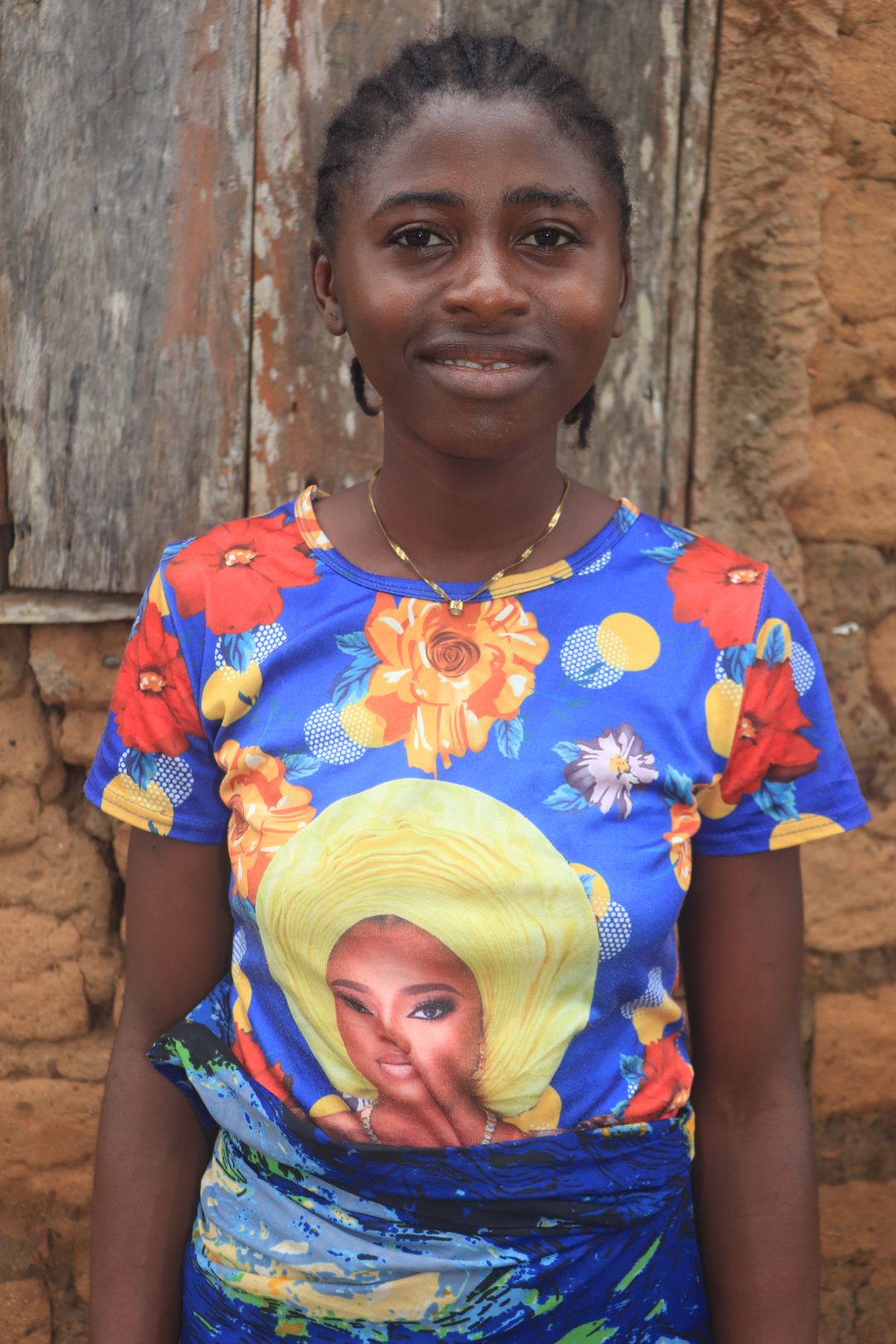
Mariatu.
With safe water close to home, Mariatu can get to class on time, put her evenings into studying, and keep working toward becoming a nurse.
Steps Toward a Solution
Our technical experts worked with the local community to identify the most effective solution to their water crisis. They decided to drill a borehole well, construct a platform for the well, and attach a hand pump.
Well
Abundant water often lies just beneath our feet. Aquifers—natural underground rivers—flow through layers of sediment and rock, offering a constant supply of safe water. A borehole well is drilled deep into the earth to access this naturally filtered and protected water. We penetrate meters, sometimes even hundreds of meters, of soil, silt, rock, and more to reach the water underground. Once found, we construct a platform for the well and attach a hand pump. The community gains a safe, enclosed water source capable of providing approximately five gallons of water per minute. Learn more here!
Community Education & Ownership
Hygiene and sanitation training are integral to our water projects. Training is tailored to each community's specific needs and includes key topics such as proper water handling, improved hygiene practices, disease transmission prevention, and care of the new water point. Safe water and improved hygiene habits foster a healthier future for everyone in the community.
Encouraged and supported by our team's guidance, the community elects a water user committee representative of its diverse members. This committee assumes responsibility for maintaining the water point, organizing community efforts, and gathering fees to ensure its upkeep.