
Ramatu is Healthier and Worries Less

April, 2026

Last year, your gift unlocked the potential for a brighter future for Ramatu. Since then, she and the Mabalama Community of 236 residents have had clean, reliable water. Your contribution has made a significant impact. Thank you for making a difference!

"I like fetching water from this source because it is well-protected and has safe water for drinking. The water source is also not too far from my house," said Ramatu.

Before the Well Rehabilitation

Like many in Sierra Leone, 25-year-old Ramatu Conteh is responsible for collecting water to meet daily water needs. Before last year’s water intervention, this task stole her time and negatively affected her.

The previous water source.

Drinking the water caused severe consequences. Many in the community suffered from waterborne diseases that created health problems, affecting their daily lives. Limited accessibility also meant people wasted time collecting sufficient water to meet their needs. The difficult journey to collect water sapped their physical and emotional energy, creating roadblocks. For Ramatu, it lessened her opportunity to remain healthy.

"My health has changed since the completion of this project. I have been able to work on my business on time and also undertake agricultural activities, which I was unable to do before because of the lack of water in the community," said Ramatu.

Since the Well Rehabilitation

Your generous gift last year was much more than a simple donation; it was a powerful statement about your commitment to this community and Ramatu’s future. By supporting the water solution, you made clean water an everyday reality, fostering hope for a brighter future.


Reliable and clean water lays the groundwork for improved health, education, and economic possibilities, allowing people to thrive. We frequently hear from those we interview that "water is life!"

"I am proud of having safe and pure drinking water since this water point was completed last year. The best thing about living with clean water is that it can be used to drink, wash, and for the practice of good hygiene," shared Ramatu.

Access to sufficient clean water not only improves health but also enables Ramatu to go about her daily life without worry.

"I am no longer worried about safety when fetching water from this source. This is because the water well is clean and within the community. It also has safe water for drinking purposes. This has changed the situation of water in the community as a whole and for me," Ramatu celebrated.

The Future is Looking Bright!

A year ago, you made a difference for Ramatu and her community. This is just the first chapter of their story as access to clean water continues to improve their lives!

At The Water Project, we value sustainability and want to ensure that people continue to thrive. We commit to monitoring this project to ensure the water is always flowing and safe to consume. We inspect system hardware, monitor water availability, conduct sanitary inspections, and collect water-quality samples to identify risks. We work with our on-the-ground team to resolve them.

You gave Ramatu a crucial tool for achieving her dreams: access to clean water. Together, we can excitedly expect that with this precious resource, her enthusiasm and courage will help Ramatu fulfill her dreams.

"There is an increase in my business compared to previous years when there was no water source in the community. I have also been able to extend my garden due to the reliable water in the garden. My dream for the future is to expand my business. This can be possible if there is access to enough water in the community," declared Ramatu.


Navigating through intense dry spells, performing preventative maintenance, conducting quality repairs when needed and continuing to assist community leaders to manage water points are all normal parts of keeping projects sustainable. The Water Promise community supports ongoing sustainability programs that help Mabalama Community maintain access to safe, reliable water.

We’d love for you to join this world-changing group committed to sustainability.

The most impactful way to continue your support of Mabalama Community – and hundreds of other places just like this – is by joining our community of monthly givers.

Your monthly giving will help provide clean water, every month... keeping The Water Promise.

Project Status


Project Type:  Borehole Well and Hand Pump

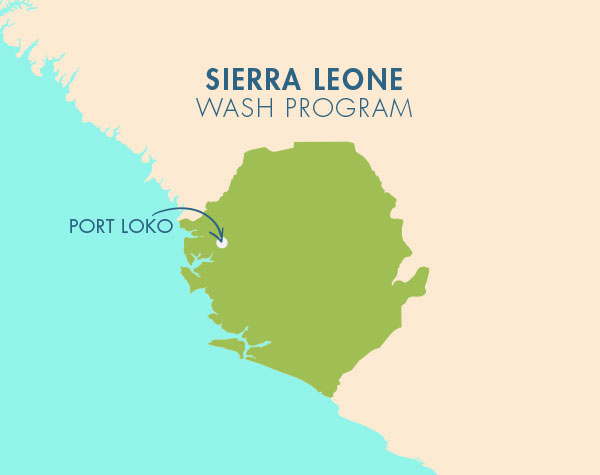
Regional Program: Port Loko, Sierra Leone WaSH Program

Impact: 236 Served

Project Phase:  In Service - Jan 2025

Functionality Status:  Functional

Last Checkup: 04/02/2026

Project Features


Click icons to learn about each feature.


Community Profile

The 236 people of Mabalama struggle to access sufficient water to meet their daily needs. With a protected dug well often broken down or running dry, they are forced to travel to a distant swamp to collect water that is questionable to consume.

"I am facing a lot of water challenges in the community. In the morning, when I wake up before going to school, the first thing I [do is] go to the pump to fetch water. When the main pump gets dry or breaks down, I go to the swamp well to fetch water. Most times, I am late for school because the distance I cover to the swamp well is far. I find it difficult to fetch water in my village," said 14-year-old Alimamy K., seen below at the swamp.

"The demand for water in the community is very high, and every household needs water to carry out their activities. They only have one protected dug well with a hand pump (shown below). The primary source is seasonal. It dries from March to April, and it [has] pump breakdowns frequently. This condition causes the community to face water challenges," said field officer Musa Conteh when describing the water situation in Mabalama.
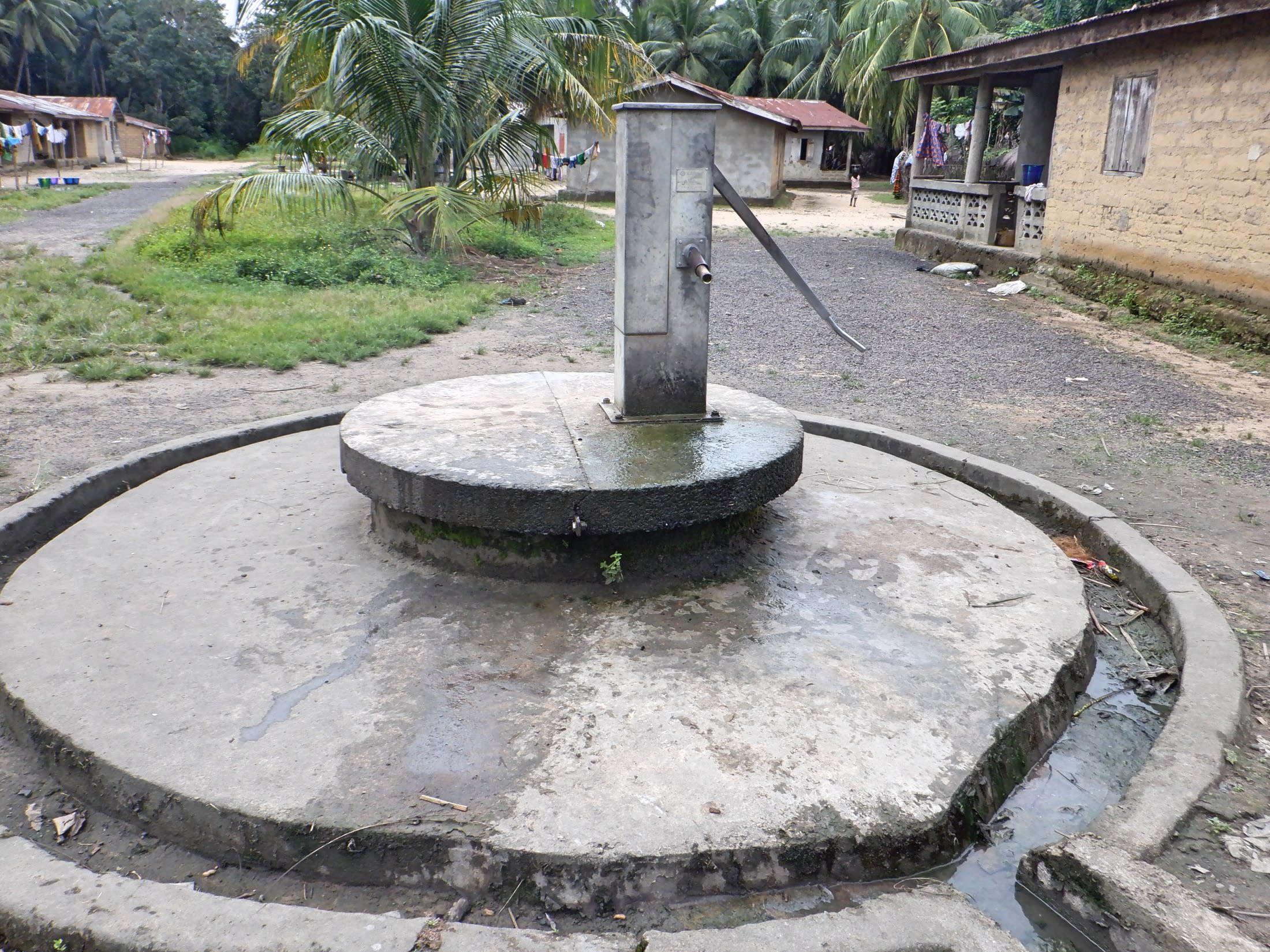
Sometimes, it takes days to repair the pump, making it very difficult to fetch water within the community. Community members are forced to collect water from a faraway stream when that happens. It is time-consuming to get to the source and risky because it is open to contamination. And just like the well, there are certain times of the year when collecting water from here becomes even more difficult because the water dries up, leaving people desperate to find water wherever they can. Sadly, but not surprisingly, people report suffering from waterborne diseases from consuming the swamp's contaminated water.

Water is essential for daily life, yet people waste so much time collecting it that it steals from other parts of their lives. Students are often late to school, losing valuable learning time, and adults miss out on opportunities to increase their livelihoods.

"This water situation affects me greatly in my village. We only have one pump in the village, but this pump sometimes produces a low quantity of water. At that moment, I must go to the stream to fetch water, but it is far from my house. I must walk to get there," said 25-year-old trader Ramatu Conteh, shown above collecting water from the swamp.

"During the dry season, the community youth add depth to the swamp to fetch enough water. But this source [is] open to contamination. I have to fetch the swamp water and then allow it to settle. During the rainy season, water flows all over the swamp, and it contains leeches, so sometimes leeches [stick] on my feet [and] suck blood. This situation pains me the most," said Ramatu.

"Also, I'm a businesswoman. I usually sell different items like baked bread, biscuits, fried fishcakes, etc. I depend on this for my living. I also do garden work in the boli land (swamp land). I plant different crops like pepper, watermelon, and okra. When I harvest these products, I take them to the market to sell to earn money. But the water problem would not allow me to do this on time," concluded Ramatu.

Rehabilitating the community's protected dug well by converting it into a borehole well will help community members access safe and sufficient water year-round. Then, hopefully, they will have the time and energy to commit to learning and improving their daily lives.

The Proposed Solution, Determined Together...

At The Water Project, everyone has a part in conversations and solutions. We operate in transparency, believing it benefits everyone. We expect reliability from one another as well as our water solutions. Everyone involved makes this possible through hard work and dedication.

In a joint discovery process, community members determine their most advantageous water solution alongside our technical experts. Read more specifics about this solution on the What We're Building tab of this project page. Then, community members lend their support by collecting needed construction materials (sometimes for months ahead of time!), providing labor alongside our artisans, sheltering and feeding the builders, and supplying additional resources.

Water Access for Everyone

This water project is one piece in a large puzzle. In Kenya, Sierra Leone, and Uganda, we're working toward complete coverage of reliable, maintained water sources that guarantee public access now and in the future within a 30-minute round trip for each community, household, school, and health center. One day, we hope to report that this has been achieved!

Training on Health, Hygiene & More

With the community's input, we've identified topics where training will increase positive health outcomes at personal, household, and community levels. We'll coordinate with them to find the best training date. Some examples of what we train communities on are:

  • Improved hygiene, health, and sanitation habits
  • Safe water handling, storage & treatment
  • Disease prevention and proper handwashing
  • Income-generation
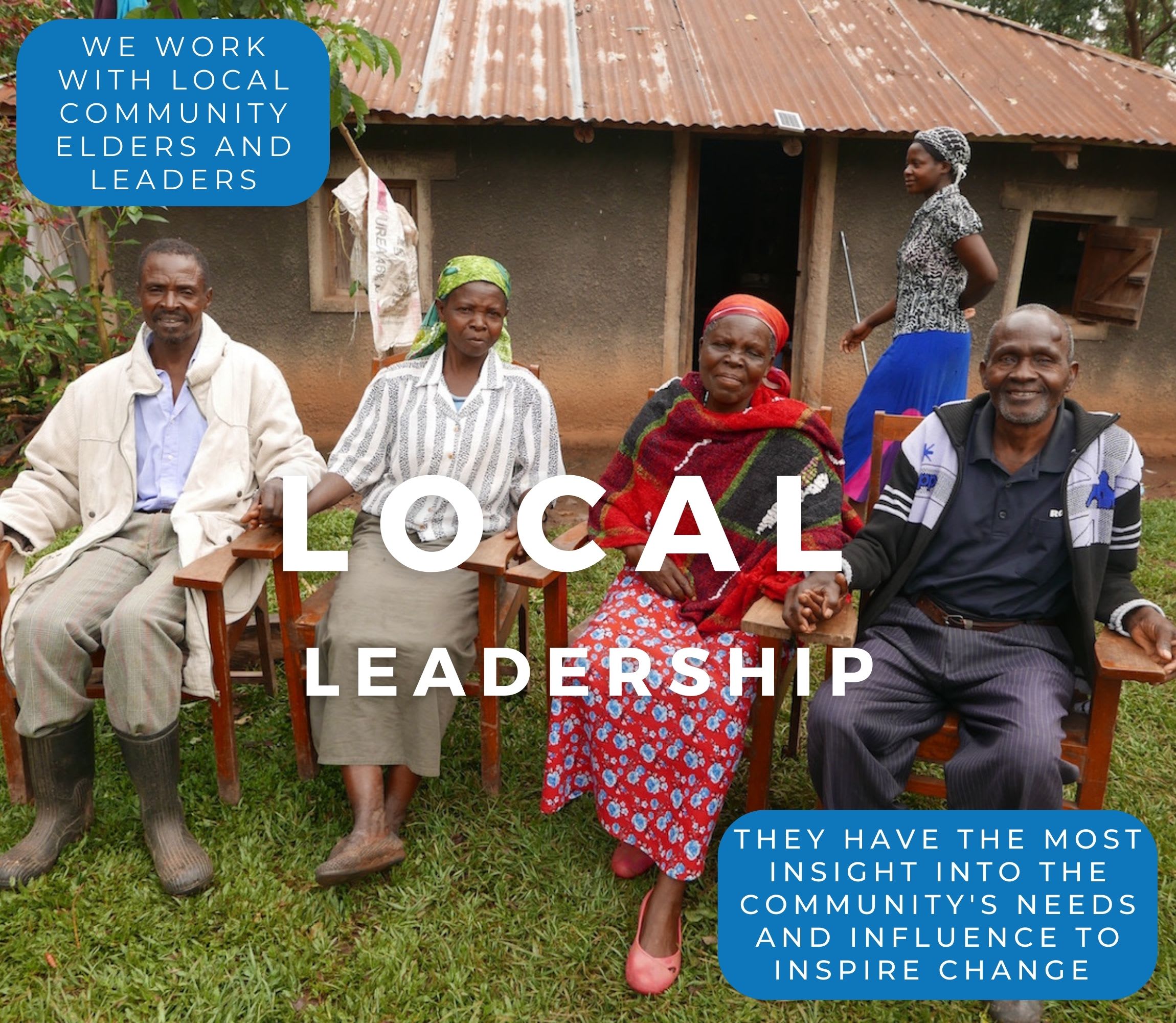
  • Community leadership, governance, & election of a water committee
  • Operation and maintenance of the water point
Project Updates


January, 2025: Mabalama Community Well Rehabilitation Complete!

We are excited to share that your donation provided a safe, reliable well at Mabalama Community. As a result, community members no longer rely on unsafe water to meet their daily needs. We also conducted hygiene and sanitation training, which focused on healthy practices such as handwashing and using latrines.

"As a trader, I am happy today because I have access to safe drinking water. Our water well in this village has been renewed. At least this will help me to go on trade normally, and now I will do my domestic activities like cooking food quickly for my family, bathe, laundry, fetching drinking, etc. I will not be walking long distances anymore to collect water from the swamp. Access to safe water helps me greatly to work toward my future hopes and dreams," shared 26-year-old trader Ramatu Conteh.

Ramatu Conteh, happy for clean water.

"Now I have access to reliable water in my village, and this will improve things for me. I will go collect water easily without delay. I will no longer be walking long distances to fetch water from the swamp. I will fetch enough water home for my parents, especially for my mother to cook food for us. Now, I have time for my studies, and I will go to school quicker than before," said 13-year-old Hassan.

Hassan collecting water.

After construction was complete, we held a dedication ceremony to officially give responsibility for the well to the community members. Several local dignitaries attended the ceremony, including representatives from the Ministry of Water Resources and the Port Loko District Council. Each official gave a short speech thanking everyone who contributed to the rehabilitation of the water project and encouraging everyone to take good care of it. Then, Ramatu and Hassan made statements on their community's behalf. The ceremony concluded with celebration, singing, and dancing.

Clean Water Restored

The community provided space for the team to store their belongings and meals for the duration of their stay. The following day, the work began!

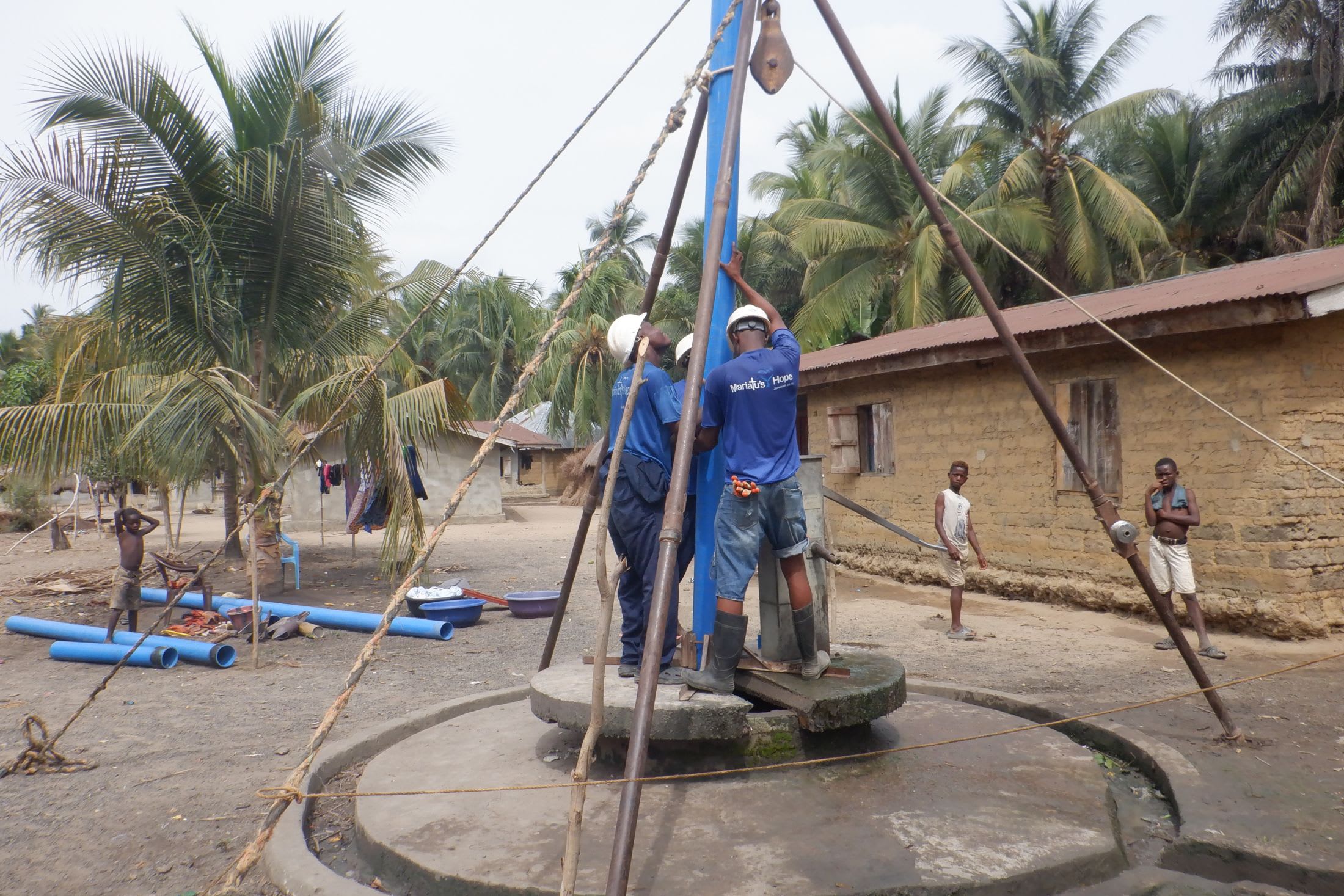
First, we raised the tripod, the structure we use to hold and maneuver each drilling tool. Next, we measured the protected dug well's original depth and socketed the pipes to install a casing.

Finally, we started to drill! We reached a final depth of 10.6 meters with water at 5 meters. The team installed the cylinder as far below the water table as possible so that the community has reliable access throughout the year.

Chlorination of the new well.

With drilling complete, we installed screening and a filter pack to keep out debris when the water is pumped.

Next, we bailed the well and flushed it, clearing any debris generated by the drilling process. Lastly, we tested the water flow to ensure the well would provide clean water with minimal effort at the pump.

As the project neared completion, we built a new cement platform, walls, and drainage system around the well to seal it off from surface-level contaminants. The drainage system helps redirect spilled water to help avoid standing water at the well, which is unhygienic and a breeding ground for disease-carrying mosquitoes.

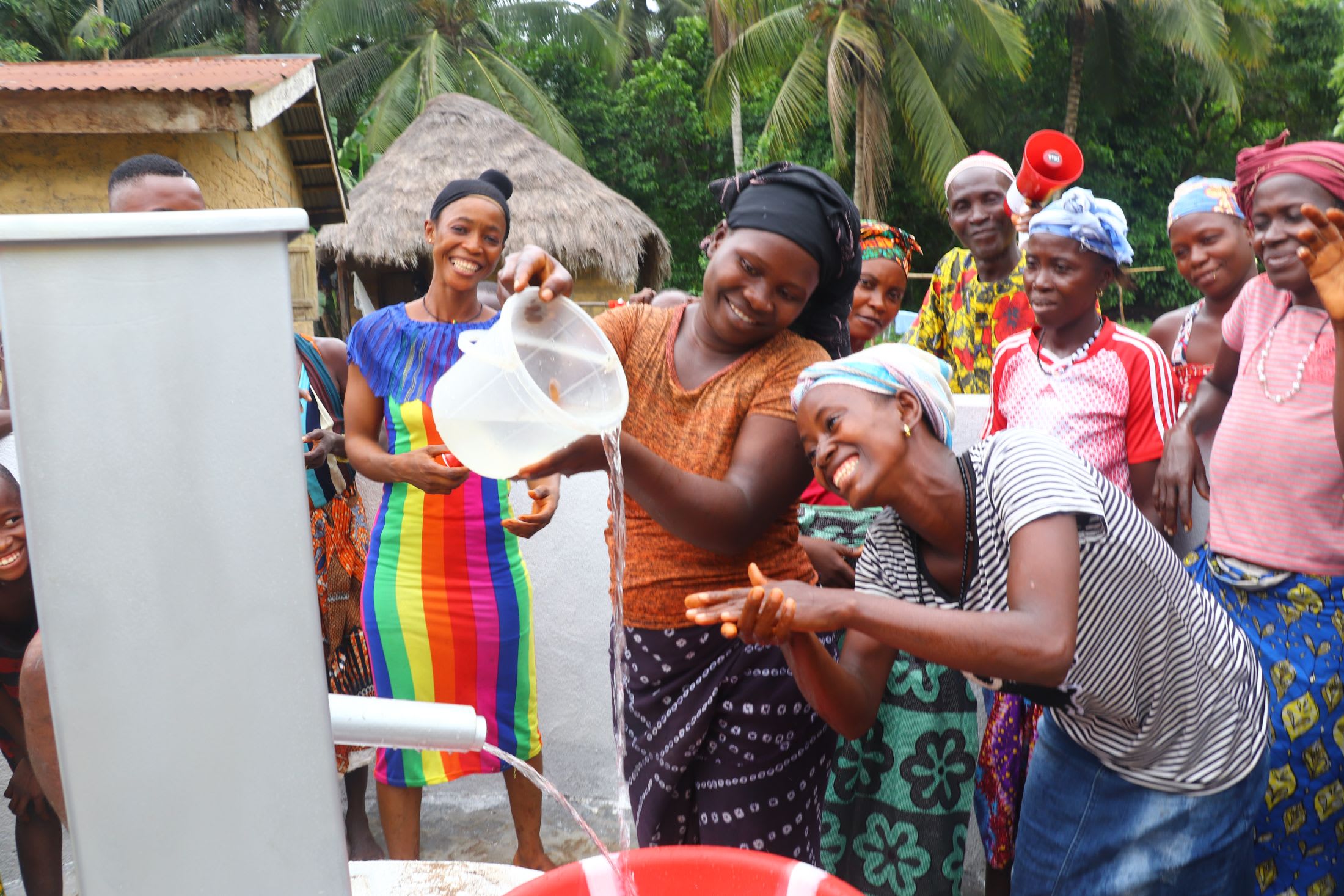
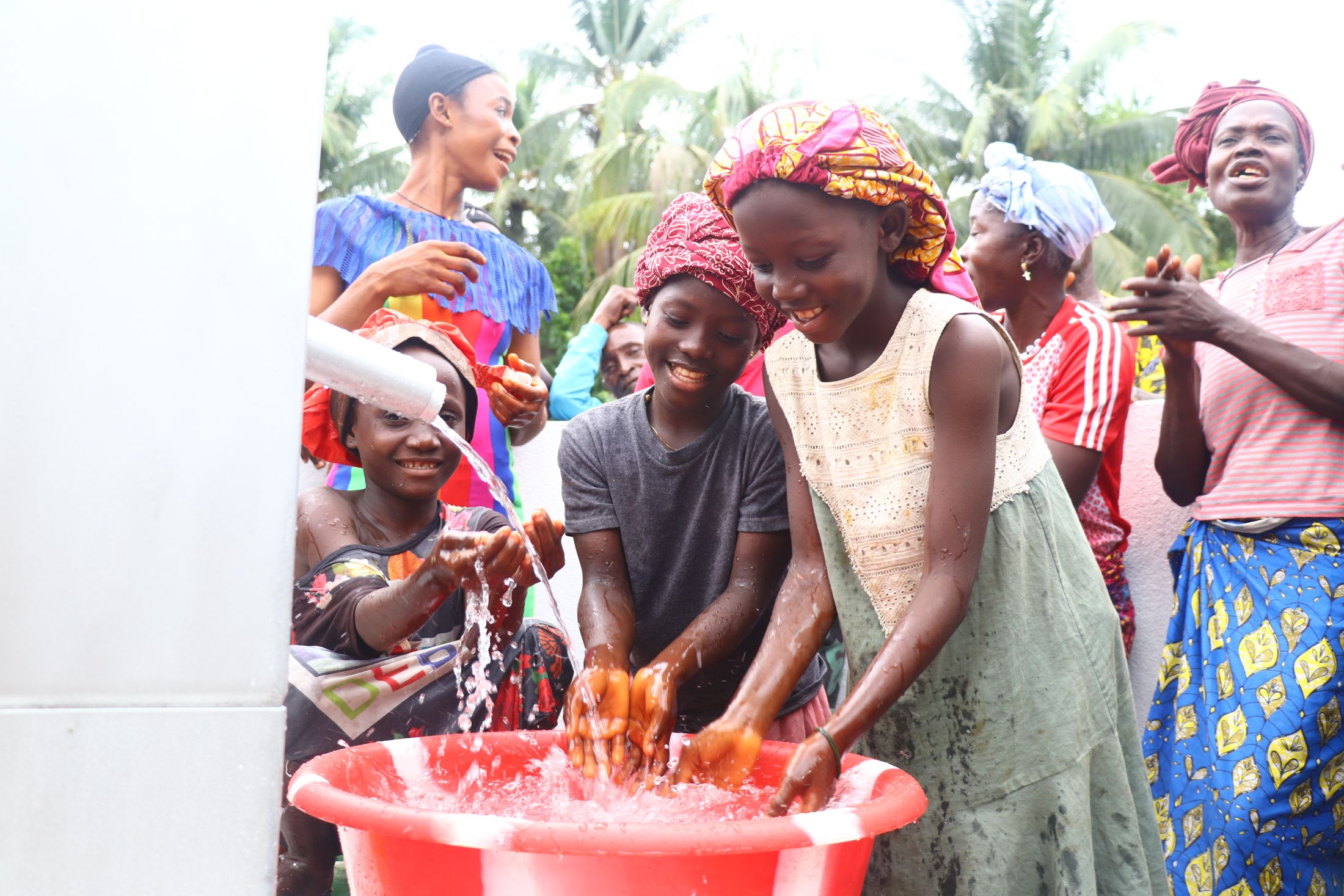
Community members celebrating.

At last, we installed the pump and conducted a water quality test. The results showed that this was clean water fit for drinking!

Community Education

Before conducting any hygiene training, we collaborated with the local water user committee to understand the community’s challenges and lack of sanitation facilities. We identified households without handwashing stations or ones that may need to repair their latrines. With this information, community members worked together to improve hygiene and sanitation at home before the training.

We also invited a nurse from the local clinic to help explain some topics and spread awareness about Sierra Leone's free vaccinations for children under five. The nurse was instrumental in reinforcing each lesson.

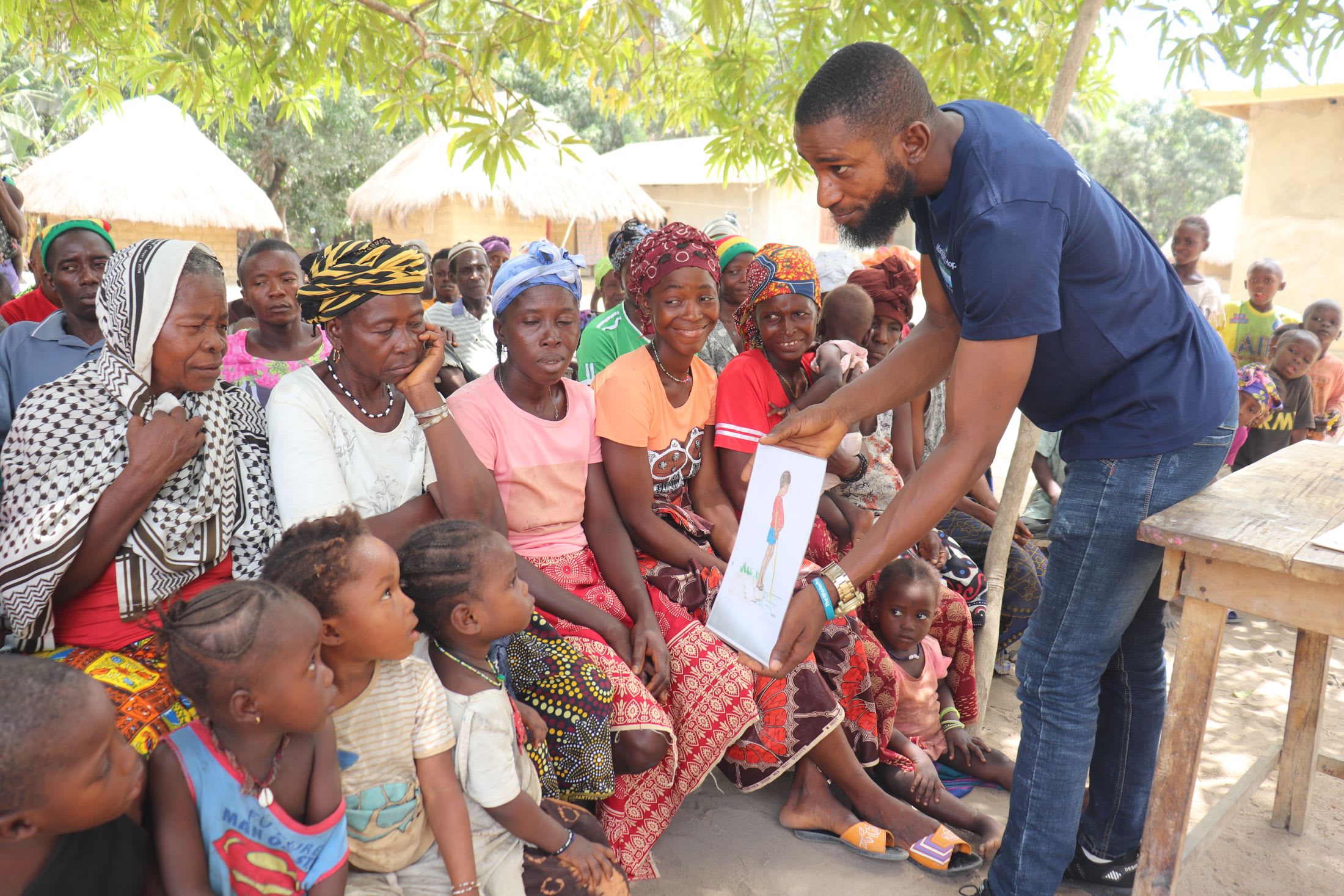
After this preparatory period, we scheduled a time when members from each household using the water point could attend a three-day hygiene and sanitation training.

We taught about proper handwashing, personal and menstrual hygiene, and healthy habits such as using latrines and maintaining a balanced diet. We discussed how disease transmission and water hygiene are crucial to community health. We emphasized the importance of maintaining and caring for the well pump and the cost recovery system.

"This was my first time receiving hygiene training in my village, also the community people. Most of the lessons were introduced to me I was doing in the wrong way or practice. I thought that it was the right practice, but it [was] very bad hygiene I was practicing. These new ideas I learned I will make sure I put it to practice together with my family. Even some of my neighbors, I will make them practice, too. This will help me and my community people to always practice good hygiene," shared Ramatu, quoted earlier.

Thank you for making all of this possible!


November, 2024: Exciting Progress in Mabalama Community!

We’re thrilled to share that, thanks to your generous support, significant change is coming for the entire Mabalama Community. Construction has begun on the well rehabilitation project, bringing them one step closer to having clean, reliable water.

But that's not all—during construction, we’re also providing vital health training. These sessions equip the community with essential hygiene practices, ensuring that the benefits of clean water extend to lasting health improvements.

We’re so grateful for your role in making this possible. Stay tuned for more updates—soon, we’ll be celebrating the arrival of safe water in Mabalama Community!


Project Photos


Contributors

Project Sponsor - The Larry Franklin Living Trust
1 individual donor(s)