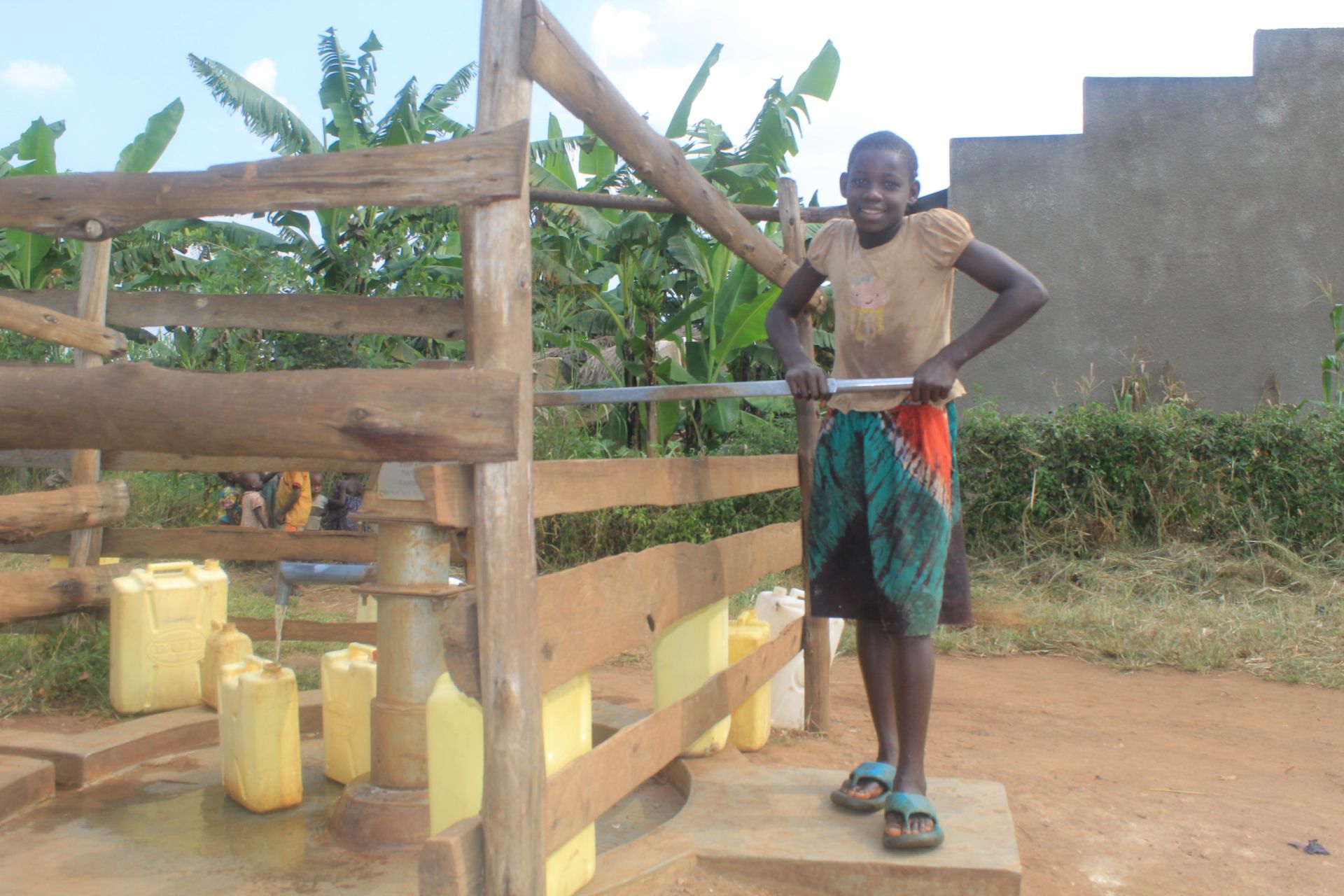

Teopista Feels Relieved by Clean Water Access!

April, 2026

Last year, your gift unlocked the potential for a brighter future for Teopista. Since then, she and the Kisalizi Community of 350 residents have had clean, reliable water. Your contribution has made a significant impact. Thank you for making a difference!

"I feel relieved and happy because the water point is now close to my home. It is not congested, so I can collect water quickly and easily. Unlike the previous source, the water is readily available and not restricted, which has made my daily life much more convenient and stress-free," shared Teopista.

Before the Well Installation

Like many girls in Uganda, 11-year-old Teopista is responsible for collecting water to meet her daily water needs. Before last year’s water intervention, this task stole her time and negatively affected her.

Drinking the water caused severe consequences. Many in the community suffered from waterborne diseases that created health problems, affecting their daily lives. Limited accessibility also meant people wasted time collecting sufficient water to meet their needs. The difficult journey to collect water sapped their physical and emotional energy, creating roadblocks. For Teopista, in particular, collecting water left her exhausted emotionally and physically.

"Accessing water was very difficult because the water point was far from my home. Long lines at the water point often made it impossible to collect water quickly. As a result, I frequently returned home late in the evening, which made daily routines exhausting and time-consuming."

Since the Well Installation

Your generous gift last year was much more than a simple donation; it was a powerful statement about your commitment to this community and Teopista’s future. By supporting the water solution, you made clean water an everyday reality, fostering hope for a brighter future.

Reliable and clean water lays the groundwork for improved health, education, and economic possibilities, allowing people to thrive. We frequently hear from those we interview that "water is life!"

"I am excelling in my studies because I no longer spend long hours fetching water. With water readily available, I can focus more on my education and complete my schoolwork on time, which has greatly improved my concentration on academics," Teopista said.

Teopista is thriving in school and at home. Her family's hygiene has improved thanks to access to clean, reliable water.

"The utensils at home were often dirty due to limited access to water. Since this water point was built, hygiene in my home has greatly improved. We have also adopted proper washing facilities, which have helped maintain cleanliness. Overall, having reliable water has made it easier to practice good hygiene daily," she said.

The Future is Looking Bright!

A year ago, you made a difference for Teopista and her community. This is just the first chapter of their story as access to clean water continues to improve their lives!

At The Water Project, we value sustainability and want to ensure that people continue to thrive. We commit to monitoring this project to ensure the water is always flowing and safe to consume. We inspect system hardware, monitor water availability, conduct sanitary inspections, and collect water-quality samples to identify risks. We work with our on-the-ground team to resolve them.

You gave Teopista a crucial tool for achieving her dreams: access to clean water. Together, we can excitedly expect that with this precious resource, her enthusiasm and courage will help Teopista fulfill her dreams.

She dreams of helping her family live healthier lives. She said, "I want to start a kitchen garden to grow my own vegetables and improve my overall health. Having a garden at home will provide fresh and nutritious food for my family. This will help me maintain a healthier lifestyle and ensure better nutrition every day."


Navigating through intense dry spells, performing preventative maintenance, conducting quality repairs when needed and continuing to assist community leaders to manage water points are all normal parts of keeping projects sustainable. The Water Promise community supports ongoing sustainability programs that help Kisalizi Community maintain access to safe, reliable water.

We’d love for you to join this world-changing group committed to sustainability.

The most impactful way to continue your support of Kisalizi Community – and hundreds of other places just like this – is by joining our community of monthly givers.

Your monthly giving will help provide clean water, every month... keeping The Water Promise.

Project Status


Project Type:  Borehole Well and Hand Pump

Regional Program: Western Uganda WaSH Program

Impact: 350 Served

Project Phase:  In Service - Mar 2025

Functionality Status:  Functional

Last Checkup: 03/17/2026

Project Features


Click icons to learn about each feature.


Community Profile

The 350 people of the Kisalizi Community struggle to access sufficient water. They must travel a long distance, often to find the shallow well is broken down. Many are left scrounging for water from a nearby scoop hole, seen below, risking their health every time they consume the water they collect.

"My primary water source is a scoop hole near my home, but the water is very dirty and unsafe; I assume that this source being in a valley, rainwater carries feces [to] the water point. There are people who abandoned this scoop hole because there is someone who defecated in the water source," shared 26-year-old Christopher Abigaba, pictured below.

"I fetch drinking water from a shallow well (seen below) as an alternative source, but there is a long distance, hence consuming a lot of time. Sometimes I fail to access water from this shallow because it frequently breaks down since it is stressed as it serves people from Kisalizi center," he continued.

Children are also familiar with the hardships of the water crisis in Kisaliizi.

10-year-old Mariam A., seen below, shared, "I have challenges because the water source where I fetch water is open, and [animals] defecate in the water, making it unsafe. I always fall sick because of using this water, and it's always diarrhea and stomach upsets; my parents always spend a lot of money treating me and my other siblings."
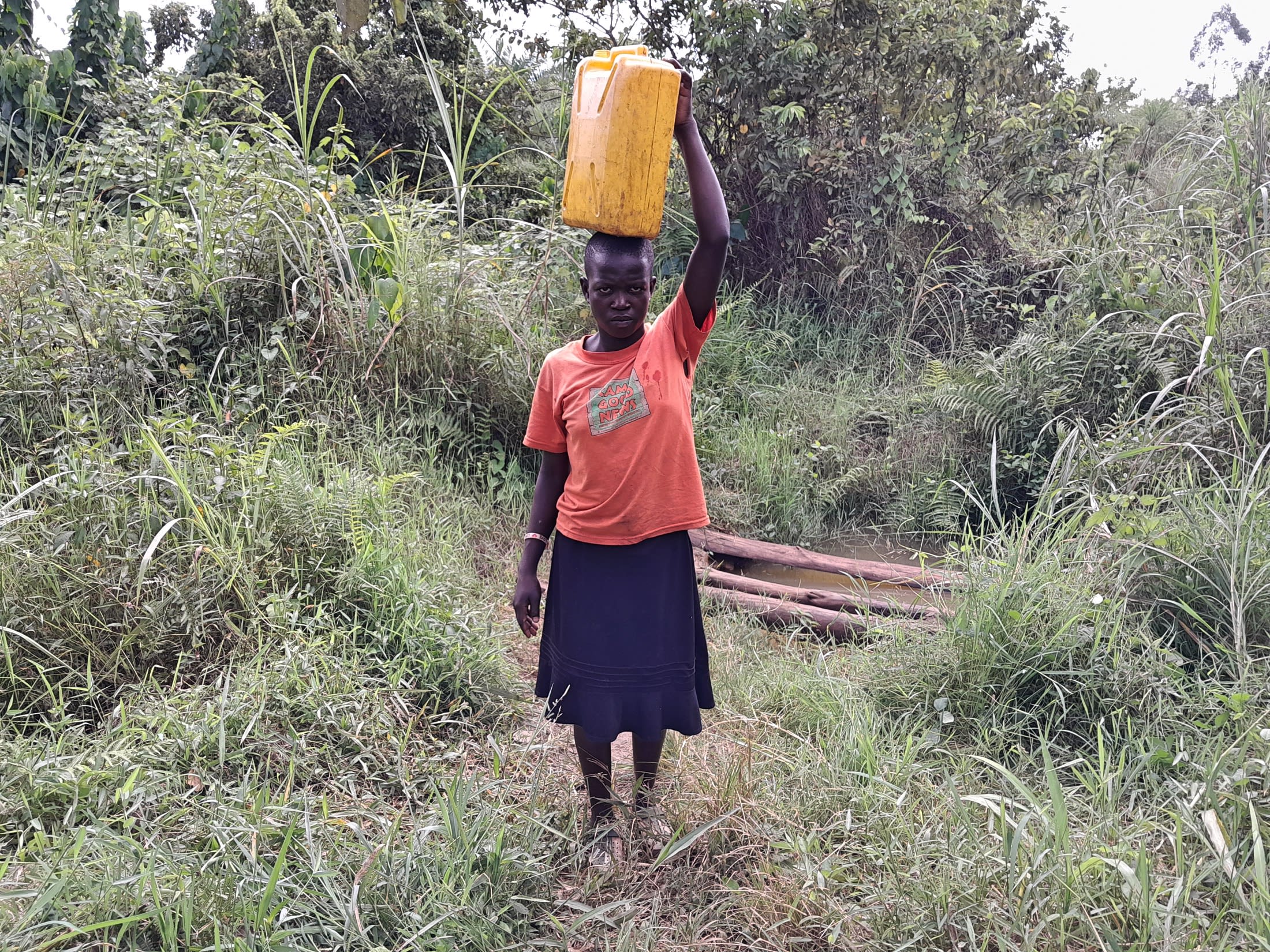
"There is an alternative source; it's a shallow well, but I cannot move there because it is far; it requires someone riding a bicycle, which I can't ride, hence failing to secure safe drinking water. I also fear moving to the alternative source because it requires me to cross the tarmac road, which is always busy," she continued.

As Mariam shared, having a bicycle to get to the distant well is a luxury few have. Even with the convenience of riding a bike, hauling water for up to 2 hours one way for some community members is draining.

Installing the new well will enable people like Christopher and Mariam to collect water easily that is safe to consume. This will allow them to invest time into their livelihoods and educations, creating the opportunity to build a better future for their community as a whole.

The Proposed Solution, Determined Together...

At The Water Project, everyone has a part in conversations and solutions. We operate in transparency, believing it benefits everyone. We expect reliability from one another as well as our water solutions. Everyone involved makes this possible through hard work and dedication.

In a joint discovery process, community members determine their most advantageous water solution alongside our technical experts. Read more specifics about this solution on the What We're Building tab of this project page. Then, community members lend their support by collecting needed construction materials (sometimes for months ahead of time!), providing labor alongside our artisans, sheltering and feeding the builders, and supplying additional resources.

Water Access for Everyone

This water project is one piece in a large puzzle. In Kenya, Sierra Leone, and Uganda, we're working toward complete coverage of reliable, maintained water sources that guarantee public access now and in the future within a 30-minute round trip for each community, household, school, and health center. One day, we hope to report that this has been achieved!

Training on Health, Hygiene & More

With the community's input, we've identified topics where training will increase positive health outcomes at personal, household, and community levels. We'll coordinate with them to find the best training date. Some examples of what we train communities on are:

  • Improved hygiene, health, and sanitation habits
  • Safe water handling, storage & treatment
  • Disease prevention and proper handwashing
  • Income-generation
  • Community leadership, governance, & election of a water committee
  • Operation and maintenance of the water point

A Community-Wide Approach

In Uganda, we require that the community pledges to stop any open defecation practices before we install the water project — meaning that every household must construct and use a latrine. This will help prevent the spread of diseases and start them on a new path toward better hygiene and sanitation alongside their new water source.

To help with this, we assign a Community Development Officer (CDO) to each community, who encourages each household to install a handwashing facility, animal-keeping structures, a garbage pit, and a drying rack for dishes. Each of these homestead components prevent commonly spread diseases in their own way.

We implement something called a Community-Led Total Sanitation (CLTS) approach, which involves setting up multiple meetings during which community members assess their own hygiene and sanitation practices in hopes of creating long-term change. During these sessions, leaders naturally emerge and push the community to recognize current unhealthy behaviors that affect the entire community.

Project Updates


March, 2025: Kisalizi Community Well Complete!

We are excited to share that your donation contributed to a safe, reliable well at Kisalizi Community, Uganda. The borehole well is now providing community members with safe water! Additionally, we hosted a training where community members worked together to make a development action plan. As a result, families are working to build new sanitation and hygiene facilities, and habits that will enable a healthier life.

"[I'm] planning to have a poultry farm, and that will help get income for [my] household. I use the water for bathing my child, drinking, and washing clothes. This makes [me] feel good," shared Janifer Chandiru.

Janifer Chandiru.

Well Construction

We worked with the community to determine the best possible site to drill the new well. We confirmed the site's eligibility by conducting a hydrogeological survey, which proves that there is sufficient groundwater to support the well before drilling begins.

Several households volunteered to host our team of drilling technicians, giving them a place to sleep and food to eat throughout their work. Many community members came to the work site each day to watch the drilling and see the well come to life.

When it came time to build the cement well pad, community members collected fine sand and water to mix the cement. After the cement platform dried, we installed a stainless steel Consallen pump, which is now flowing with clean, safe water!

Grace.

"Reliable water will help in washing, bathing, drinking, and cleaning utensils and [my] personal hygiene. I am not a student; however, reliable water will have [an] impact on my sibling's learning at school because they'll come back from school and fetch water within the shortest time and then use the rest of the time to do the assignment given to them by their teachers," shared 18-year-old Grace.

Community Education

The self-help group associated with the project was set up and began training in advance of selecting this project.

The first training session focused on financial planning. We mobilized the community through a series of meetings that sensitized them on the importance and purpose of saving. This included meetings dedicated to creating a community profile, where participants map the physical environment and stakeholders in their own community. We also ran a participatory vulnerability capacity assessment exercise. In this session, community members mapped out their shared risks and opportunities, including the water point breaking down.

Participants learning. A representative photo from a similar Self-Help Group training in Uganda.

We worked with the community to establish a Village Savings and Loan Association (VSLA) and a water user committee. The VSLA members will all contribute to two different savings accounts: one which can be used to give each other small loans throughout the year, and another that will fund maintenance and repairs at the new well. The group also agreed on a social fund that will provide grants to fellow group members and help them with weddings, funeral expenses or catastrophes such as fire damage. Our teams will provide follow-up training and continuous coaching to support the management of the VSLA.

Participant engagement is key. A representative photo from a similar Self-Help Group training in Uganda.

We conducted training on hygiene and sanitation at the personal, household, community, and environmental levels. In collaboration with the community facilitator and local leaders, we trained households on critical hygiene and sanitation facilities. These include latrines, dish racks, refuse pits, handwashing facilities, and bathing shelters. Our teams monitor these facilities’ construction while helping the community learn how to best use and care for them.

Finally, we led an additional training for local artisans to teach them how to fabricate and sell locally used and accepted sanitation products that allow for more hygienic and accessible latrines.

We will continue to support the community in their sanitation and hygiene progress through monitoring visits. In addition, we will offer follow-up assistance and refresher training to ensure community members follow through in building their new facilities and developing new habits.

Thank you for making all of this possible!


January, 2025: Exciting Progress in Kisalizi Community!

We’re thrilled to share that, thanks to your generous support, significant change is coming for 26-year-old Christopher and the entire Kisalizi Community. Construction has begun on the new well project, bringing them one step closer to having clean, reliable water.

But that's not all—during construction, we’re also providing vital health training. These sessions equip the community with essential hygiene practices, ensuring that the benefits of clean water extend to lasting health improvements.

We’re so grateful for your role in making this possible. Stay tuned for more updates—soon; we’ll be celebrating the arrival of safe water in the Kisalizi Community!


Project Photos


Contributors

5 individual donor(s)