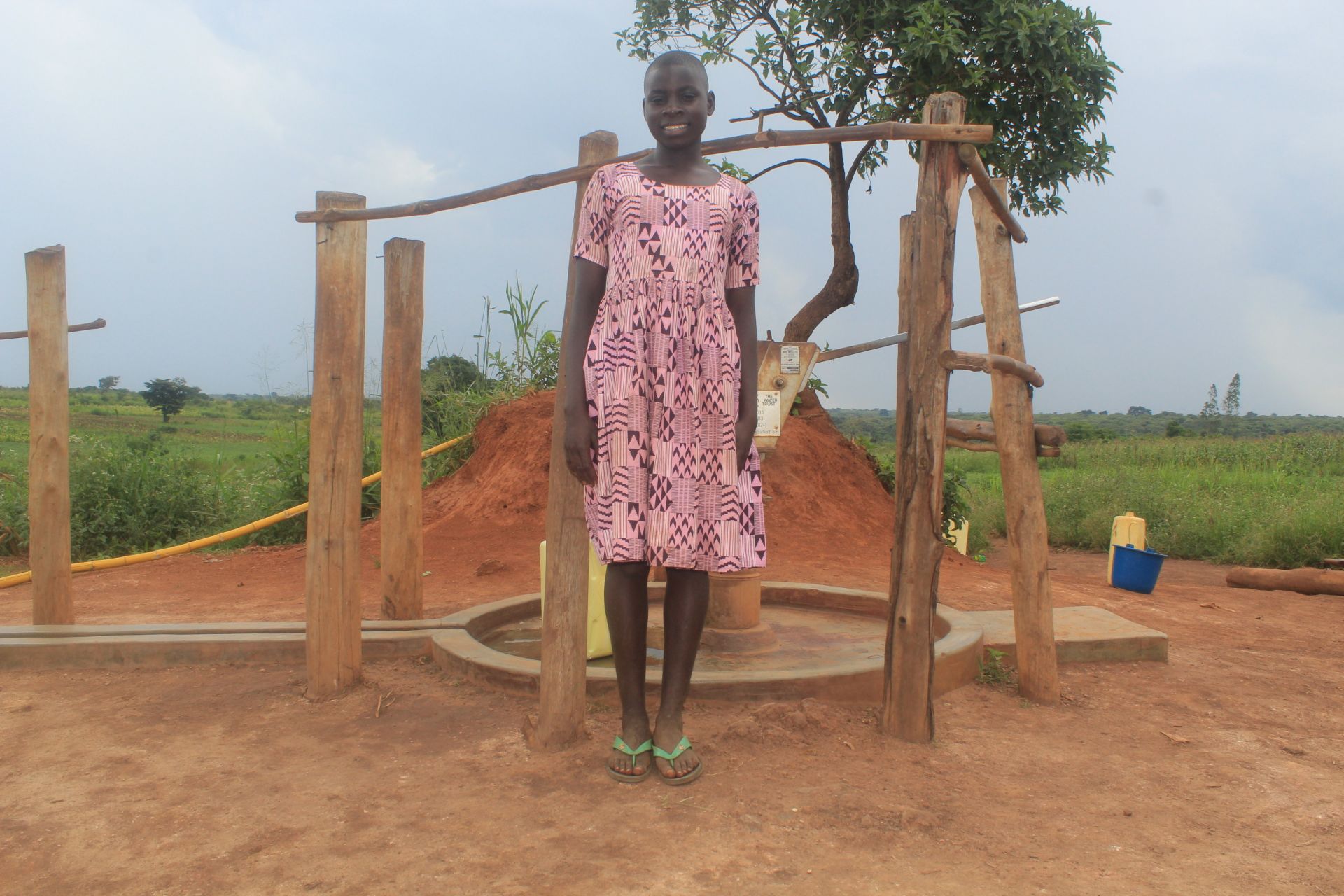

Less Worry and a Greater Sense of Safety

April, 2026

Last year, your gift unlocked the potential for a brighter future for Easter. Since then, she and the Karungu Community of 250 residents have had clean, reliable water. Your contribution has made a significant impact. Thank you for making a difference!

"I don't have any worry, and I feel good because the water point is near my home, and it's safe to drink without boiling. The water is always available and safe for drinking and cooking, and the water point is conveniently located near my home," said Easter.

Before the Well Installation

Like many girls in Uganda, 15-year-old Easter is responsible for collecting water to meet daily water needs. Before last year’s water intervention, this task stole her time and negatively affected her.

Where water was collected before the well.

Drinking the water caused severe consequences. Many in the community suffered from waterborne diseases that created health problems, affecting their daily lives. Limited accessibility also meant people wasted time collecting sufficient water to meet their needs. The difficult journey to collect water sapped their physical and emotional energy, creating roadblocks. For Easter, it lessened her opportunity to regularly attend school and make academic progress.

"I used to collect water from a contaminated source, which often made me sick, and the route to the water point was bushy and hilly, adding to my worries. I constantly feared for my safety while walking there. The long and difficult journey was exhausting and time-consuming," said Easter.

Since the Well Installation

Your generous gift last year was much more than a simple donation; it was a powerful statement about your commitment to this community and Easter’s future. By supporting the water solution, you made clean water an everyday reality, fostering hope for a brighter future.

Easter pumps water at the well.

Reliable and clean water lays the groundwork for improved health, education, and economic possibilities, allowing people to thrive. We frequently hear from those we interview that "water is life!"

"I no longer fall sick because the water I use is safe for drinking, and having access to clean water has significantly improved my overall health. As a result, I feel stronger, healthier, and more energetic," reported Easter.

The Future is Looking Bright!

A year ago, you made a difference for Easter and her community. This is just the first chapter of their story as access to clean water continues to improve their lives!

At The Water Project, we value sustainability and want to ensure that people continue to thrive. We commit to monitoring this project to ensure the water is always flowing and safe to consume. We inspect system hardware, monitor water availability, conduct sanitary inspections, and collect water-quality samples to identify risks. We work with our on-the-ground team to resolve them.

You gave Easter a crucial tool for achieving her dreams: access to clean water. Together, we can excitedly expect that with this precious resource, her enthusiasm and courage will help Easter fulfill her dreams.

"I now spend my time playing, reading, and enjoying leisure activities," declared Easter.

"My academic performance has improved because I no longer spend much time fetching water since the water point is conveniently located near my home, which saves me a lot of time. I can now use the extra time to focus on my studies and complete schoolwork more effectively," she continued.

We asked Easter if she has any dreams for the future. She said, "Becoming an academic giant since I have enough time to read my books, and the time spent collecting water has been reduced." Now that she is set up for success with accessible water, we have no doubt she will do her best to achieve her dream.


Navigating through intense dry spells, performing preventative maintenance, conducting quality repairs when needed and continuing to assist community leaders to manage water points are all normal parts of keeping projects sustainable. The Water Promise community supports ongoing sustainability programs that help Karungu Community 3 maintain access to safe, reliable water.

We’d love for you to join this world-changing group committed to sustainability.

The most impactful way to continue your support of Karungu Community 3 – and hundreds of other places just like this – is by joining our community of monthly givers.

Your monthly giving will help provide clean water, every month... keeping The Water Promise.

Project Status


Project Type:  Borehole Well and Hand Pump

Regional Program: Western Uganda WaSH Program

Impact: 250 Served

Project Phase:  In Service - Feb 2025

Functionality Status:  Functional

Last Checkup: 03/13/2026

Project Features


Click icons to learn about each feature.


Community Profile

The 250 people who live in Karungu Community do not have a safe, accessible water source to meet their daily needs.

"The access road to the well is in poor condition, making it unsafe. Additionally, the surrounding area is overgrown with bushes, which serve as hiding spots for snakes. These snakes occasionally venture near the waterpoint, causing fear and deterring people from accessing the water," said Field Officer Bena Nakabiri.
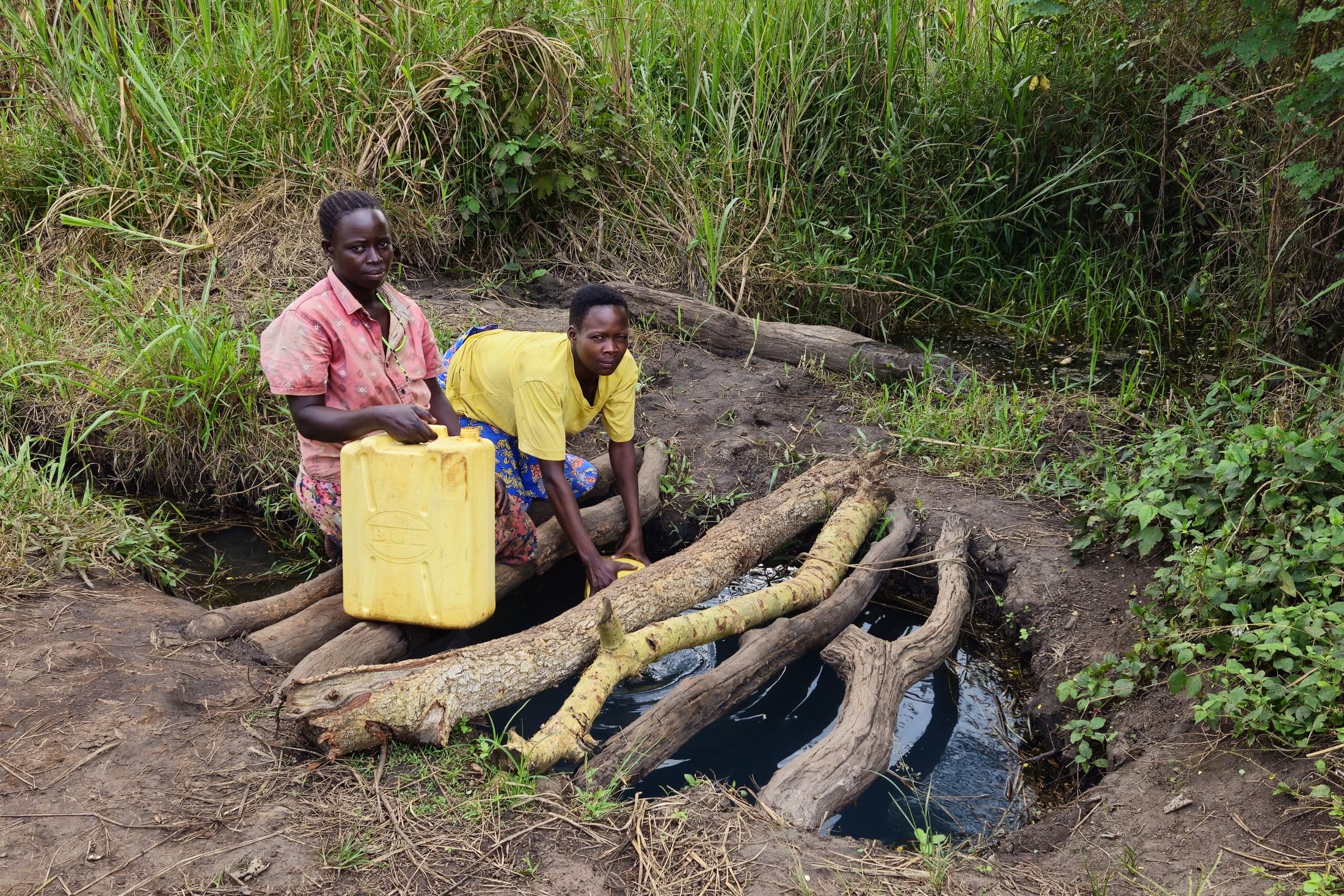
The small pool of water the community uses for daily needs is stagnant and covered with logs. People must kneel on the logs, slide their containers between them, and submerge them into the water to fill them. Many community members must make this tiring, difficult journey several times a day to meet their water needs.

"I fetch water five times a day because I need to wash clothes every day," said 23-year-old farmer Jennifer Chandiru.

Sadly, the difficult journey is not only exhausting, but all of that effort is for water that is threatening everyone's health. Consuming the contaminated water it provides causes people to suffer from waterborne illnesses like diarrhea and typhoid regularly.

"The open waterpoint is not safe and poses a significant risk, as there have been occasions when I found snakes there. It's not safe, as it impacts both my health and that of my family," said Jennifer.

Jennifer collecting water.

"The last time my child fell sick, I took her to the clinic for treatment. I had to borrow money from a neighbor to cover the expenses because I didn't have enough funds. I received medication from the clinic and paid for it. It causes me to spend a lot on medication, which impacts my income and savings," said Jennifer.

"My child also missed school while she was ill," Jennifer concluded.
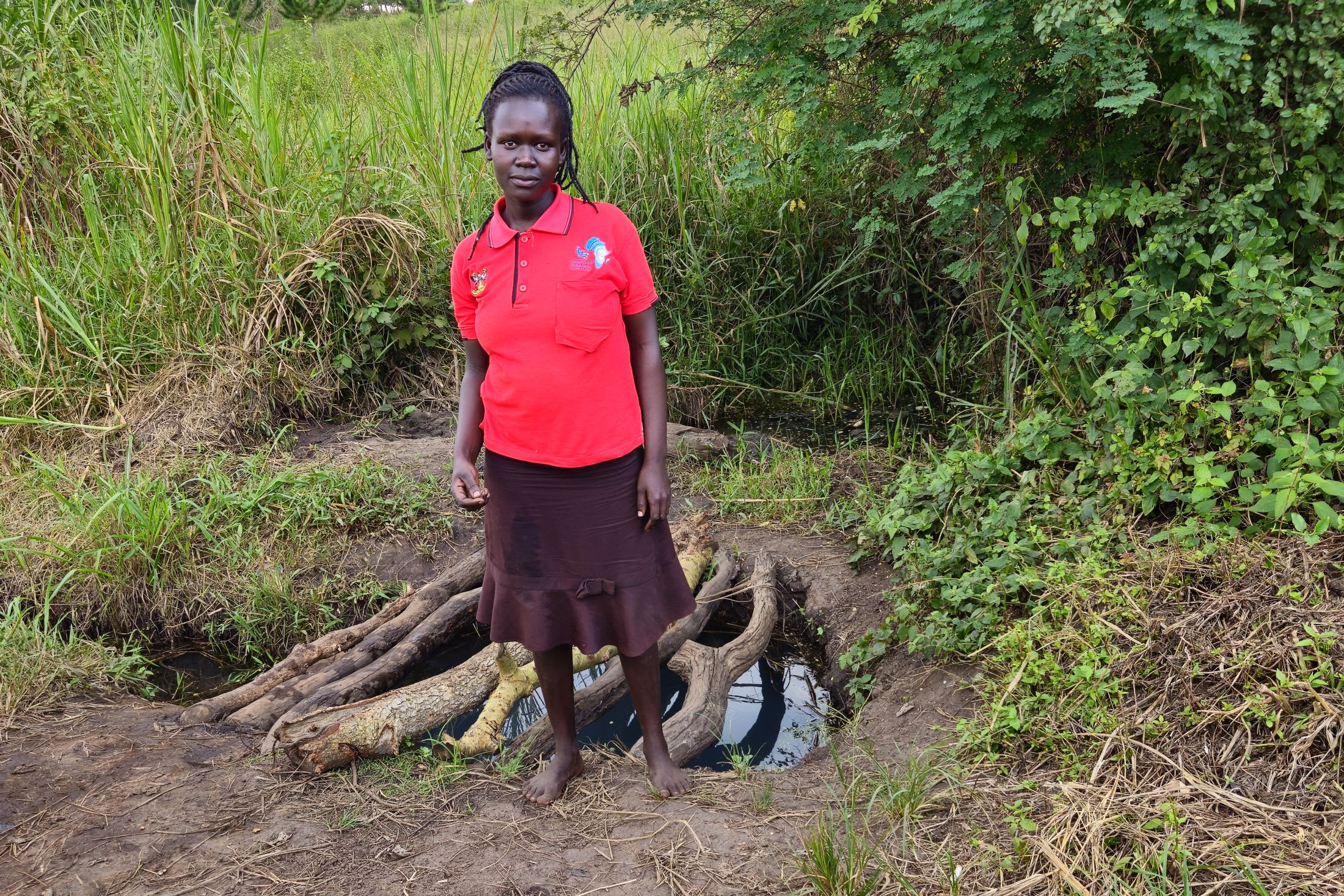
When members of a community are afflicted by recurring illnesses due to the consumption of contaminated water, it not only endangers their well-being but also undermines their prospects for the future. The significant portion of their resources expended on seeking treatment hinders any potential advancements or improvements they could otherwise achieve.

Jennifer and her community require a reliable water source to guarantee access to safe, clean water for their daily needs. By meeting these needs, community members such as Jennifer will have the opportunity to pursue their dreams and support their families, breaking the cycle and empowering them to thrive.

Steps Toward a Solution

Our technical experts worked with the local community to identify the most effective solution to their water crisis. They decided to drill a borehole well, construct a platform for the well, and attach a hand pump.

Well
Abundant water often lies just beneath our feet. Aquifers—natural underground rivers—flow through layers of sediment and rock, offering a constant supply of safe water. A borehole well is drilled deep into the earth to access this naturally filtered and protected water. We penetrate meters, sometimes even hundreds of meters, of soil, silt, rock, and more to reach the water underground. Once found, we construct a platform for the well and attach a hand pump. The community gains a safe, enclosed water source capable of providing approximately five gallons of water per minute. Learn more here!

Community Education & Ownership
Hygiene and sanitation training are integral to our water projects. Training is tailored to each community's specific needs and includes key topics such as proper water handling, improved hygiene practices, disease transmission prevention, and care of the new water point. Safe water and improved hygiene habits foster a healthier future for everyone in the community. Encouraged and supported by the guidance of our team, a water user committee representative of the community's diverse members assumes responsibility for maintaining the water point, often gathering fees to ensure its upkeep.

A Community-Wide Approach
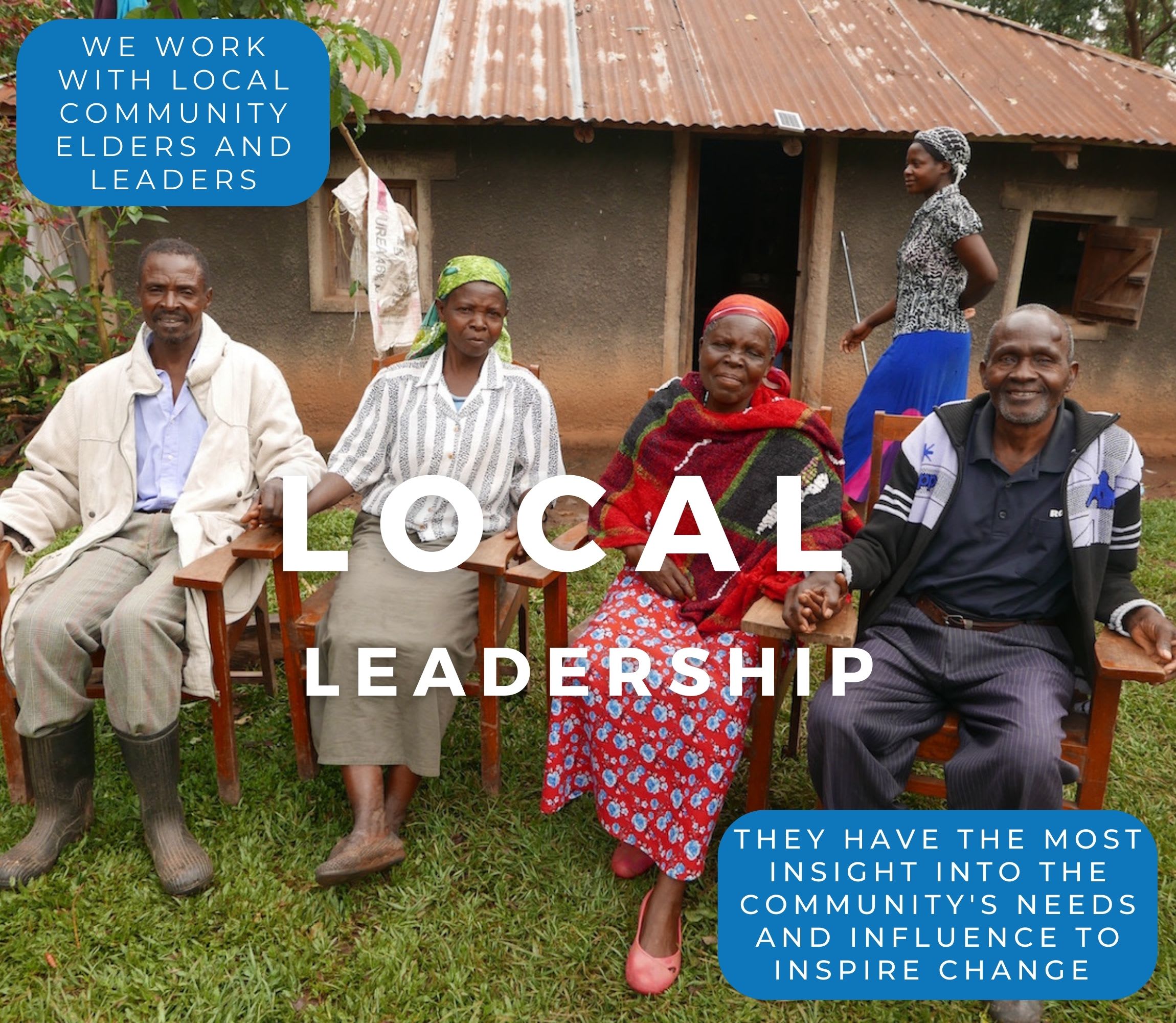
In Uganda, we use a Community-Led Total Sanitation (CLTS) approach, which involves several meetings where community members evaluate their own hygiene and sanitation practices to encourage lasting change. During these sessions, natural leaders emerge, motivating the community to recognize and change unhealthy behaviors that affect everyone.

Communities then commit to ending open defecation before we install the water project. Every household builds and uses a latrine to prevent disease and improve hygiene and sanitation alongside their new water source. To support this effort, a Community Development Officer (CDO) is assigned. The CDO encourages each household to set up handwashing stations, animal pens, garbage pits, and dish-drying racks. These additions are crucial in preventing the spread of common diseases.

Project Updates


February, 2025: Karungu Community Well Complete!

We are excited to share that your donation contributed to a safe, reliable well at Karungu Community, Uganda. The borehole well is now providing community members with safe water! Additionally, we hosted a training where community members worked together to make a development action plan. As a result, families are working to build new sanitation and hygiene facilities, and habits that will enable a healthier life.


"My baby drinks clean water and doesn't often fall sick. My other school-going children are happy because they no longer get back home late from fetching water. The waterpoint is so close and they can fetch and come back home early and do their homework. Even in the morning, they reach school early because of [the] long distances in search of water," said farmer Beatrice Apio.

Ms. Beatrice Apio.

"Previously, we were sharing water with animals, and I would frequently get typhoid and spend money in the hospital. Now the expenditure has [been] reduced, and I can save that money."

When we asked Beatrice what problems she hoped this new waterpoint would solve for her, she said, "No more getting of elephants and other wild animals which used to scare us as we went to collect water."

Well Construction

We worked with the community to determine the best possible site to drill the new well. We confirmed the site's eligibility by conducting a hydrogeological survey, which proves that there is sufficient groundwater to support the well before drilling begins.

Several households volunteered to host our team of drilling technicians, giving them a place to sleep and food to eat throughout their work. Many community members came to the work site each day to watch the drilling and see the well come to life.

When it came time to build the cement well pad, community members collected fine sand and water to mix the cement. After the cement platform dried, we installed a stainless steel Consallen pump, which is now flowing with clean, safe water!

The completed well.

"Before, I used to drink dirty water and would get diseases like diarrhea, [and] typhoid, but now, with this clean water, I don't fall sick. Before this borehole, I was moving long distances to fetch water in the evening, and I was afraid of animals from the park and some boys who would disturb me on my way," said 15-year-old Juliet.

When we asked Juliet how reliable water will change her educational experience she shared, "No [more] going to school late. I also get water for washing my uniform. I can do my homework early because I don't come back from fetching water late like before."

Community Education

The self-help group associated with the project was set up and began training in advance of selecting this project.

The first training session focused on financial planning. We mobilized the community through a series of meetings that sensitized them on the importance and purpose of saving. This included meetings dedicated to creating a community profile, where participants map the physical environment and stakeholders in their own community. We also ran a participatory vulnerability capacity assessment exercise. In this session, community members mapped out their shared risks and opportunities, including the water point breaking down.

Participants learning. A representative photo from a similar Self-Help Group training in Uganda.

We worked with the community to establish a Village Savings and Loan Association (VSLA) and a water user committee. The VSLA members will all contribute to two different savings accounts: one which can be used to give each other small loans throughout the year, and another that will fund maintenance and repairs at the new well. The group also agreed on a social fund that will provide grants to fellow group members and help them with weddings, funeral expenses or catastrophes such as fire damage. Our teams will provide follow-up training and continuous coaching to support the management of the VSLA.

Participant engagement is key. A representative photo from a similar Self-Help Group training in Uganda.

We conducted training on hygiene and sanitation at the personal, household, community, and environmental levels. In collaboration with the community facilitator and local leaders, we trained households on critical hygiene and sanitation facilities. These include latrines, dish racks, refuse pits, handwashing facilities, and bathing shelters. Our teams monitor these facilities’ construction while helping the community learn how to best use and care for them.

Finally, we led an additional training for local artisans to teach them how to fabricate and sell locally used and accepted sanitation products that allow for more hygienic and accessible latrines.

We will continue to support the community in their sanitation and hygiene progress through monitoring visits. In addition, we will offer follow-up assistance and refresher training to ensure community members follow through in building their new facilities and developing new habits.

Thank you for making all of this possible!


December, 2024: Exciting Progress in Karungu Community!

We’re thrilled to share that, thanks to your generous support, significant change is coming for Jennifer and the entire Karungu Community. Construction has begun on the well project, bringing them one step closer to having clean, reliable water.

But that's not all—during construction, we’re also providing vital health training. These sessions equip the community with essential hygiene practices, ensuring that the benefits of clean water extend to lasting health improvements.

We’re so grateful for your role in making this possible. Stay tuned for more updates—soon, we’ll be celebrating the arrival of safe water in the Karungu Community!


Project Photos


Contributors

6 individual donor(s)