 Borehole Well and Hand Pump
 Rehabilitation Project









We installed a rain tank at Shivanga Primary School in 2019. It has provided water in past years, but it is no longer sufficient for the school's needs as the rainy seasons have become more erratic and unpredictable.
Even though the 540 school staff and students do their best to keep the tank full by collecting rainwater, bringing in water from home, and even paying for water deliveries, the tank inevitably runs dry. When it does, they must leave the school premises to collect water from the community spring. It is a process that steals everyone's energy and time in the classroom.
Forty-year-old teacher Zipporah Wanjala shared her thoughts.

Ms. Wanjala presents a lesson.
"As a teacher, I worry about safety because students can easily get hurt when collecting water, especially when it gets busy or crowded. I am also concerned that unsafe water can make learners sick, which affects their health and school attendance.
Ms. Wanjala said it is common for students to spend an average of 45 minutes waiting their turn to collect water, and shockingly, sometimes they must make the exhausting trip up to five times a day. It is time that is critical to their learning - time that should be spent in the classroom.
"The longest time our students have had to wait for water is over an hour. This usually happens during the dry season when the only available source, which is a spring, cannot meet the demand, leading to long queues and crowding since many people depend on the same water point," Ms. Wanjala reported.
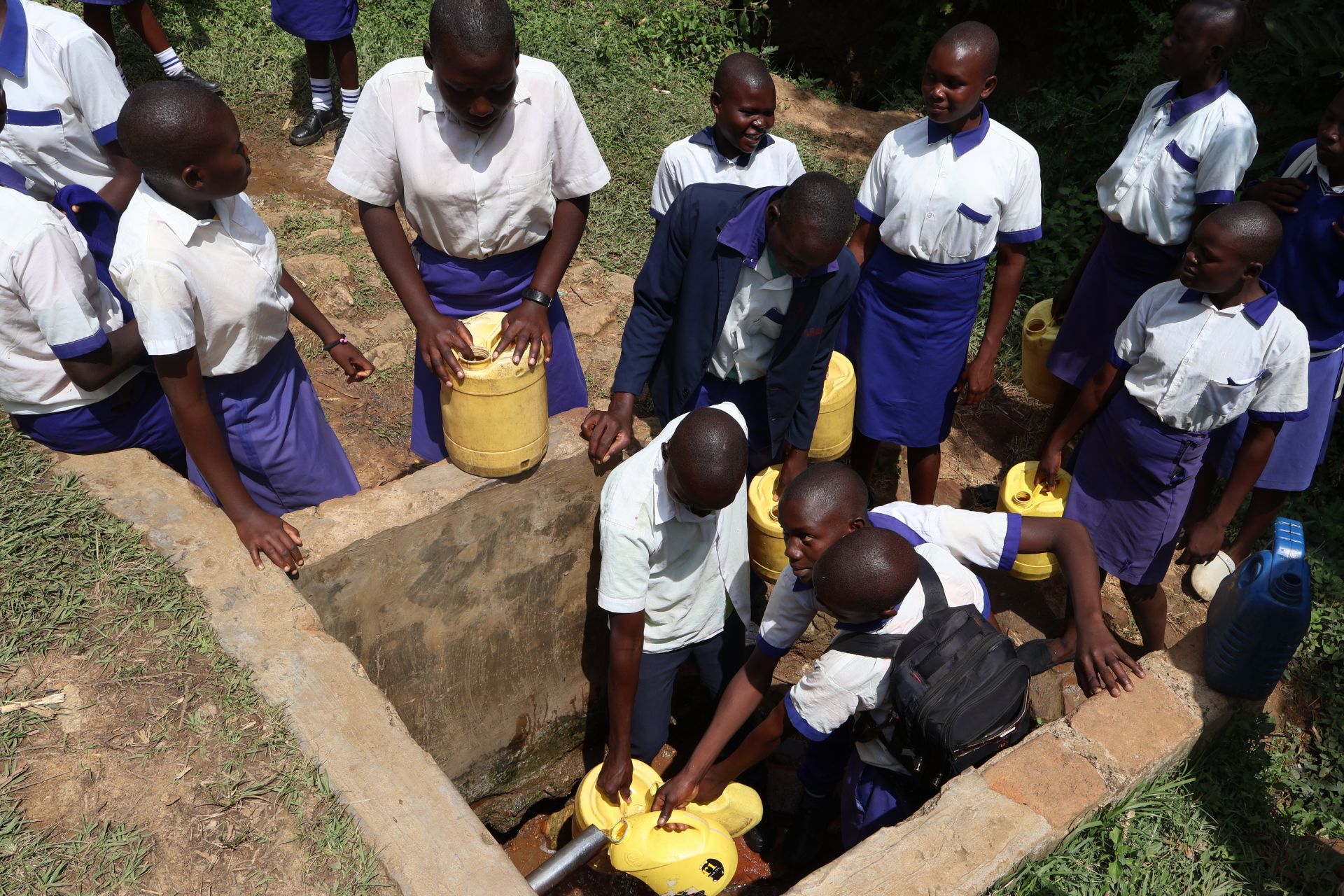
Students collect water at the spring.
"At times, there have been cases of harassment while waiting for water, mostly when the place is crowded. It usually happens when people try to skip the line or push ahead due to long waiting times. It can make me or the students feel uncomfortable and stressed, especially after already waiting for a long time, knowing that the students and I have lessons to attend to," she lamented.
Ms. Wanjala understands the importance of clean, accessible water for everyone.
"For me, water is very important because it supports the health and well-being of my students and myself. It is needed for drinking, hygiene, and keeping the school environment clean. Without reliable water, it becomes difficult to maintain good learning conditions, so having it means a healthier and more productive school day," she said.
"Access to safe water would likely improve academic performance because students would spend less time fetching water and more time learning and revising. It would also reduce illness caused by unsafe water, leading to better attendance, improved concentration in class, and overall better results," she continued.

Ms. Zipporah Wanjala.
"If I didn’t have to spend so much time fetching water, I would dedicate more time to teaching and preparing my lessons. I would also be able to give more attention to my students, support those who are struggling, and engage in other school activities that improve learning outcomes," Ms. Wanjala envisioned.
Field Officer Joel Otuya agrees that having nearby, sufficient, clean water will make an incredible impact for everyone. "The proposed water solution will provide a reliable and safe source of clean water, reducing the risk of illnesses caused by contaminated water. It will save time currently spent fetching water, allowing pupils to focus more on their studies and improving overall productivity in the school. With a consistent water supply, the school will also be able to maintain better hygiene and sanitation standards. This will support a healthier learning environment and contribute to the school’s development goals, including improved performance."
Steps Toward a Solution
Returning to a community where we previously implemented a water project is not just a matter of maintenance; it stays true to our commitment to sustainability. Our technical experts worked with the local community to identify their current needs and decided to drill a well.
Reinvestment
While the original project provided critical access to safe water, things like changing environmental conditions, population growth, and infrastructure wear have put that access at risk. Reinvesting now ensures that progress is not lost and that the school continues to thrive with reliable, clean water. We are committed to supporting lasting, reliable solutions that honor the trust placed in us by the people who depend on this essential resource every day.
Once this plan is implemented, the school will once again have access to safe drinking water in quality and quantity.
School Education & Ownership
Hygiene and sanitation training are integral to our water projects. Since this school has previously received hygiene training, we will conduct a refresher tailored to this school's specific needs and the new students in attendance.
We will check on the previously established student health club, composed of elected student representatives and a teacher. These clubs promote hygiene practices schoolwide and keep handwashing stations well-stocked. This student-led model encourages a sense of ownership and responsibility.
Safe water and improved hygiene habits foster a healthier future for everyone in the school and the surrounding community.