 Protected Dug Well
 Rehabilitation Project











The 272 community members living in Mikame struggle to find and collect enough water to meet their daily needs. They have only two water options, and neither is efficient or effective.
They can make a three-hour trip to a dry river bed where they scoop water from holes dug into the dirt. Or they can pay a water vendor to do the same for them, which is a luxury many cannot afford. Either way, it is an exhausting, difficult way to collect water, and there is never enough water to go around.

A scoop hole where people dig down to find water.
Field Officer Alex Koech described the water situation.
"The area is characterized by steep hills, rocky surfaces, and bare dusty roads, making water collection physically demanding and time-consuming. Community members must travel long distances across difficult terrain to access water, often carrying heavy containers back home. These conditions contribute to fatigue, exhaustion, and an increased risk of injuries, particularly among women, children, and elderly residents.
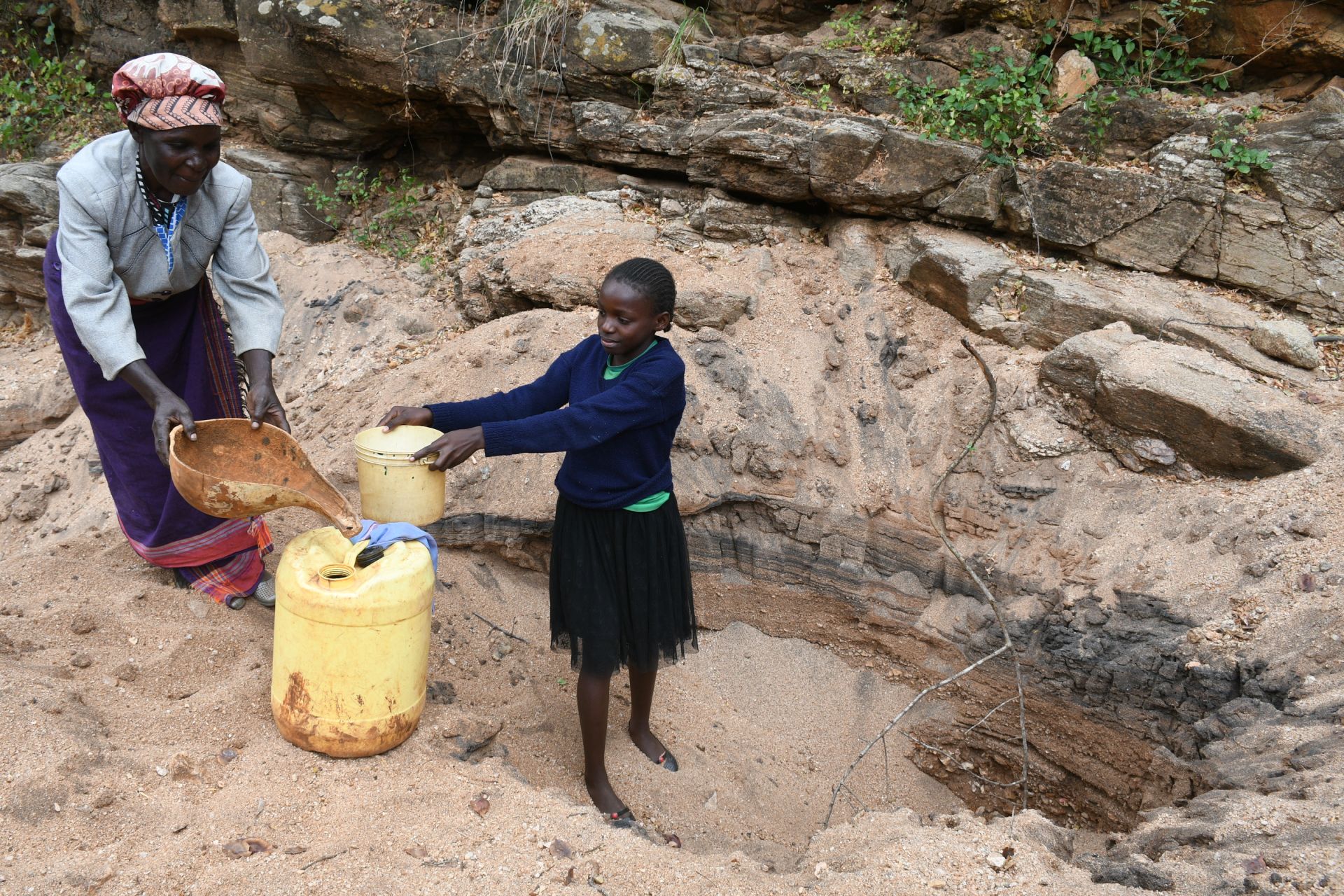
Irene collects water from the scoop hole.
"Community members report frequent cases of stomach upsets, diarrhea, and other water-related illnesses resulting from the consumption of contaminated water from open scoop holes. Because these sources are exposed to contamination from animals, dust, and surface runoff, the water poses significant health risks. The illnesses place an additional burden on already vulnerable households through treatment costs, lost productivity, and reduced overall well-being.
"Beyond the health impacts, the current water situation significantly affects livelihoods, education, hygiene, and food security. Community members spend up to four hours or more each day fetching water, especially during drought periods when water levels decline and long queues form at the scoop holes. This leaves little time for farming, business activities, childcare, or other productive work. Water is often reserved for drinking and cooking, limiting its use for hygiene, sanitation, livestock, and crop production.
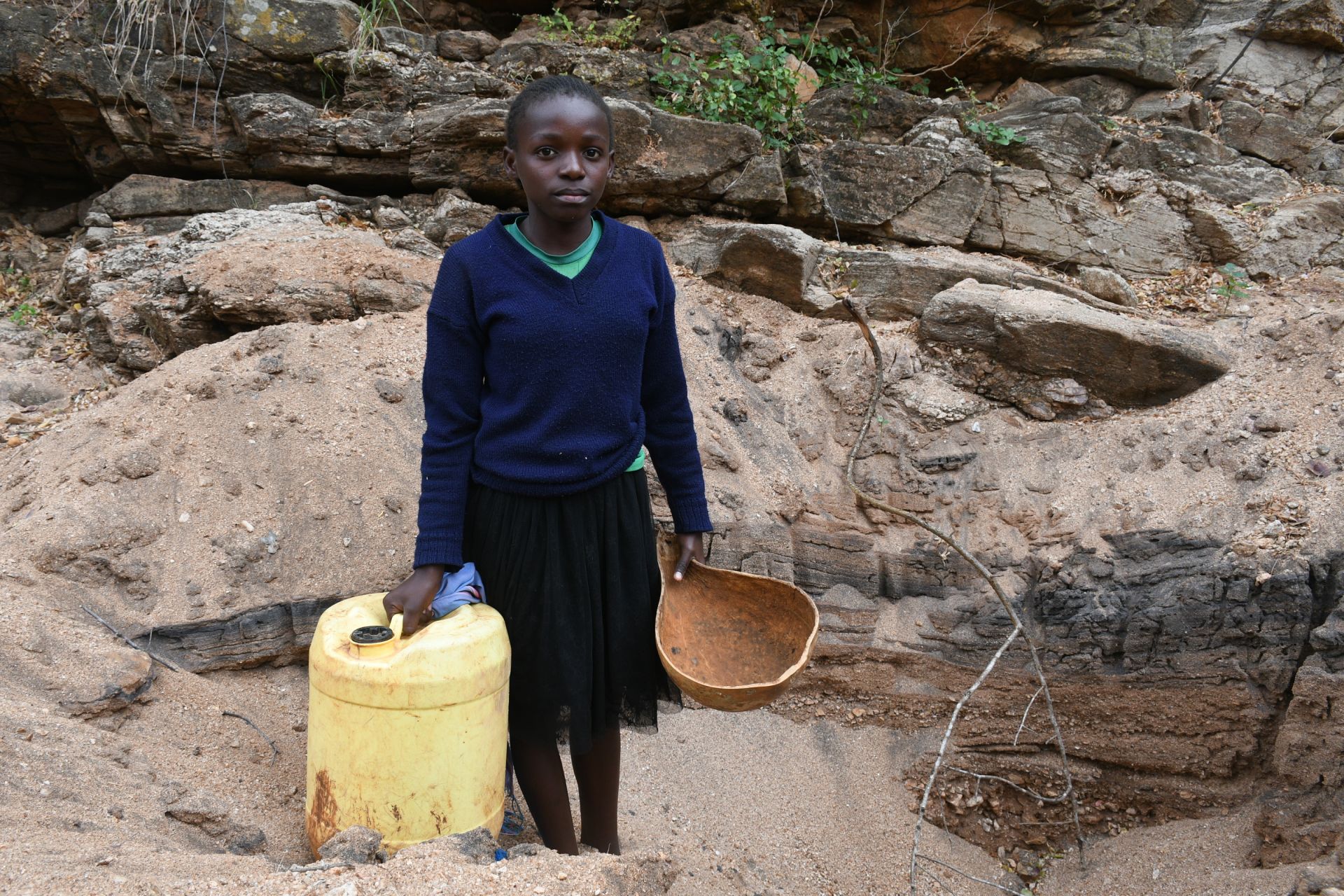
Eleven-year-old Irene spends at least two hours a day collecting water, which sometimes keeps her from school.
"Fetching water takes a long time because the water source is very far from our home. The journey involves walking across rocky, steep, and dusty paths, and sometimes there are many people waiting to collect water. During dry seasons, the water levels are low, which means we spend even more time waiting before we can fill our containers," Irene said.
"If I did not have to spend so much time fetching water, I would spend more time studying, completing my homework, and revising for exams. I would also have time to play with my friends, rest, and participate in school activities."
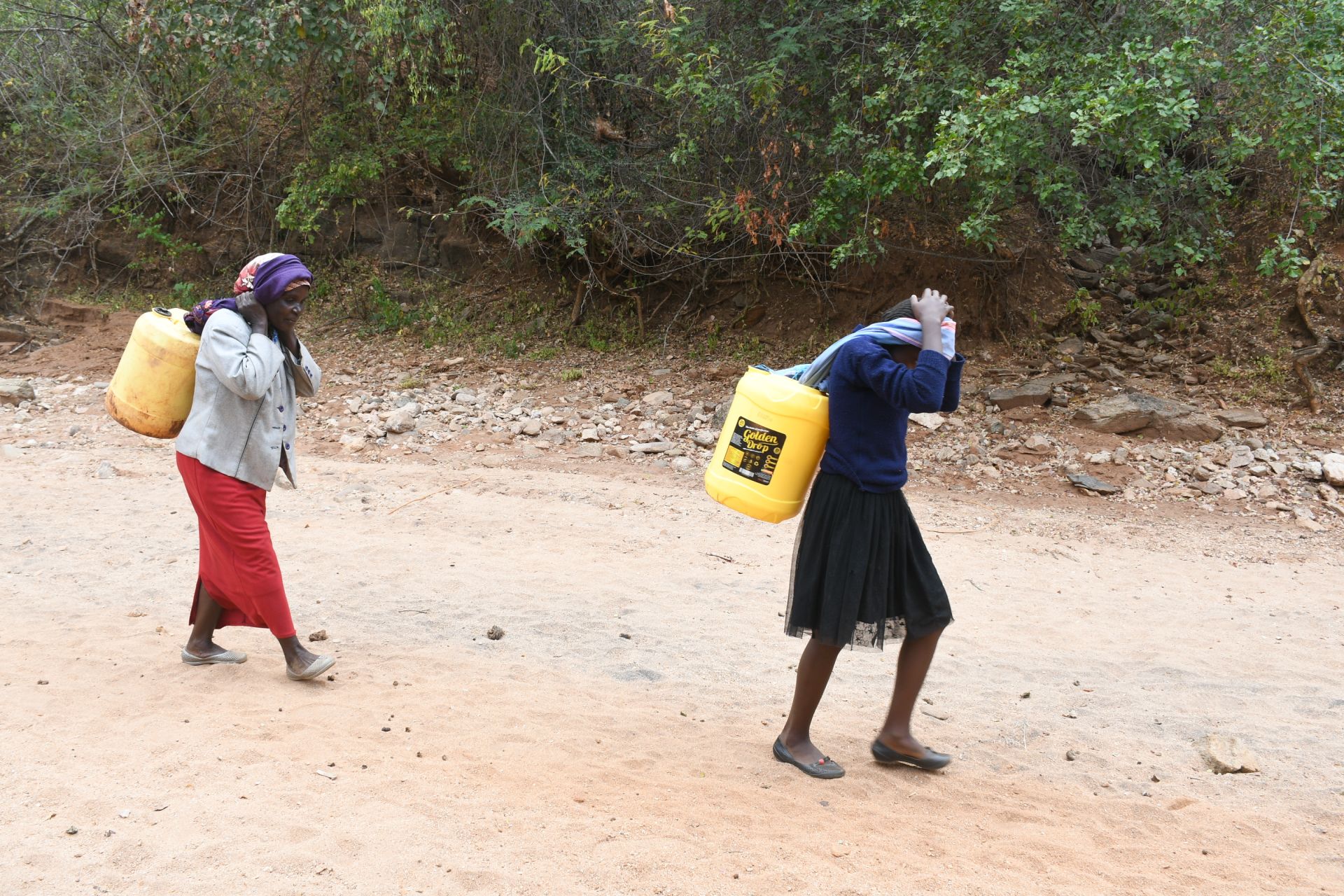
Irene carries water home.
Irene bravely shared how the water crisis she faces daily makes her feel, "I worry because the journey to the water source is long and difficult. The paths are rocky and uneven, and I have slipped several times while carrying water. On one occasion, I fell and broke the plastic jerrycan I was carrying, which was very frustrating."
"I am also concerned about the cleanliness of the water because it is exposed to dust, animals, and other contaminants that can make people sick. Because the water is not always clean and safe, many children in our community occasionally experience water-related illnesses that make us uncomfortable and affect our daily activities," said Irene.
"I remember a time when I developed a severe stomach upset after drinking water from the scoop hole. My stomach was very painful, and I felt uncomfortable. I could not concentrate properly in class, and I spent most of my time resting. It was difficult for me to study and participate in normal activities until I recovered. Being absent from school makes it difficult for me to catch up with the others because of the missed lessons.
We plan to intervene by providing Irene and her community with a nearby, safe water source. She deserves to feel safe and use her energy to focus on learning and building a brighter future.
Solving the water crisis in this community will require a multifaceted system that will work together to create a sustainable water source that will serve this community for years to come.
Steps Toward a Solution
Our technical experts worked with the local community to identify the most effective solution to their water crisis. Together, they decided to construct a protected dug well and sand dam.
Protected Dug Well Near A Sand Dam
Once a sand dam is installed and has time to mature by gathering sand and silt, groundwater increases significantly in the entire area surrounding the project. This provides a reliable source of groundwater that wasn’t possible before. As a result, wells can be constructed to take advantage of the water stored and filtered in the collected sand.
During the construction of the protected dug well, we will build a platform for the well and attach a hand pump. The community will gain a safe, enclosed water source capable of providing approximately five gallons of water per minute.
This protected dug well will be connected to a sand dam to obtain water.
Community Education & Ownership
Hygiene and sanitation training are integral to our water projects. Training is tailored to each community's specific needs and includes key topics such as proper water handling, improved hygiene practices, disease transmission prevention, and care of the new water point. Safe water and improved hygiene habits foster a healthier future for everyone in the community.
Encouraged and supported by our team's guidance, the community elects a water user committee representative of its diverse members. This committee assumes responsibility for maintaining the water point, organizing community efforts, and gathering fees to ensure its upkeep.