
Clean Water Helps Elizabeth Hold Her Dream Near!

March, 2026

Last year, your gift unlocked the potential for a brighter future for Elizabeth. Since then, she and the Nzakya Community of 300 residents have had clean, reliable water. Your contribution has made a significant impact. Thank you for making a difference!

"I don’t have to worry about getting sick or missing school because of water issues. I can also bathe and wash my clothes regularly, which helps me feel fresh and confident. I’ve improved a lot in school. I now have more time to revise and attend all my classes without interruptions. I feel more focused and prepared during exams," said Elizabeth.

Before the Sand Dam Installation

Like many in Kenya, 17-year-old Elizabeth is responsible for collecting water to meet her daily water needs. Before last year’s water intervention, this task stole her time and negatively affected her.

Drinking the water caused severe consequences. Many in the community suffered from waterborne diseases that created health problems, affecting their daily lives. Limited accessibility also meant people wasted time collecting sufficient water to meet their needs. The difficult journey to collect water sapped their physical and emotional energy, creating roadblocks. For Elizabeth, in particular, it lessened her opportunity to stay healthy and remain in school.

Community members collected water from the previous water source - the earth dam.

"Before this project was constructed, we had to walk very far to get water from the earth dam, and it would take many hours. The water was dirty, and we would sometimes get sick after drinking or using it. I remember missing school or getting home too late to revise properly because of how much time it took to fetch water," Elizabeth reflected.

"It was really hard and exhausting. We walked long distances in the hot sun and still returned with water that wasn’t even clean. Sometimes I felt too tired to do my schoolwork or help my parents with various chores at home," she continued.

Since the Sand Dam Installation

Your generous gift last year was much more than a simple donation; it was a powerful statement about your commitment to this community and Elizabeth’s future. By supporting the water solution, you made clean water an everyday reality, fostering hope for a brighter future.

Reliable and clean water lays the groundwork for improved health, education, and economic possibilities, allowing people to thrive. We frequently hear from those we interview that "water is life!"

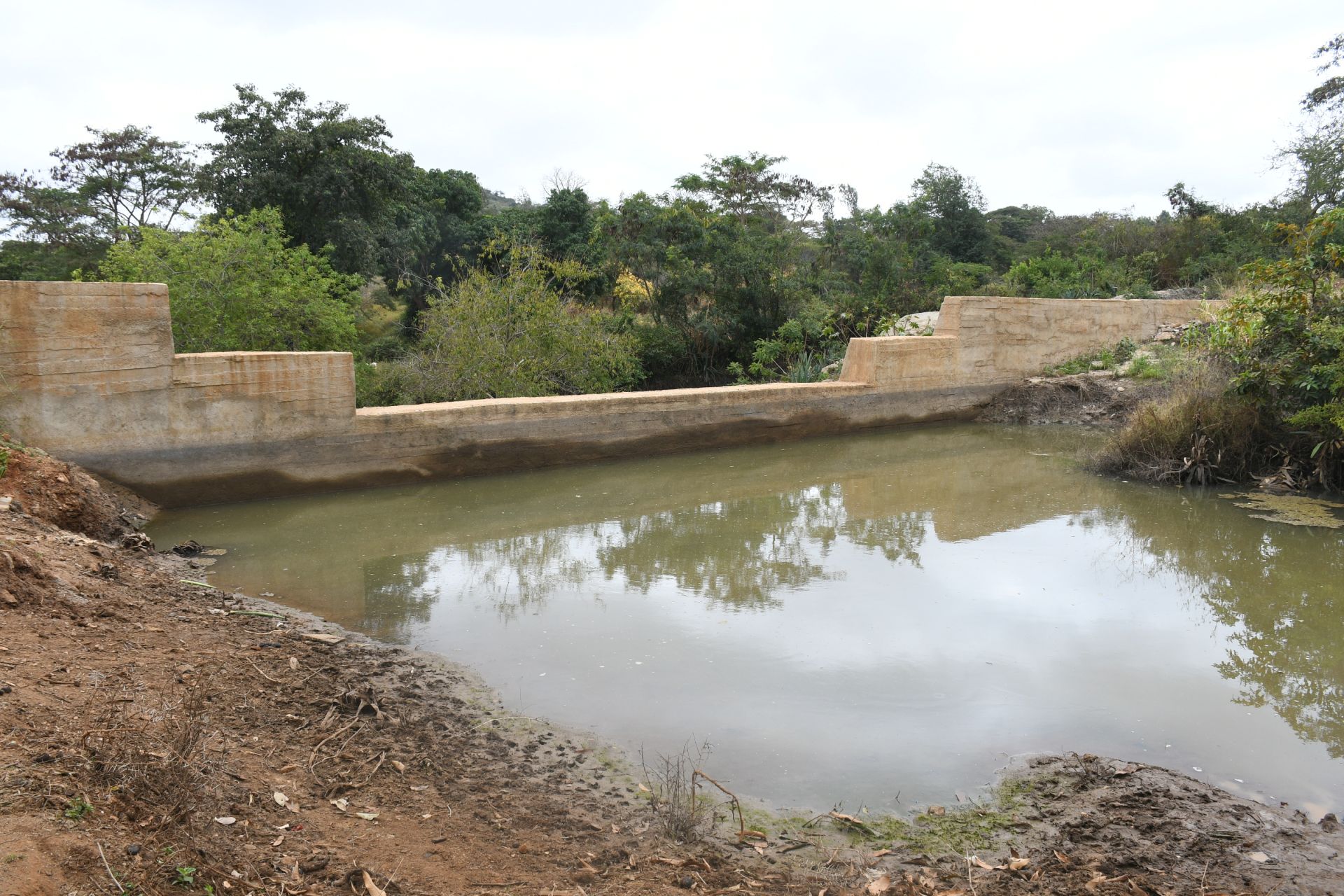
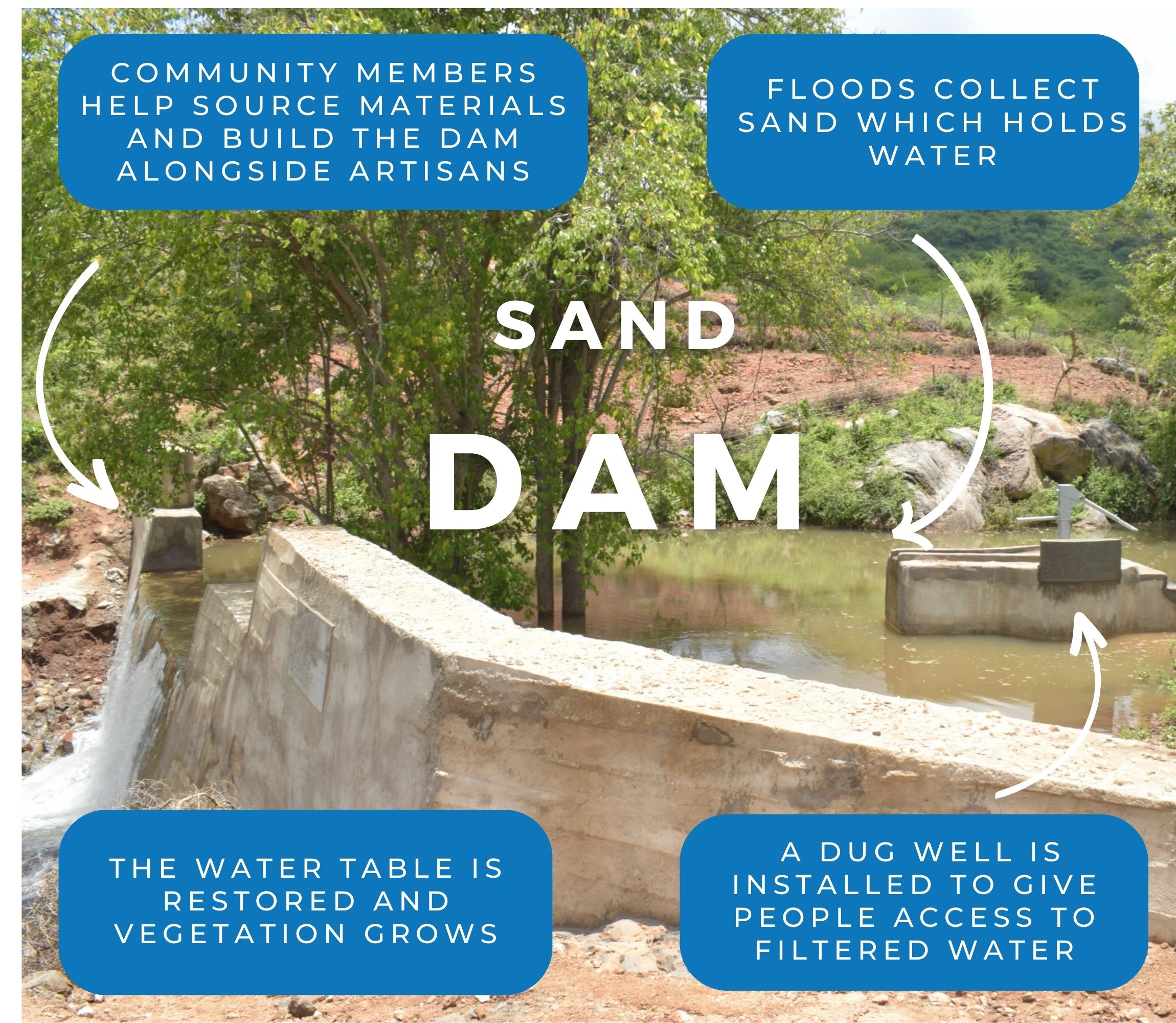
The sand dam is now filled with water.

The Future is Looking Bright!

A year ago, you made a difference for Elizabeth and the rest of her community. This is just the first chapter of their story as access to clean water continues to improve their lives!

At The Water Project, we value sustainability and want to ensure that people continue to thrive. We commit to monitoring this project to ensure the water is always flowing and safe to consume. We inspect the system hardware, track water availability, conduct sanitary inspections, and collect water quality samples to identify risks. We work with our team on the ground to resolve them.

You gave Elizabeth a crucial tool for achieving her dreams: access to clean water. Together, we can excitedly expect that with this precious resource, her enthusiasm and courage will help Elizabeth fulfill her dreams.

"I now have time to read, help my parents with other chores, and even relax or talk to my friends. I feel like I can do more with my day," said Elizabeth.

"I want to become a fashion designer. I love creating new designs and imagining beautiful clothes. Having clean water helps me stay in school and work hard toward that dream," Elizabeth exclaimed.

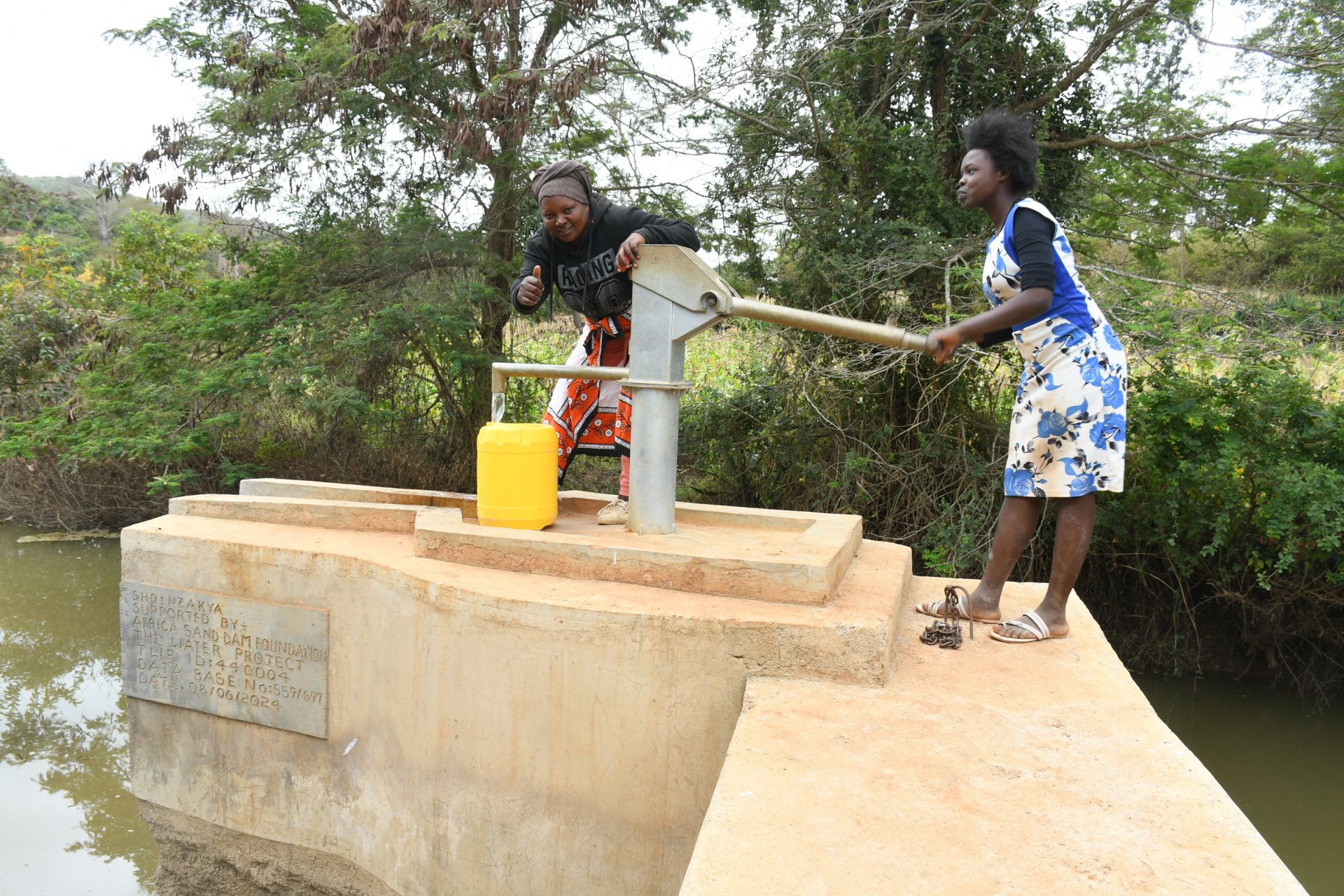
Elizabeth collects water from the well attached to the sand dam.


Navigating through intense dry spells, performing preventative maintenance, conducting quality repairs when needed and continuing to assist community leaders to manage water points are all normal parts of keeping projects sustainable. The Water Promise community supports ongoing sustainability programs that help Nzakya Community A maintain access to safe, reliable water.

We’d love for you to join this world-changing group committed to sustainability.

The most impactful way to continue your support of Nzakya Community A – and hundreds of other places just like this – is by joining our community of monthly givers.

Your monthly giving will help provide clean water, every month... keeping The Water Promise.

Project Status


Project Type:  Sand Dam

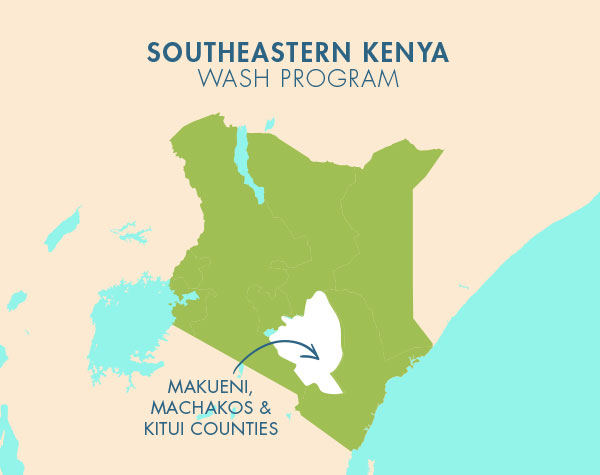
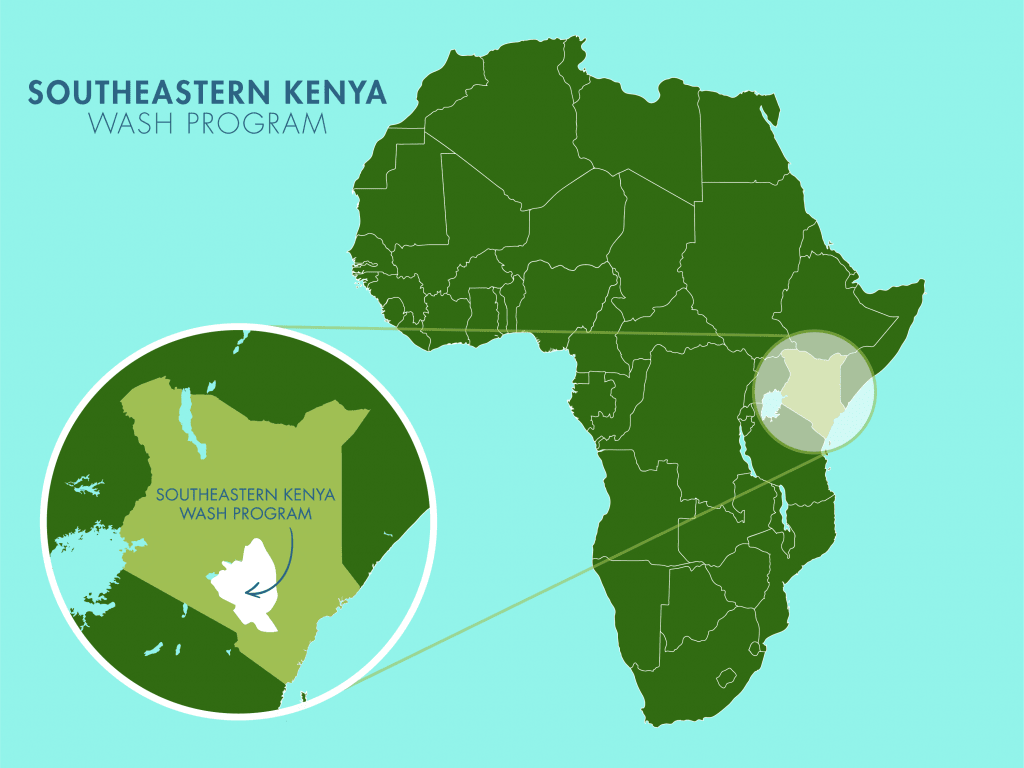
Regional Program: Southeastern Kenya WaSH Program

Impact: 455 Served

Project Phase:  In Service - Feb 2025

Functionality Status:  Functional

Last Checkup: 02/09/2026

Project Features


Click icons to learn about each feature.


The 755 community members who live in Nzakya struggle each day to collect sufficient water to meet their needs.

When field officer Jefferson Mutie described the semi-arid region's struggles with water, he said, "Growing water demand and scarcity have turned into a notable challenge in Kenya. Climate change, population growth, urbanization, water pollution, and poor management of water resources have aggravated the issue of the water crisis, which affects economic activities, food security, education, and health. These challenges are especially evident in rural areas of Southeast Kenya where people are often unable to get clean water."

For the community members living in Nzakya, who love where they live, the water crisis is nothing new, but they are tired of using all of their energy collecting water instead of making significant progress in their lives.

"Life is good in this village. Since I was married here, I found [it] a peaceful village [and] very beautiful. Water was the main headache and still is the worst challenge which we face here. I wake up very early and set off for water [from] the dam. The trek is risky and dangerous," said 43-year-old farmer Peris Nduku, seen below collecting water with her baby on her back.

"I feel offended living in a community whereby women lack the opportunity to get water easily and fast. I am very hopeful that in [the] future, we shall have water security. We shall have women enjoying fetching water and fostering relationships in the family. I am thinking of having a community that has no water-related diseases and no more sicknesses," said Peris.

The primary water source in this community is an earthen dam. Collecting water from the dam is a task mostly left to the adults since it is a dangerous large body of water not close to home. Yet, when families need water to meet their basic needs, and parents are busy producing incomes and maintaining their households, they must take the risk and send older children to collect water.

"My parents like sending me to the dam, which is dangerous and far. This happens after I come back from school, and it forces me to have no time to study and do my homework," said 17-year-old Muli P. Seen below.

But like most bodies of water in Southeast Kenya, particularly the smaller ones, they are prone to drying up when it is not the rainy season, leaving people to search for water elsewhere.

"When the water is very scarce, we opt to rush to River Migwani, which is miles away. The journey is never sweet [and] no one wants to experience it. I would feel very happy to see myself collect water very fast and come back to do my activities back at home. I love playing soccer, which I fail to have time to do," concluded Muli.

Installing a sand dam will enable community members like Muli and Peris to have quick, safe access to water so they can collect all the water they need to meet their daily needs. Hopefully, this will give them the time and energy to improve their daily lives and dream about changes they can implement in the future.

Helping to solve the water crisis in this community will take a multi-faceted system. It requires the collaboration of the sand dam and a dug well. They will work together to create a sustainable water source that will serve this community for years to come.

The Proposed Solution, Determined Together...

At The Water Project, everyone has a part in conversations and solutions. We operate in transparency, believing it benefits everyone. We expect reliability from one another as well as our water solutions. Everyone involved makes this possible through hard work and dedication.

In a joint discovery process, community members determine their most advantageous water solution alongside our technical experts. Read more specifics about this solution on the What We're Building tab of this project page. Then, community members lend their support by collecting needed construction materials (sometimes for months ahead of time!), providing labor alongside our artisans, sheltering and feeding the builders, and supplying additional resources.

Water Access for Everyone

This water project is one piece in a large puzzle. In Kenya, Sierra Leone, and Uganda, we're working toward complete coverage of reliable, maintained water sources that guarantee public access now and in the future within a 30-minute round trip for each community, household, school, and health center. One day, we hope to report that this has been achieved!

Training on Health, Hygiene & More

With the community's input, we've identified topics where training will increase positive health outcomes at personal, household, and community levels. We'll coordinate with them to find the best training date. Some examples of what we train communities on are:

  • Improved hygiene, health, and sanitation habits
  • Safe water handling, storage & treatment
  • Disease prevention and proper handwashing
  • Income-generation
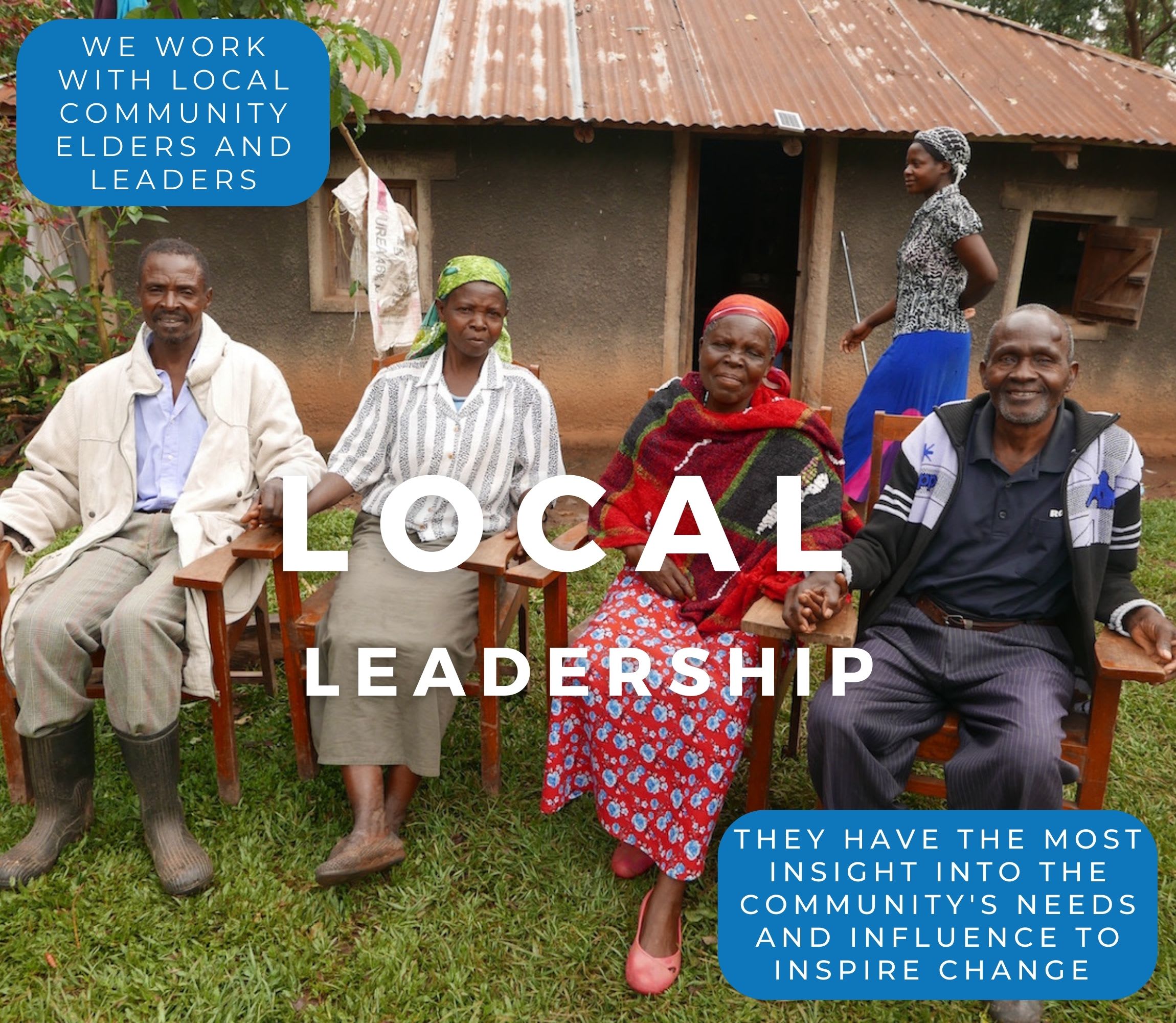
  • Community leadership, governance, & election of a water committee
  • Operation and maintenance of the water point

Project Updates


February, 2025: Nzakya Community Sand Dam Complete!

Nzakya, Kenya now has access to a new water source thanks to your donation! We constructed a sand dam on the riverbed, which will raise the water table and naturally filter water over time. We also built a new protected dug well with a hand pump adjacent to the sand dam, providing the community with a safer method to draw the drinking water supplied by the dam.

"Our children will be drinking clean water throughout the day, which will improve their health. Moreover, I will plant various vegetables at home because I now have water to irrigate them; thus, my children will be eating a balanced diet to improve their nutrition. Through the sale of these vegetables and other crops, I will get money to pay for children's school fees, which will enable [them] to attend school every day and improve their grades. I can easily access this implemented water source then go back home; thus, I will be spending more time with the young ones and improve their social welfare," said 32-year-old farmer Mercy Muthami.

Mercy drinks water from the well attached to the sand dam.

"I will have more time to cultivate my land and grow vegetables, as well as various crops that I can sell and eek out an income. I will also be taking care of my cattle and goats, who will easily drink water here without having to go far away, which will improve their health and yield," Mercy continued.

Sand Dam Construction

The members of the Self-Help Group collected all of the local materials, like rocks and sand, required to complete the dam. The collection of raw materials takes longer than the actual construction, lasting up to four months for a large sand dam. The group also dedicated their time to support our artisans with a tremendous amount of physical labor throughout the project.

First, our team drew up siting and technical designs and presented them to the Water Resources Management Authority. We then sent a survey to the National Environment Management Authority for approval before beginning construction.

Once the plans were approved, we established a firm base for the sand dam wall. Usually, this requires the community to dig all the way down to the bedrock beneath the river channel. In the absence of good bedrock, we excavate to a depth at which the ground is compact enough to stop seepage.

Next, we heaped mortar (a mixture of sand, cement, and water) into the foundation, followed by rocks. We then used barbed wire and rebar to reinforce the mixture.

Once the foundation was complete, we built a timber skeleton to hold the structure above ground level. We repeated the process until reaching a sufficient height, width, and length.

Finally, we dismantled the vertical timber beams and left the dam to cure. This dam measures 45 meters long and 4 meters high and took 1250 bags of cement.


When the rains come, sand and silt will be carried down the dry riverbed and build up behind the dam wall. This reservoir of sand acts as a giant natural filter, and allows rainwater to seep into the ground and raise the water table. With this water, the surrounding landscape will become lush and fertile, and the well will provide drinking water to the community. It could take up to three years of rain for this sand dam to reach maximum capacity because in this region, sometimes it only rains once a year!

Community Education

Our trainer worked with the field staff and community members to determine which topics the community could improve upon.

As we’ve worked with this Self-Help Group in the past, we asked them about the subjects they needed refresher training on.

A favorite training session was the soap-making activity. The facilitators shared with the group that using soap and latrine disinfectants is crucial for environmental hygiene. By the end of the training, the group had made forty liters of soap and twenty liters of latrine disinfectant.

We trained the group on various skills, including bookkeeping, financial management, project management, group dynamics, and governance. We conducted hygiene and sanitation training to teach skills like soap and detergent-making and improve habits, such as handwashing.

We covered health problems in the community, good and bad hygiene habits, and the prevention of disease. Finally, we covered natural resource management as well as the operation and maintenance of the sand dam.

"The design of the tippy tap (handwashing station) that was demonstrated is more hygienic and easy to use than the one some of us have been [using]. We will improve to the new one and ensure that we wash our hands more often than we used to do before since we now know the most critical moments for handwashing. Our income will go high since now we have a new skill in soap and latrine disinfectant making. If the skill is well practiced, it will help us improve on hygiene and income both at [the] group and personal level," said 68-year-old John Mukala.

John.

Thank you for making all of this possible!


January, 2025: Exciting Progress in Nzakya Community!

We’re thrilled to share that, thanks to your generous support, significant change is coming for Peris and the entire Nzakya Community. Construction has begun on the sand dam project, bringing them one step closer to having clean, reliable water.

But that's not all—during construction, we’re also providing vital health training. These sessions equip the community with essential hygiene practices, ensuring that the benefits of clean water extend to lasting health improvements.

We’re so grateful for your role in making this possible. Stay tuned for more updates—soon, we’ll be celebrating the arrival of safe water in the Nzakya Community!


Project Photos


Contributors

Accelerator Match
2 individual donor(s)