
Project Status


Project Type:  Sand Dam

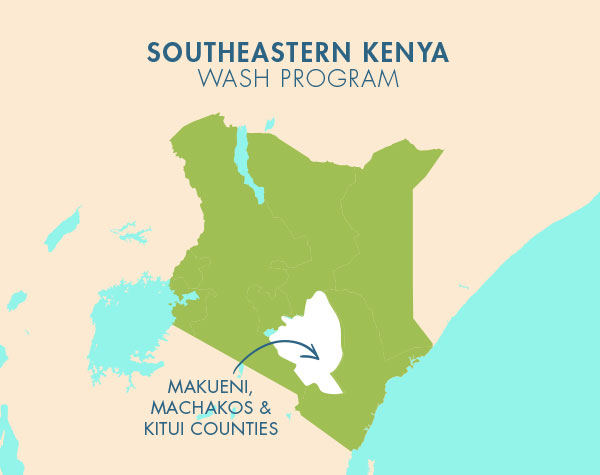
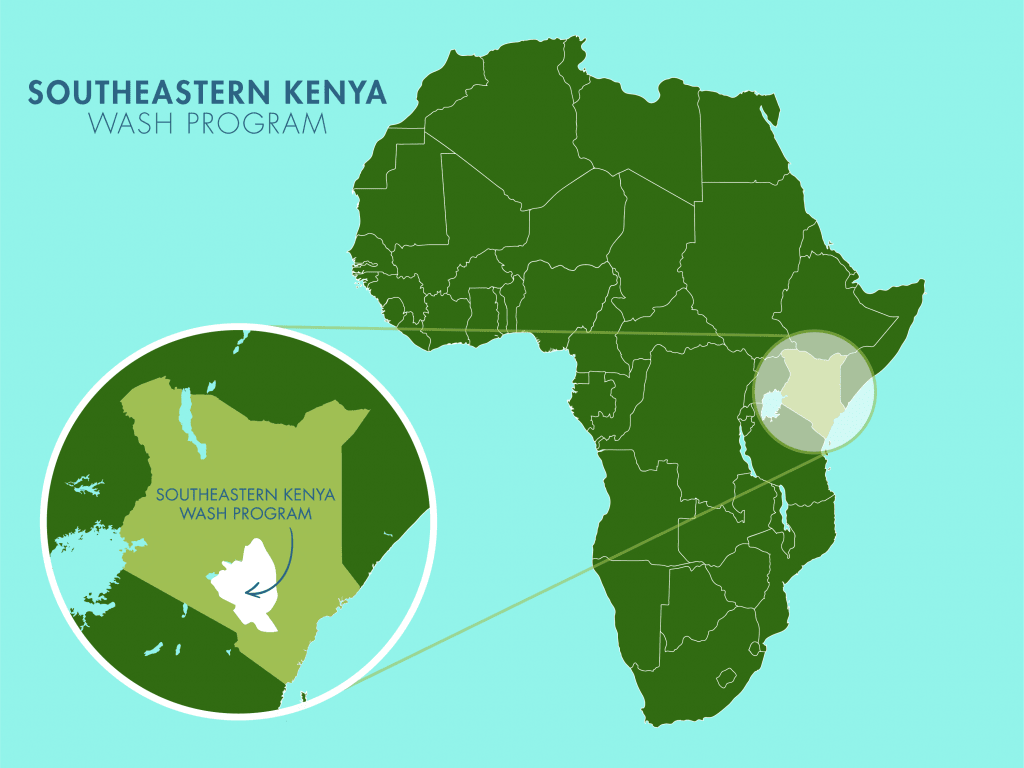
Regional Program: Southeastern Kenya WaSH Program

Impact: 300 Served

Project Phase:  In Service - Apr 2026

Functionality Status:  Functional

Project Features


Click icons to learn about each feature.


Like most communities in this semi-arid area of Southeast Kenya, the Itumani Community faces a daily water crisis. The 2,000 people in the community lack a reliable, safe water source for their daily needs. They resort to collecting water from a faraway earth dam that is open to various types of contamination.

"The terrain around Itumani village is generally dry and dusty, making water collection challenging, especially during droughts. The area is also hilly and rocky, and the lack of nearby water sources means that water must often be transported from distant locations. This increases the difficulty of collecting water, particularly during hot weather, leading to physical exhaustion and potential health risks for residents involved in water fetching," shared Field Officer Alex Koech.

A community member collecting water from the earth dam.

"Residents frequently suffer from diarrheal diseases, cholera, and typhoid due to the contamination in the earth dam," he continued.

When community members do not collect water from the earth dam, they collect it from a faraway borehole well, which has its own issues.

"The high salt content in the borehole water has led to increased dehydration, particularly among children and the elderly. Water from the borehole kiosk is expensive, putting financial strain on households, especially because income is acquired primarily from farming, which is adversely affected by drought. Many families struggle to afford enough water for their daily needs," Alex continued.

"Moreover, drinking saline water from the borehole has caused gastrointestinal discomfort, including bloating and stomach cramps. Some community members also experience skin irritations and rashes, likely due to bathing in contaminated water," Alex said.

Peter at the earth dam.

Fifteen-year-old Peter is familiar with the daily struggle of not having enough water to meet his daily needs.

"The water sources are located far away from my home. I feel bad because I have to walk several kilometers to draw water. Walking on the dusty roads for a long time makes our donkey tired, and sometimes, it drops down the jerrycans of water, forcing me to go back. We experience several months of drought, and I feel exhausted going to fetch water from distant sources," said Peter.

Understandably, collecting water from so far away leaves Peter exhausted, making it difficult for him to complete his daily tasks.

"It is hard to focus in class the following day because I get too tired fetching water in the evening after school. One day, I hope to be a doctor so that I can help my community. The new waterpoint will be nearby, and I will be fetching water any time during the day," continued Peter.

The Itumani Community.

"The sand dam will store water in the sand, which reduces evaporation and ensures a more consistent supply of clean water throughout the year, especially during droughts. This will alleviate the issue of water scarcity and reduce the need to rely on contaminated or saline sources. By filtering water naturally through the sand, the dam will provide cleaner water, reducing the health risks associated with waterborne diseases, such as diarrhea, cholera, and typhoid, and eliminating the need to consume saline water from the borehole," concluded Field Officer Alex Koech.

Once the sand dam is built, it can feed a dug well, giving Peter access to water closer to home. This will allow him to quickly and efficiently collect water and return his focus to other things that will help him build a brighter future.

Solving the water crisis in this community will require a multifaceted system that will work together to create a sustainable water source that will serve this community for years to come.

Steps Toward a Solution

Our technical experts worked with the local community to identify the most effective solution to their water crisis. Together, they decided to construct a sand dam and dug well.

Sand Dam
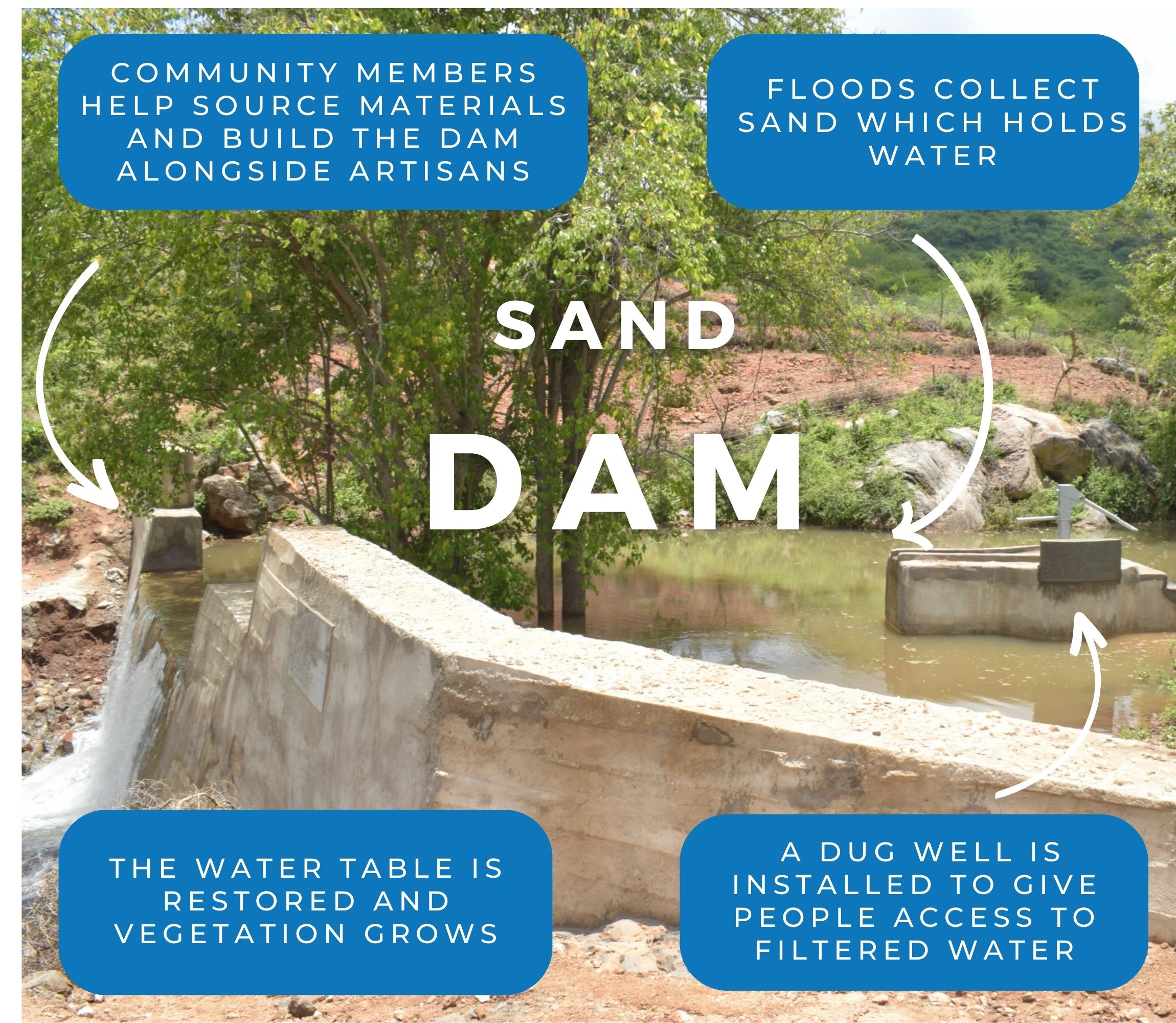
Sand dams are sought-after, climate-smart, and lasting water solutions providing hope and resilience to communities in arid Southeastern Kenya. Think of them like giant sandboxes constructed in seasonal rivers that would typically quickly dry up after the rainy season. Instead of holding water like traditional dams, they collect sand and silt.

When infrequent rains do come, these dams catch a percentage of the river's flow, letting most of the water continue downstream to other communities. But here's the magic: the sand they collect acts like a natural filter, holding onto water long after the river's gone dry. Then, wells are constructed nearby, creating a reliable water source even during the driest times.

And the benefits don't stop there! In communities impacted by climate change, sand dams replenish groundwater and prevent soil erosion. Even during severe droughts, the consistent water supply from these sand dams allows farmers to thrive, giving way for enough food not only for their families but also to sell in local markets.

The most remarkable aspect of sand dams is how they involve the local community every step of the way, giving them a sense of ownership and pride in solving their own water shortage and managing their own water resources.

This sand dam will be connected to a dug well to make the water more accessible.

Community Education & Ownership
Hygiene and sanitation training are integral to our water projects. Training is tailored to each community's specific needs and includes key topics such as proper water handling, improved hygiene practices, disease transmission prevention, and care of the new water point. Safe water and improved hygiene habits foster a healthier future for everyone in the community. Encouraged and supported by the guidance of our team, a water user committee representative of the community's diverse members assumes responsibility for maintaining the water point, often gathering fees to ensure its upkeep.

Project Updates


April, 2026: Itumani Community Sand Dam Complete!

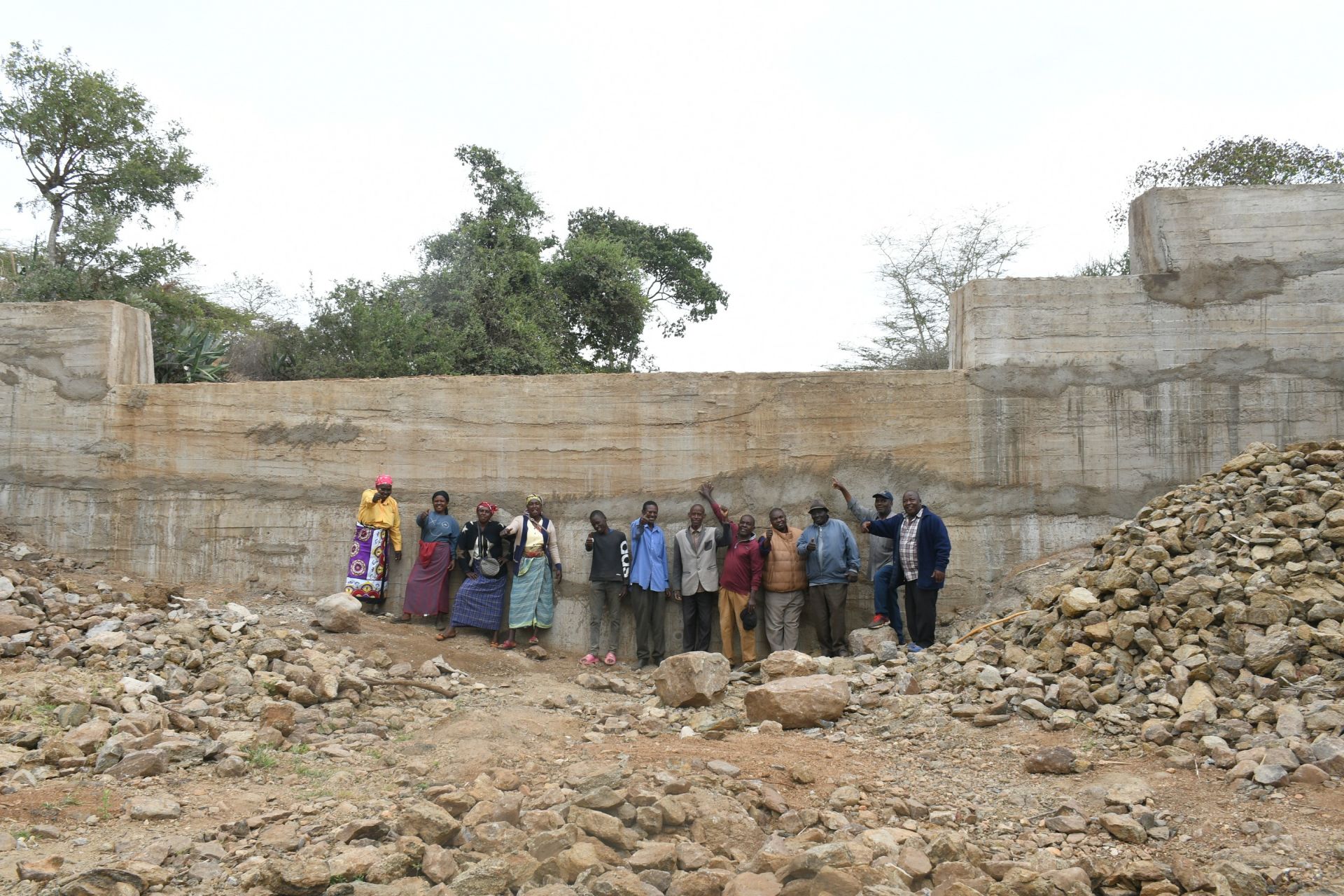
Itumani, Kenya now has access to a new water source thanks to your donation! We constructed a sand dam on the riverbed, which will raise the water table and allow the water to naturally filter over time. We also built a new protected dug well with a hand pump adjacent to the sand dam, providing the community with a safer method to draw the drinking water supplied by the dam.

"I will no longer have to walk several kilometers from the distant earthdam, offering me time and energy to focus on various crucial chores at home, like working on my farm, nurturing a kitchen garden, or taking care of chores at home. I will also have enough clean water to drink and no longer need to worry about exposure to water-related infections that were common in the past because we relied on the contaminated water from the earthdam," shared 54-year-old farmer Janeter Joseph.

Ms. Janeter Joseph.

"My children will now be drinking clean water without fear of contracting infections like amoeba and typhoid, which are associated with water from the earthdam. They will also be able to improve their hygiene because there is enough water. Fetching water will now be easy because this new water point is nearby. They will now have enough time and energy to study and play with their friends," Janeter continued.

Sand Dam Construction

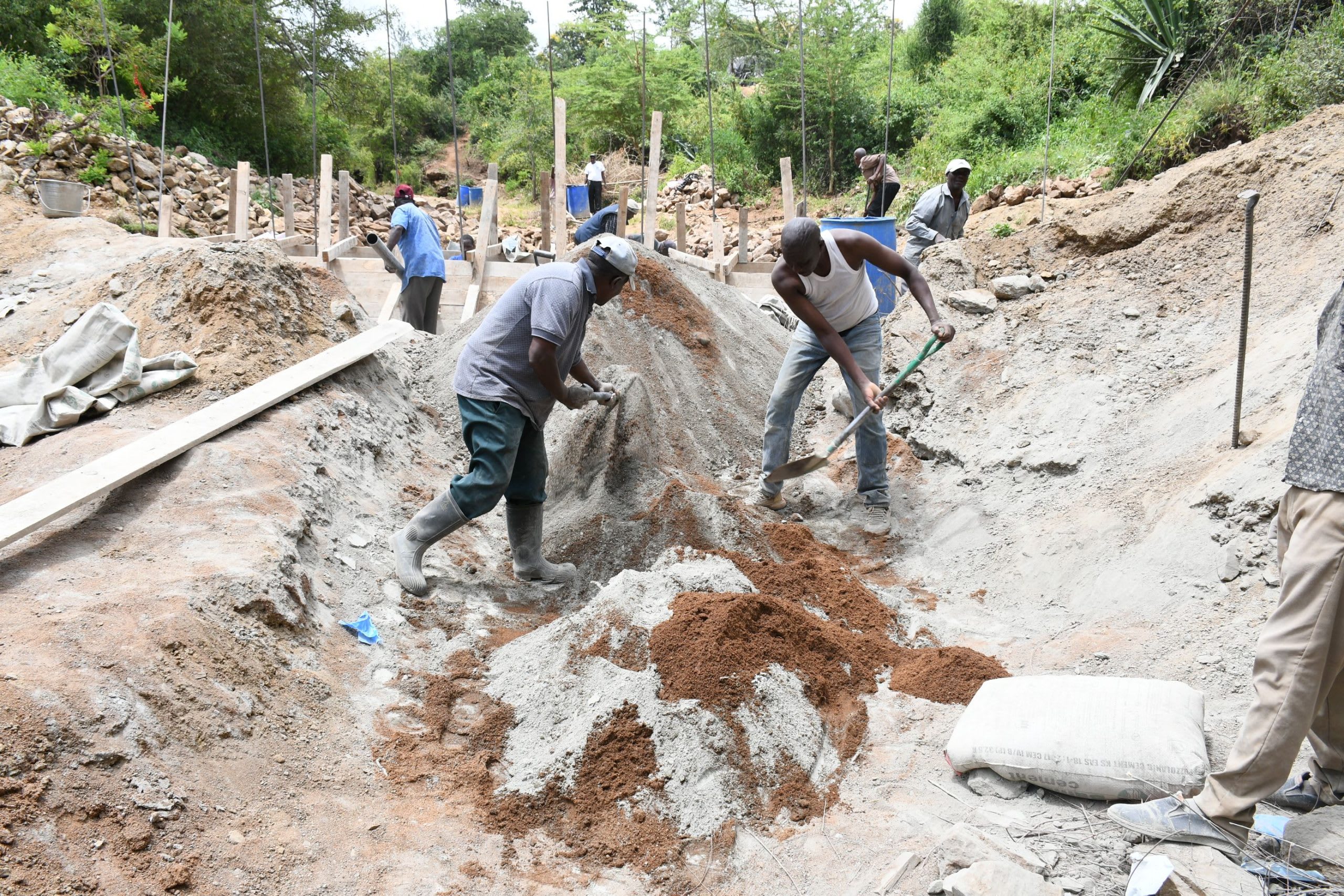
The members of the Kamunyu Farmers Self-Help Group collected all the local materials, such as rocks and sand, required to complete the dam. The collection of raw materials takes longer than the actual construction, lasting up to four months for a large sand dam. The group also dedicated a tremendous amount of time to supporting our artisans through physical labor throughout the project.

First, our team developed the siting and technical designs, which were then presented to the Water Resources Management Authority. We then sent a survey to the National Environment Management Authority for approval before beginning construction.

Once the plans were approved, we established a firm base for the sand dam wall. Usually, this requires the community to dig all the way down to the bedrock beneath the river channel. In the absence of good bedrock, we excavate to a depth at which the ground is compact enough to stop seepage.

Next, we heaped mortar (a mixture of sand, cement, and water) into the foundation, followed by the addition of rocks. We then used barbed wire and rebar to reinforce the mixture.

Once the foundation was complete, we built a timber skeleton to hold the structure above ground level. We repeated the process until reaching a sufficient height, width, and length.

Finally, we dismantled the vertical timber beams and left the dam to cure. This dam measures 25 meters long and 3 meters high and took 866 bags of cement.

When the rains come, sand and silt will be carried down the dry riverbed and build up behind the dam wall. This reservoir of sand acts as a giant natural filter, allowing rainwater to seep into the ground and raise the water table. With this water, the surrounding landscape will become lush and fertile, and the well will provide the community with drinking water. It could take up to three years of rain for this sand dam to reach its maximum capacity, because in this region, it sometimes only rains once a year!

Community Education

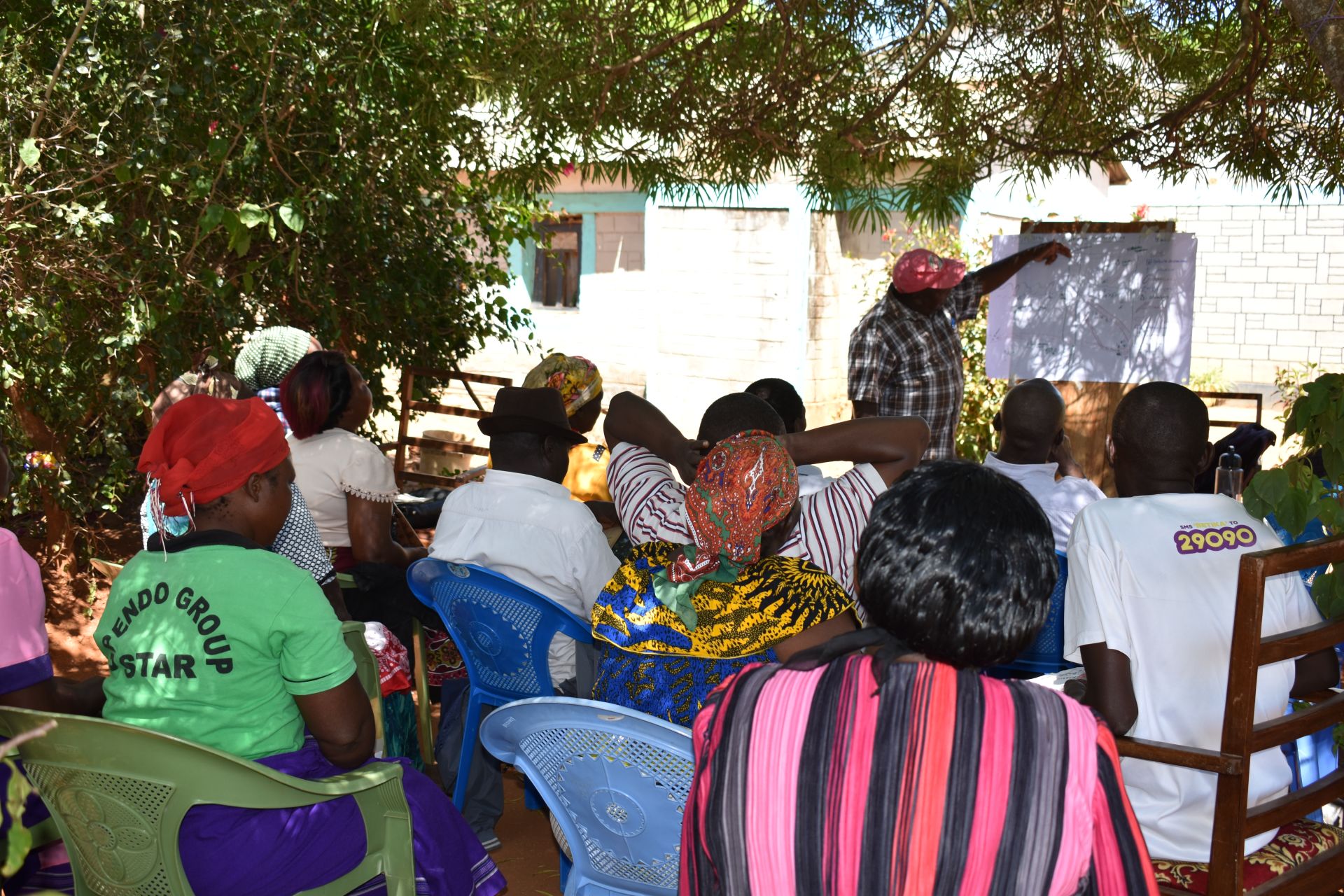
Our trainer collaborated with the field staff and community members to identify areas where the community could improve.

Field Officer Alex Koech shared: "I am very hopeful about this group because they put a lot of effort into ensuring the project was concluded on schedule. They also have a tree nursery, indicating their interest in environmental conservation. They also have great plans of making use of the implemented project, like growing vegetables and even improving hygiene in their homes."

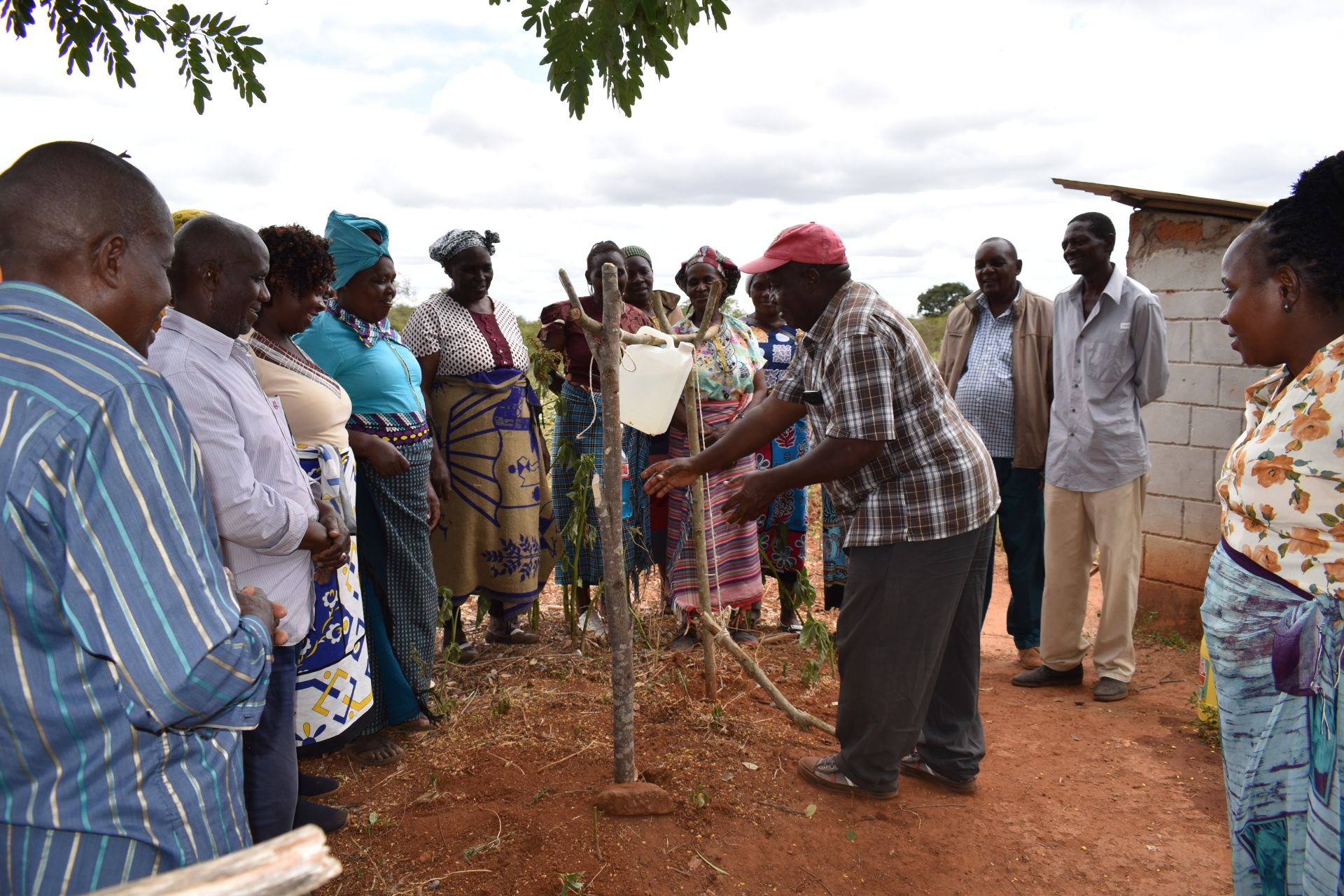
We trained the group on various skills, including bookkeeping, financial management, project management, group dynamics, and governance. We conducted hygiene and sanitation training to teach skills such as soap and detergent making and to improve habits, including handwashing.

We covered health problems in the community, including good and bad hygiene habits, as well as the prevention of disease. Finally, we covered both natural resource management and the operation and maintenance of the sand dam.

Ms. Jacinta Ngusya.

"This training has taught us a lot of fundamental things to do with hygiene. We have learned that our daily behaviors contribute so much to getting diseases and therefore, there’s a need to change our behaviors to reduce disease incidence. It was highly important to be trained on water treatment, food hygiene, water hygiene, personal hygiene, and environmental hygiene, among other things," said 57-year-old farmer Jacinta Ngusya.

Thank you for making all of this possible!


Update photo


February, 2026: Exciting Progress in the Itumani Community!

We’re thrilled to share that, thanks to your generous support, significant change is coming for Peter and the entire Itumani Community. Construction has begun on the sand dam project, bringing them one step closer to having clean, reliable water.

But that's not all—during construction, we’re also providing vital health training. These sessions equip the community with essential hygiene practices, ensuring that the benefits of clean water extend to lasting health improvements.

We’re so grateful for your role in making this possible. Stay tuned for more updates—soon, we’ll be celebrating the arrival of safe water in the Itumani Community!


Project Photos


Project Type

Sand dams are huge, impressive structures built into the riverbeds of seasonal rivers (rivers that disappear every year during dry seasons). Instead of holding back a reservoir of water like a traditional dam would, sand dams accumulate a reservoir of silt and sand. Once the rain comes, the sand will capture 1-3% of the river’s flow, allowing most of the water to pass over. Then, we construct shallow wells on the riverbank to provide water even when the river has dried up, thanks to new groundwater reserves. Learn more here!


Contributors

Project Sponsor - Jonah Development Corp.
4 individual donor(s)