 Sand Dam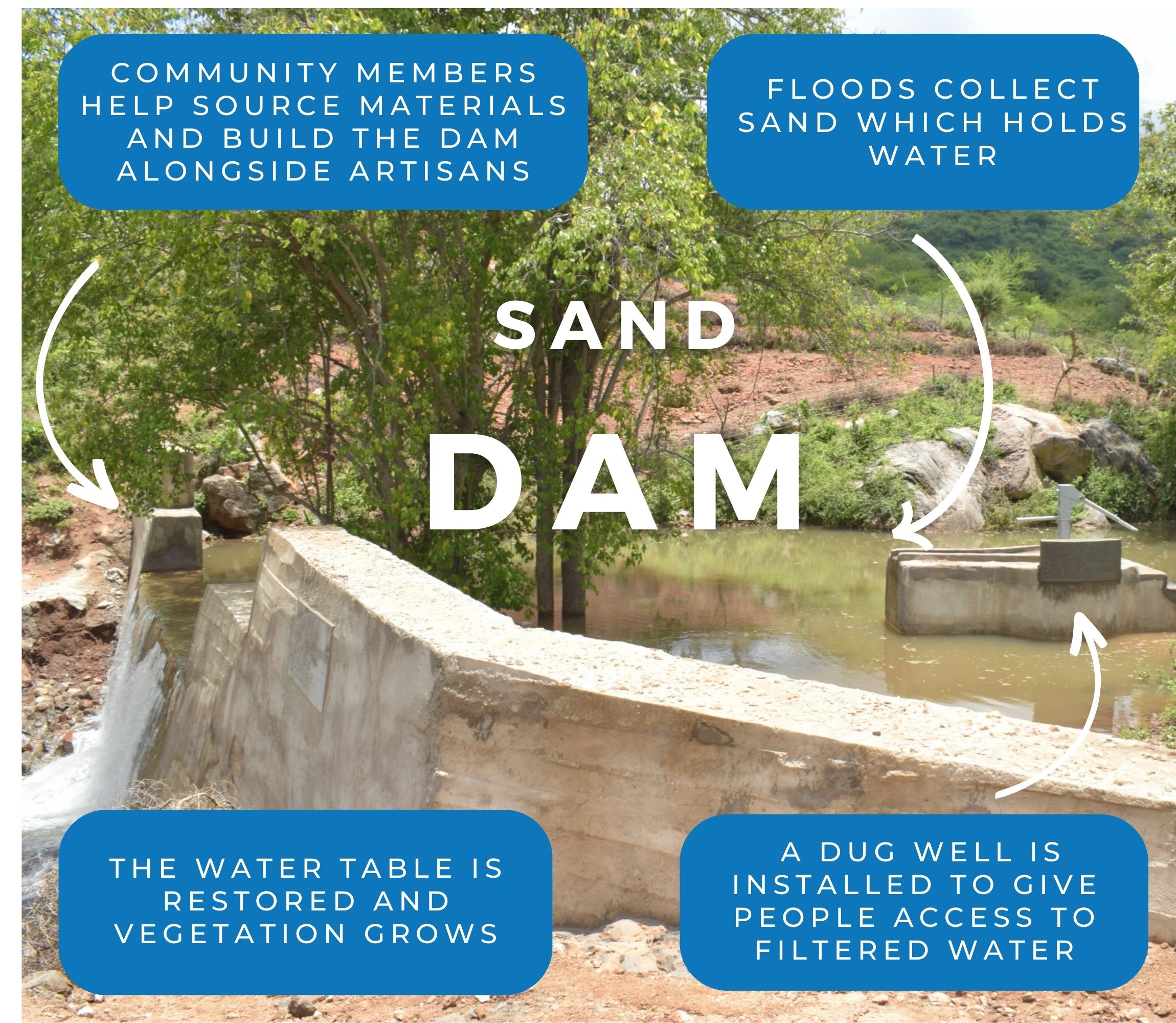
 Rehabilitation Project











The 250 community members who live in the Kavililo Community struggle to collect enough water to meet their daily needs. They must walk to faraway water sources, trying to find enough water to survive.
Their primary water source, a dug well, is a two-hour trip away, and the next choice, an open earth dam, is a three-hour trip.
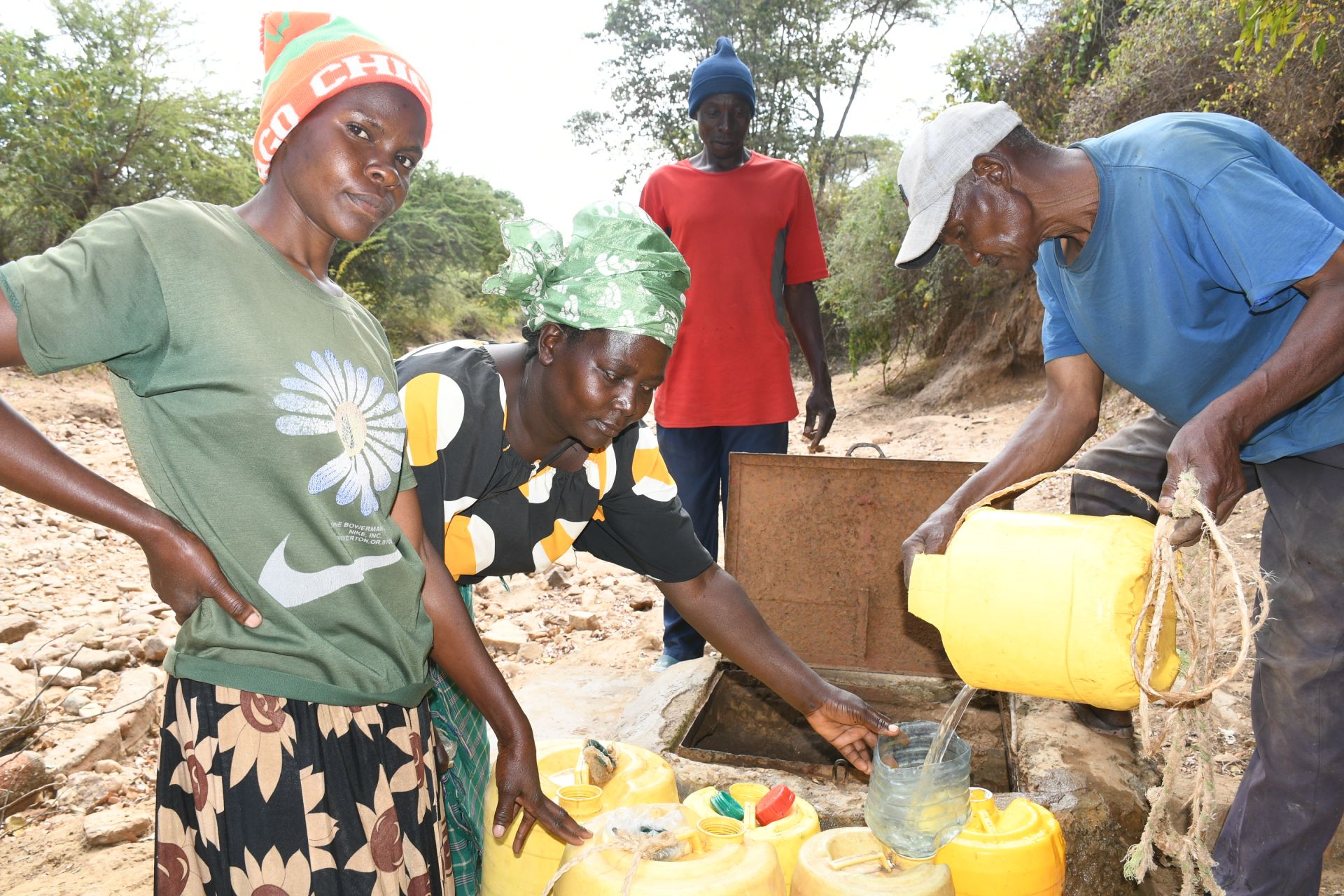
People collecting water from the faraway dug well.
Field Officer Alex Cheruiyot described the community's plight. "During periods when the dug wells have little or no water, residents may spend up to four hours fetching water from the earth dam. Because of this burden, households can generally make only two water-fetching trips a day and must ration the water they bring home, prioritizing drinking and cooking over handwashing, cleaning, and other hygiene needs. The time spent fetching water reduces the time available for farming, household activities, and other livelihood opportunities."
When people do not have the time or energy to make the lengthy, demanding trips, they resort to paying for others to collect water for them, but only if they can afford it. Some do not have that luxury or must make huge sacrifices for it to happen.
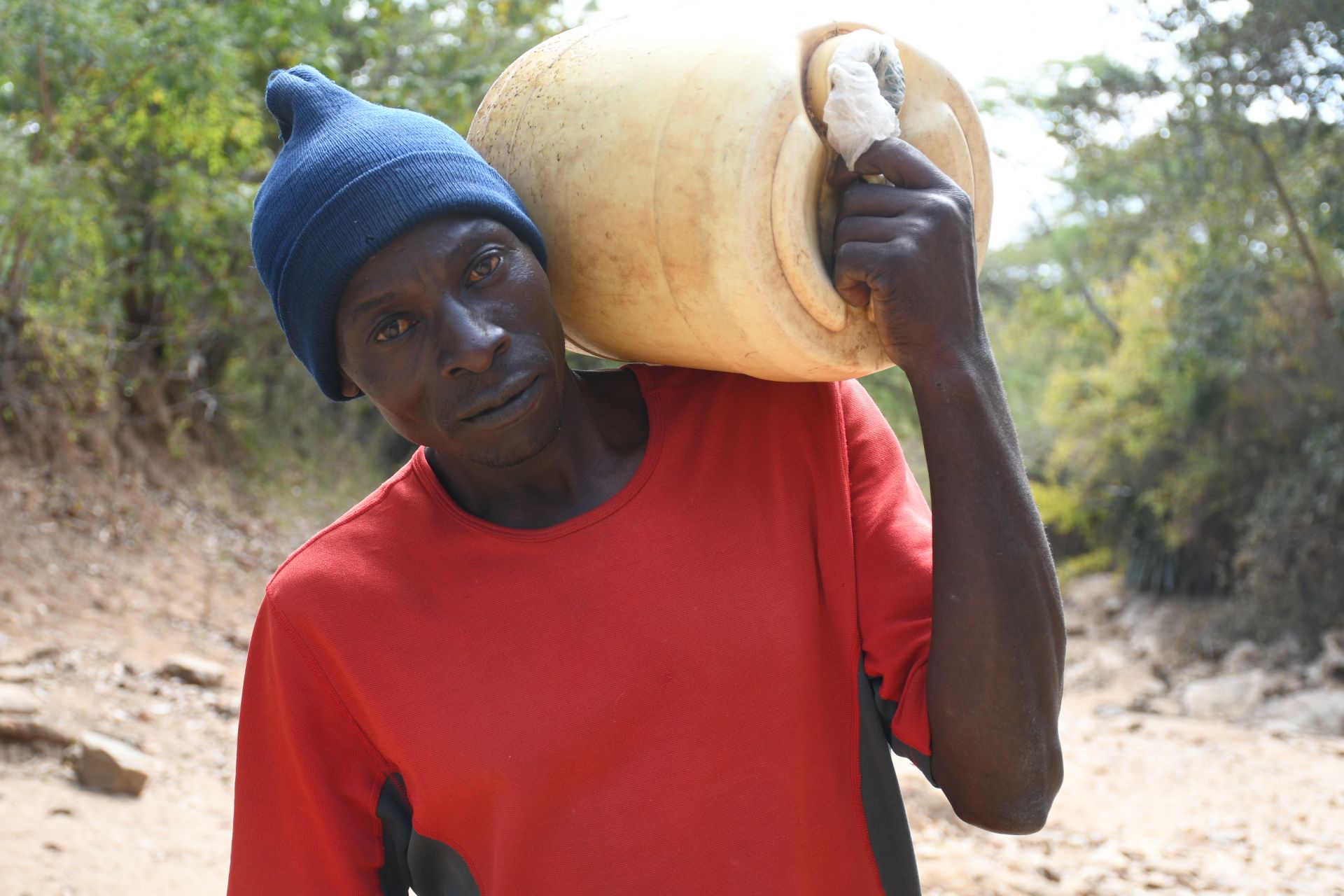
47-year-old farmer Makau Mbithi said, "Water is life because everything in my home depends on it. We need it for drinking, cooking, bathing, washing, cleaning, and keeping ourselves healthy. Without enough water, even maintaining basic hygiene becomes difficult."
When Mr. Mbithi can afford it, he tries to buy water to save time, but all of his other priorities must shift to make the financial sacrifice.
"The cost of water affects my family because even the KSh 5 we pay for a 20-liter jerrycan becomes a burden when we need several jerrycans each day. With our limited income, money spent on water means less money for food, farming, school needs, and healthcare," he lamented.

People collect water from the faraway earth dam.
When there is not enough money to purchase water, he and his family have no choice but to make the exhausting trip.
"At the moment, even though the dug well is about two hours away for a round trip, the journey through the steep terrain is physically exhausting. Sometimes I use a donkey to carry the jerrycans, but even the donkey can become stubborn when exhausted and throw the containers down," he said.
Most people can only make two trips a day, leaving them still facing a water crisis.
Solving the water crisis in this community will require a multifaceted system that will work together to create a sustainable water source that will serve this community for years to come.
Steps Toward a Solution
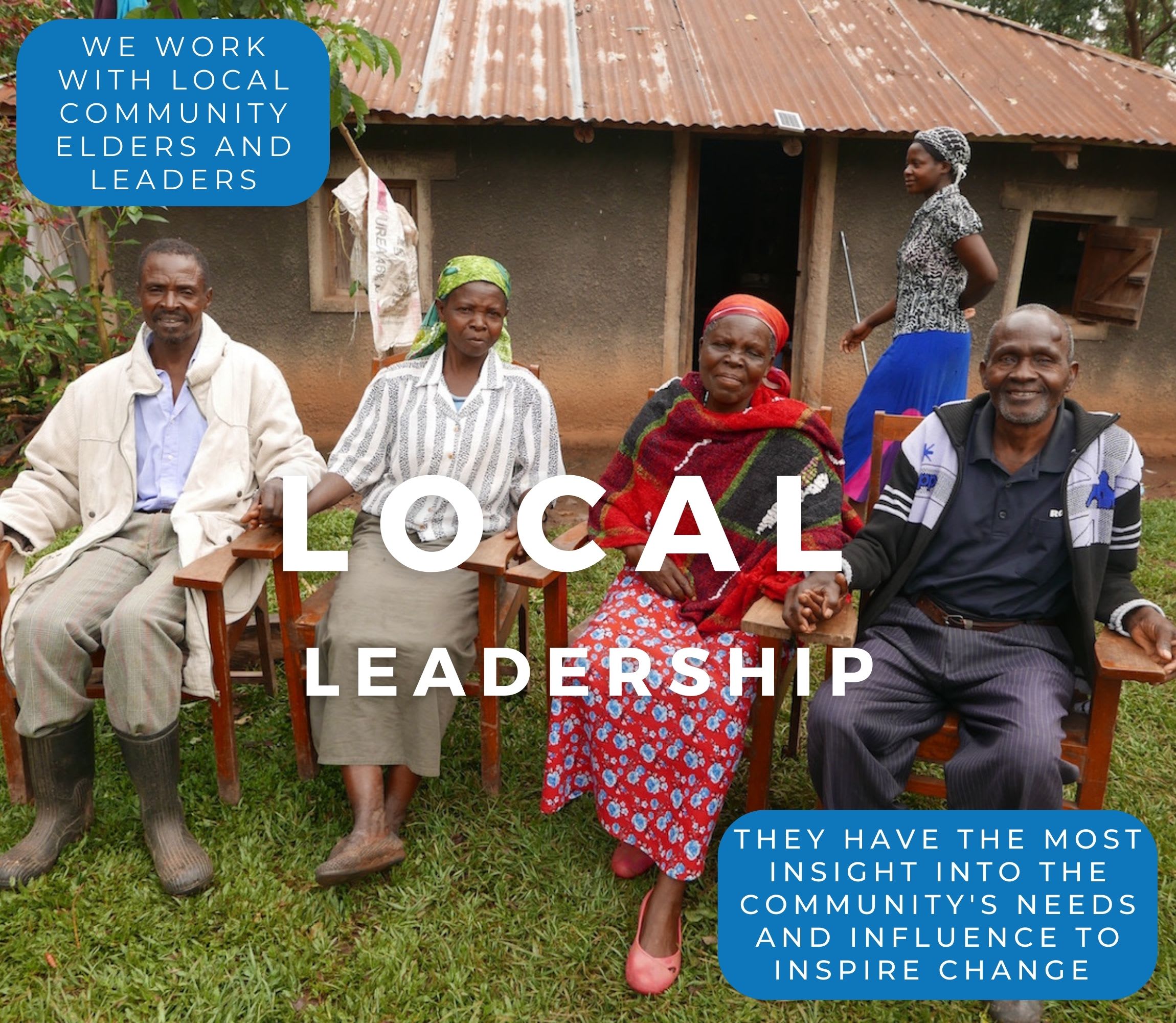
Our technical experts worked with the local community to identify the most effective solution to their water crisis. Together, they decided to construct a sand dam and a protected dug well.
Sand Dam
Sand dams are sought-after, climate-smart, and lasting water solutions providing hope and resilience to communities in arid Southeastern Kenya. Think of them like giant sandboxes constructed in seasonal rivers that would typically quickly dry up after the rainy season. Instead of holding water like traditional dams, they collect sand and silt.
When infrequent rains do come, these dams catch a percentage of the river's flow, letting most of the water continue downstream to other communities. But here's the magic: the sand they collect acts like a natural filter, holding onto water long after the river's gone dry. Then, wells are constructed nearby, creating a reliable water source even during the driest times.
And the benefits don't stop there! In communities impacted by climate change, sand dams replenish groundwater and prevent soil erosion. Even during severe droughts, the consistent water supply from these sand dams allows farmers to thrive, giving way for enough food not only for their families but also to sell in local markets.
The most remarkable aspect of sand dams is how they involve the local community every step of the way, giving them a sense of ownership and pride in solving their own water shortage and managing their own water resources.
This sand dam will be connected to a protected dug well to make the water more accessible.
Community Education & Ownership
Hygiene and sanitation training are integral to our water projects. Training is tailored to each community's specific needs and includes key topics such as proper water handling, improved hygiene practices, disease transmission prevention, and care of the new water point. Safe water and improved hygiene habits foster a healthier future for everyone in the community.
Encouraged and supported by our team's guidance, the community elects a water user committee representative of its diverse members. This committee assumes responsibility for maintaining the water point, organizing community efforts, and gathering fees to ensure its upkeep.