
Karlota's Education Can Now Be Prioritized!

April, 2026

Last year, your gift unlocked the potential for a brighter future for Karlota. Since then, she and the Mwitoti Community of 203 residents have had clean, reliable water. Your contribution has made a significant impact. Thank you for making a difference!

"It is easy to get to the drawing point, and the waterpoint is no longer too congested, and fetching water has become fast," said Karlota.

Before the Spring Protection

Like many girls in Western Kenya, 13-year-old Karlota is responsible for collecting water to meet her daily water needs. Before last year’s water intervention, this task stole her time and negatively affected her.

Drinking the water caused severe consequences. Many in the community suffered from waterborne diseases that created health problems, affecting their daily lives. Limited accessibility also meant people wasted time collecting sufficient water to meet their needs. The difficult journey to collect water sapped their physical and emotional energy, creating roadblocks. For Karlota, in particular, it reduced her ability to attend school on time, ultimately affecting the quality of her education.

"I used to stay in line for long [times] because of water, and I got to school late trying to fetch water for school," said Karlota.

Since the Spring Protection

Your generous gift last year was much more than a simple donation; it was a powerful statement about your commitment to this community and Karlota’s future. By supporting the water solution, you made clean water an everyday reality, fostering hope for a brighter future.

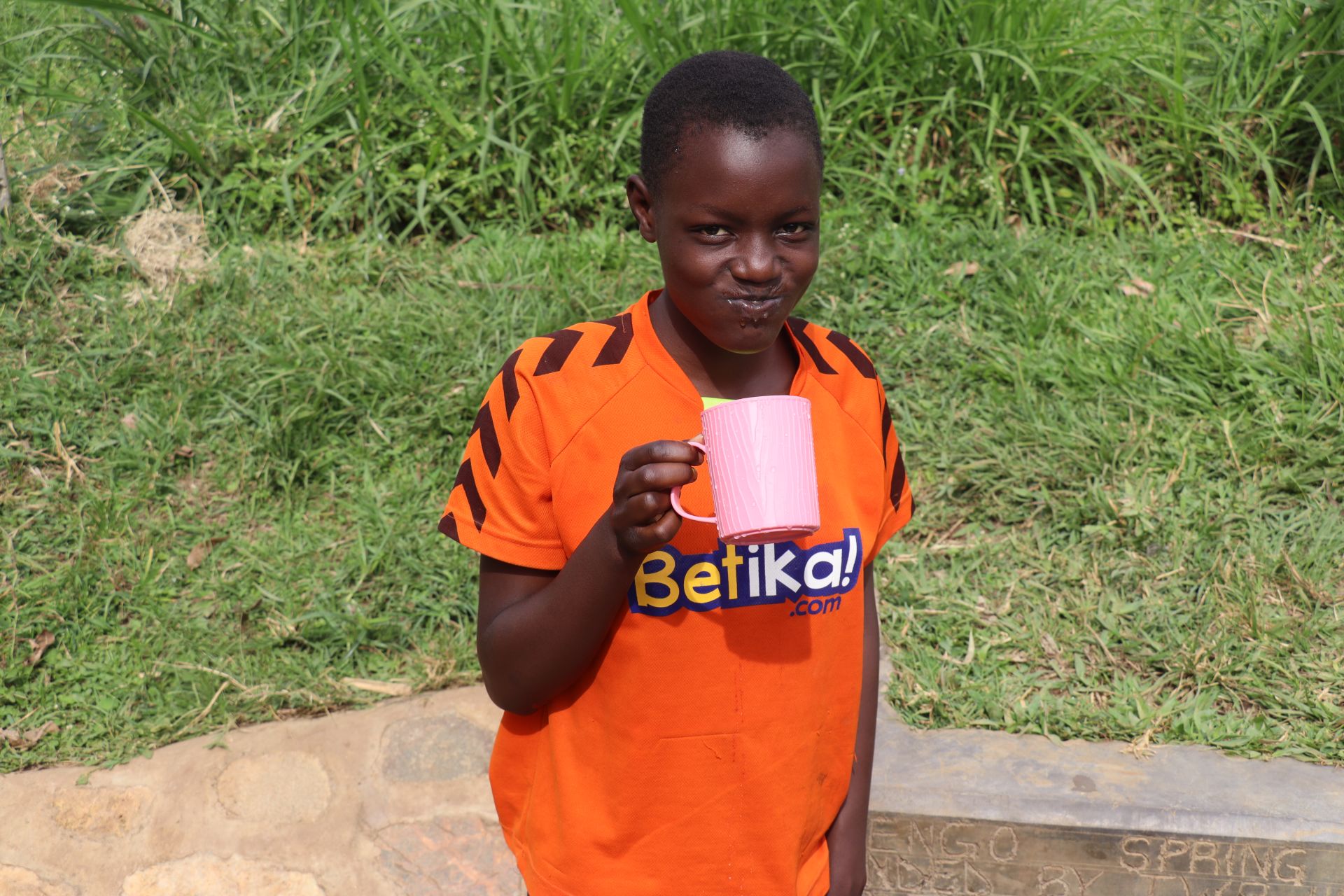
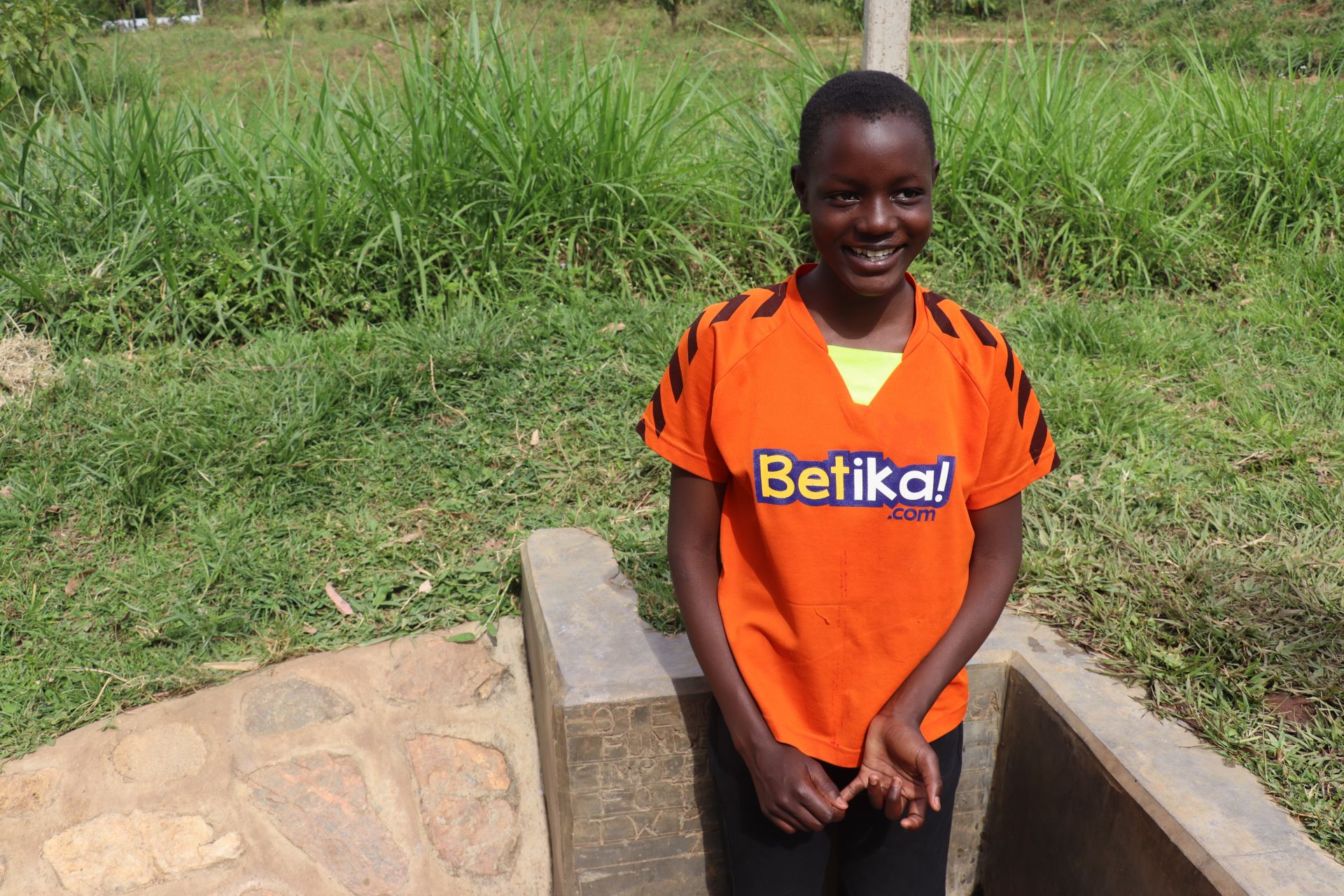
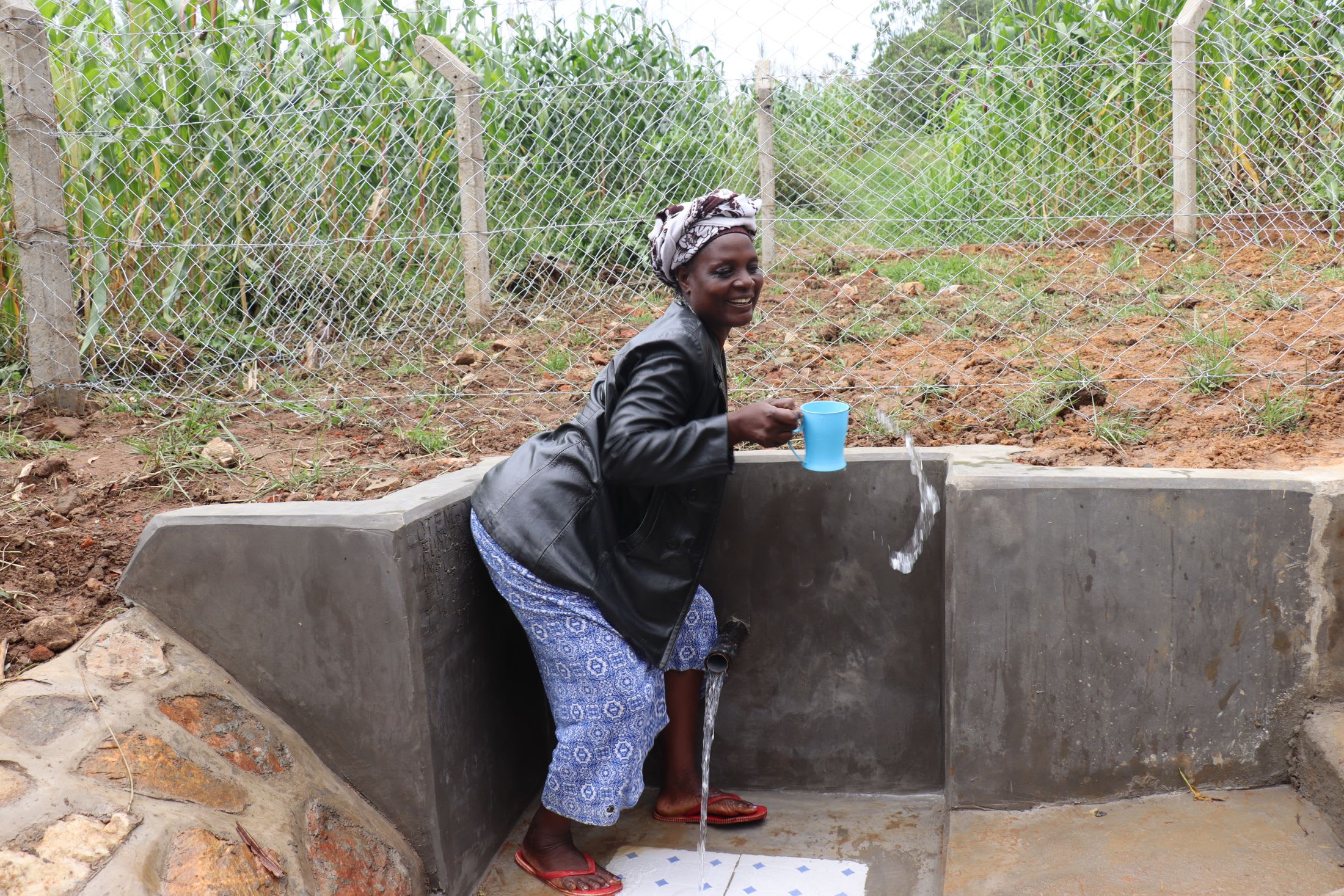
Karlota at the protected spring!

Reliable and clean water lays the groundwork for improved health, education, and economic possibilities, allowing people to thrive. We frequently hear from those we interview that "water is life!"

Karlota eagerly shared the best part of living with clean, reliable water access. "Being able to access water fast without lining up for [a] long [time]. Going to school early and attending all the classes without worrying."

"My performance has changed for the better, and I will still continue improving," she continued, "I use my time to read and do revisions with my friends. I also help my parents with house chores. The water point is very safe, the stairs make it easy to fetch water, the water point is clean and clear, [and it's] easy to see any dangerous animals."

The Future is Looking Bright!

A year ago, you made a difference for Karlota and the rest of her community. This is just the first chapter of their story as access to clean water continues to improve their lives!

At The Water Project, we value sustainability and want to ensure that people continue to thrive. We commit to monitoring this project to ensure the water is always flowing and safe to consume. We inspect the system hardware, track water availability, conduct sanitary inspections, and collect water quality samples to identify risks. We work with our team on the ground to resolve them.

You gave Karlota a crucial tool for achieving her dreams: access to clean water. Together, we can excitedly expect that with this precious resource, her enthusiasm and courage will help Karlota fulfill her dreams.

"I want to become a doctor. Doctors treat and make people feel better, and I want to do that too," she exclaimed.


Navigating through intense dry spells, performing preventative maintenance, conducting quality repairs when needed and continuing to assist community leaders to manage water points are all normal parts of keeping projects sustainable. The Water Promise community supports ongoing sustainability programs that help Mwitoti Community maintain access to safe, reliable water.

We’d love for you to join this world-changing group committed to sustainability.

The most impactful way to continue your support of Mwitoti Community – and hundreds of other places just like this – is by joining our community of monthly givers.

Your monthly giving will help provide clean water, every month... keeping The Water Promise.

Project Status


Project Type:  Protected Spring

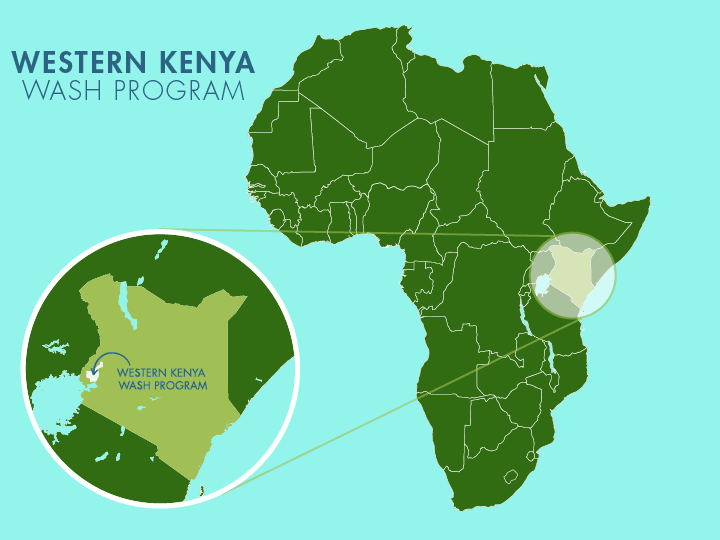
Regional Program: Western Kenya WaSH Program

Impact: 203 Served

Project Phase:  In Service - Jan 2025

Functionality Status:  Functional

Last Checkup: 02/05/2026

Project Features


Click icons to learn about each feature.


The 203 people of the Mwitoti Community struggle to access sufficient water every day. Without the benefit of clean water access, life for everyone is difficult.

Their primary water source is a spring that was previously protected but is currently in disrepair, which poses significant challenges. It is hard to tell at first glance, but the water is not filtered correctly, does not flow from the pipes at the correct speed, and becomes cloudier as the day progresses. And because the spring box doesn't drain properly, people must stand in water, covering their feet while collecting.

These issues lead to long wait times for water with questionable quality. However, since community members do not have another local alternative, they must still use the spring.

"I spend much time fetching water before going to school, which makes me go late to school and miss part of the lessons. Like last week [a] teacher on duty was very strict and punished me for going late to school. When this water source is redone, I will be spending little time fetching water, thus improving in my class work because the rest of the time will be channeled into [my] education," said 11-year-old Dennis O., seen below at the spring.

"This water point is broken, and for this water to be safe for drinking, we have to redo it. There is no cutoff drainage, so runoff contaminates this water," said field officer Elvine Atsieno. "During my visit to this water source, it had rained, and it was in the morning. When it has rained, this area is slippery. [The] water appeared not to be clear, which made me say that I could not drink this water."

"As a community area administrator, I have to fetch water very early in the morning before people start queueing at the water point so that I can go to the office on time. Failure to [do] that I will waste much time fetching water. As a mother, you have to make sure that there is enough water in the house before leaving for work," said 48-year-old area administrator Maximilla Okumu.

The proper protection of the spring will enable people like Maximilla and Dennis to focus on the daily tasks they need to accomplish instead of wasting time waiting to collect water from a source that is delaying everyone's progress.

"This community is facing a challenge because their water source is partially functioning. When it's redone, then this will solve the problem of using unsafe water. Water users are trusting God for an intervention so that they can enjoy water," concluded Elvine.

The Proposed Solution, Determined Together...

At The Water Project, everyone has a part in conversations and solutions. We operate in transparency, believing it benefits everyone. We expect reliability from one another as well as our water solutions. Everyone involved makes this possible through hard work and dedication.

In a joint discovery process, community members determine their most advantageous water solution alongside our technical experts. Read more specifics about this solution on the What We're Building tab of this project page. Then, community members lend their support by collecting needed construction materials (sometimes for months ahead of time!), providing labor alongside our artisans, sheltering and feeding the builders, and supplying additional resources.

Water Access for Everyone

This water project is one piece in a large puzzle. In Kenya, Sierra Leone, and Uganda, we're working toward complete coverage of reliable, maintained water sources that guarantee public access now and in the future within a 30-minute round trip for each community, household, school, and health center. One day, we hope to report that this has been achieved!

Training on Health, Hygiene & More

With the community's input, we've identified topics where training will increase positive health outcomes at personal, household, and community levels. We'll coordinate with them to find the best training date. Some examples of what we train communities on are:

  • Improved hygiene, health, and sanitation habits
  • Safe water handling, storage & treatment
  • Disease prevention and proper handwashing
  • Income-generation
  • Community leadership, governance, & election of a water committee
  • Operation and maintenance of the water point

Chlorine Dispensers

Installing chlorine dispensers is an important piece of our spring protection projects. Protecting a spring provides community members with an improved water source, but it doesn’t prevent contamination once the water is collected and stored. For example, if the water is clean and the container is dirty, the water will become contaminated.

We ensure that each chlorine dispenser is filled with diluted chlorine on a consistent schedule so that people can add pre-measured drops to each container of water they collect. That way, community members can feel even more confident in the quality of their water.

Project Updates


January, 2025: Mwitoti Community Spring Protection Complete!

Your contribution has made access to clean water for the Mwitoti Community possible!

We transformed their spring into a flowing source of naturally filtered water. A chlorine dispenser was installed to provide added protection and we trained the community on improved sanitation and hygiene practices. Together, these components will unlock the opportunity for community members to thrive!

"Now that the spring is protected well and [a] chlorine dispenser installed, I am very certain that water-related illnesses won't attack us, resulting in children missing numerous days of school and community members using more than expected of their income to treat water-related illnesses," said Maxmilla Atsango, a 45-year-old community administrator and newly appointed chairperson of the water user committee.

Ms. Atsango celebrating clean water!

Children were just as excited as adults about clean water access!

"Our water is now safe for drinking, and I won't have to worry about getting sick. I used to miss school because of consuming unsafe water, which caused stomachaches, and my performance became poor. Right now, [I] am happy and very ready to attend all my classes and pass with flying colors," said Klein, age 6.

Klein washing his hands at the protected spring.

Preparing for Spring Protection

Community members worked together to source all locally available construction materials for the spring, including bricks, sand, stones, and fencing poles. Because people have to carry most items by hand, the material-collection process can take anywhere from a few weeks to months.

Community members help collect project materials.

When the community was ready, we delivered the remaining construction materials, including cement, plastic tarps, and hardware. Then our construction artisan and field officers deployed to the spring to begin work.

Protecting the Protecting the Spring: A Step-by-Step Process

First, we excavated the spring area. This includes digging a drainage channel below the spring and several runoff diversion channels above and around the spring to help divert surface contaminants away.

To ensure community members could still access water throughout the construction process, we also dug temporary channels around the construction site to allow water to continue to flow. Excavation created space for setting the spring's foundation.

Measuring the site.

After establishing the base, made of thick plastic, wire, concrete and waterproof cement, we started brickwork to build the spring walls and stairs. Once the walls were tall enough, we began one of the most crucial steps: setting the discharge pipe. The discharge pipe needs to be positioned low enough so the water level never rises above the spring's eye, yet high enough to allow room for the average collection container (20-liters) to sit beneath the pipe without making contact, to prevent cross-contamination.

If we place the pipe too high, back pressure could force water to emerge elsewhere. Too low, and community members would not be able to access the water easily.

In coordination with the walls and stairs, we cemented stones on both sides of the spring's drainage channel. These stones discourage people and animals from standing in that area, which could cause soil erosion and a clogged drainage area.

We then cemented and plastered the spring walls. These finishing layers reinforce the brickwork and prevent water in the reservoir from seeping through. In turn, enough pressure builds to push water out through the discharge pipe.

As the walls cured, we finished the stairs and installed tiles beneath the discharge pipe. The tiles protect the concrete from the falling water's erosive force.

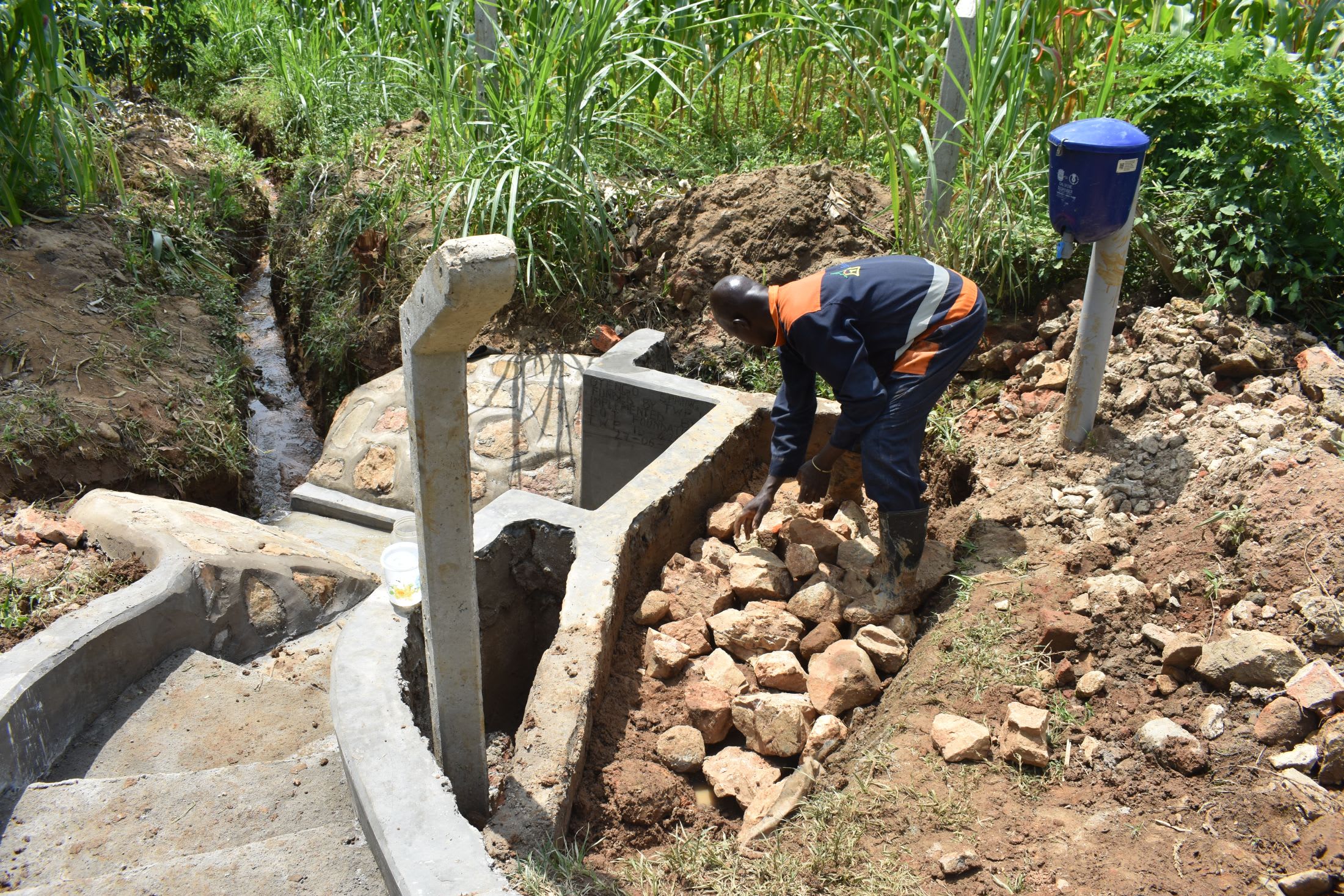
We redirected the temporary diversion channels back into the reservoir box and closed all other exits to force water through only the discharge pipe. We filled the reservoir area with the large, clean stones arranging them in layers like a well-fitting puzzle. We covered the rocks with thick plastic and piled enough dirt on top to compensate for future settling.

Backfilling the spring.

Community members transplanted grass to help prevent erosion and the collection area was fenced. The fence prevents people or animals from walking in the area above the spring, as compaction of this area can potentially compromise water quality.

Community members help plant grass to prevent erosion.

The construction process took about two weeks of work and patience. As soon as the spring was ready, people got the okay from their local field officers to fetch water.

We officially gave ownership of the waterpoint to the Mwitoti Community.

The completed spring!

Happiness and thanksgiving flowed in all directions!

Training on Health, Hygiene, and More

Together with the community, we found their preferred date for training. When the day arrived, facilitators, Joyce Naliaka, Joy Ongeri, Faith Makisiki, and Mercy Odongo deployed to the site to lead the event. 42 people attended the training, including 26 women and 16 men.

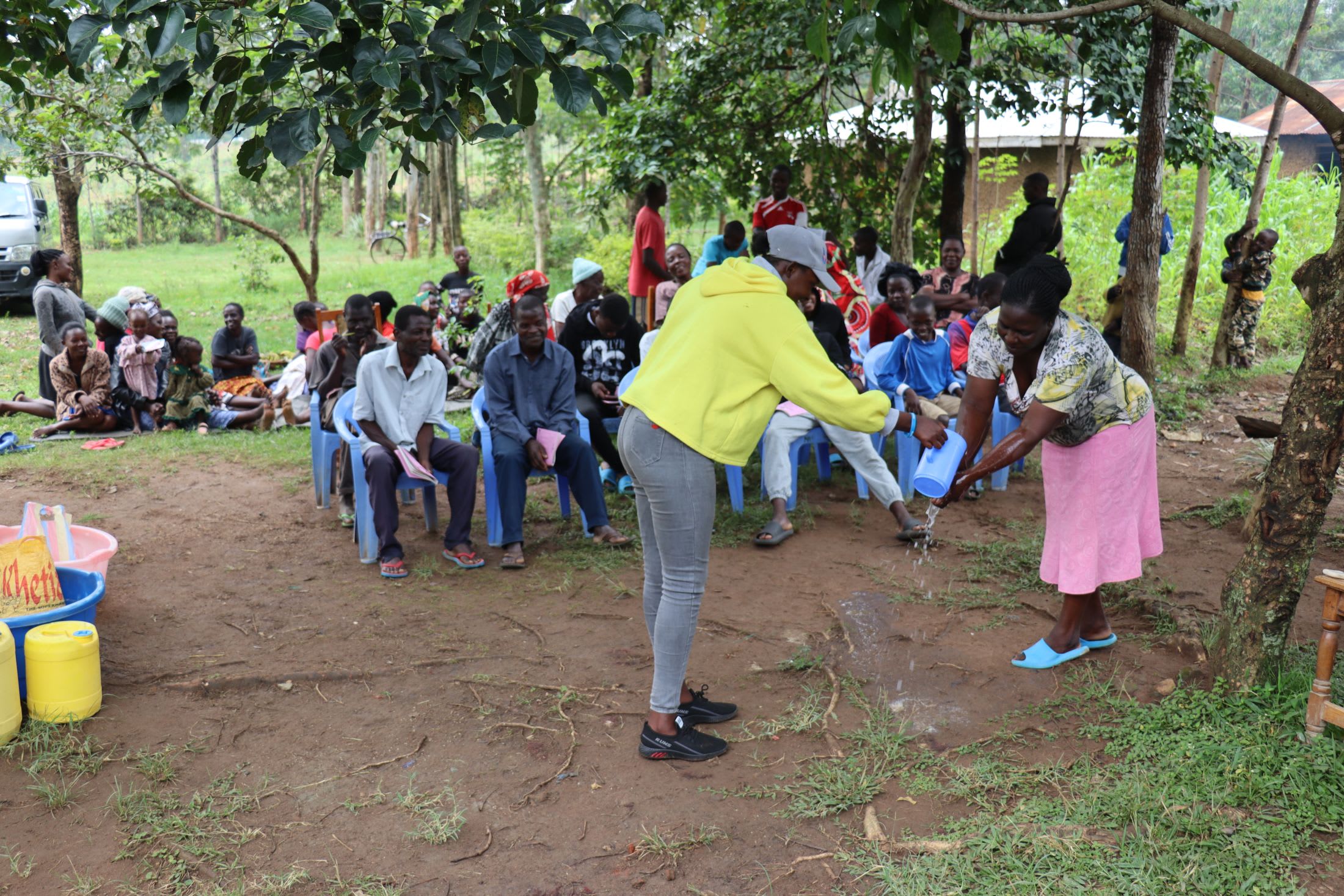
We discussed personal, oral, and environmental hygiene, emphasizing proper water handling, soap-making, and the ten steps of handwashing. We also highlighted the importance of primary health care and covered the operation and maintenance of the water point, as well as leadership and governance. By the end of the training, each participant had a clear understanding of their role in maintaining clean water and promoting good health within their community.

Handwashing session.

We held an election for the newly formed water user committee who will oversee the maintenance of the spring. We brainstormed income-generating activities and encouraged them to start a group savings account for future minor repairs to the spring.

Learning to make soap.

"The process of soapmaking was the most loved topic because the community members never knew how liquid soap was made by the people selling it, and after teaching them how, they said that they were going to improve their livelihood through soap making," shared Field Officer Mercy Odongo.

Ms. Omulla.

Forty-two-year-old teacher Hawwa Omulla shared what she learned about personal hygiene during the training: "Many of us knew about the basics, but you have taught us many things that most of us assumed, like ensuring that our houses are properly cleaned every day, including our underbed to avoid dangerous animals hiding there because we use our underbeds as storage."

Thank you for making all of this possible!


December, 2024: Mwitoti Community Spring Protection Underway!

The lack of adequate water in Mwitoti Community costs people time, energy, and health every single day. Clean water scarcity contributes to community instability and diminishes individuals’ personal progress.

But thanks to your recent generosity, things will soon improve here. We are now working to install a reliable water point and improve hygiene standards. We look forward to sharing inspiring news in the near future!


Project Photos