 Borehole Well and Hand Pump
 Rehabilitation Project











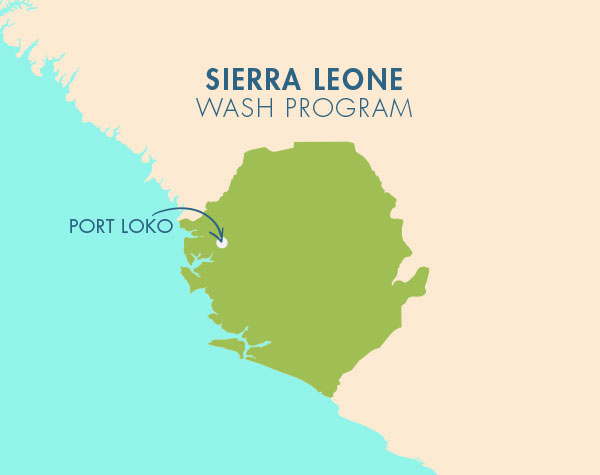
At the New Life Clinic tucked into the hills of Sierra Leone's Kaffu Bullom Chiefdom, Adiatu Fefegulah has learned to work around a problem that shouldn't exist at a health facility. A clinic that employs 9 staff members and serves an average of 8 patients a day. One of the staff, Adiatu, 43, is an MCH Aide at the clinic. Like the rest of the staff, she spends part of her day finding water rather than caring for patients.
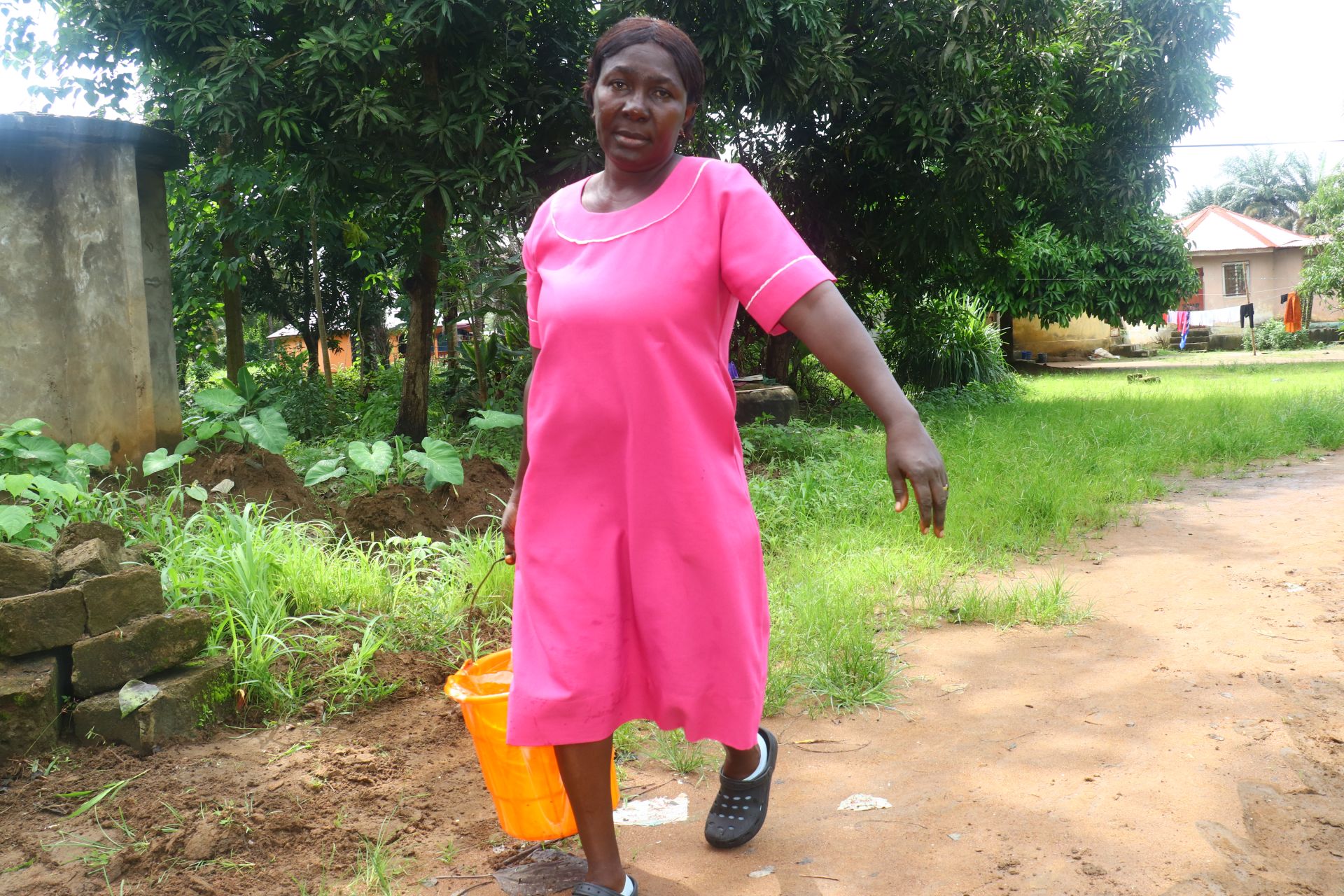
The terrain itself works against them. The clinic sits on a hill above a stony road, and when the field team visited, they described the walk to the community's water source as one that puts staff at real risk, especially carrying heavy buckets balanced on their heads. Fetching water from that alternate source leaves people weak and tired long before they're back at the clinic, simply from the climb.
The clinic was never meant to be without running water. Years ago, a 5,000-liter tank was installed on a tower, with plans to connect a solar-powered submersible pump that would fill it and circulate water throughout the facility. The tank was damaged before that plan was completed, and no pump was ever connected. Now the under-five unit, maternity ward, observation room, pediatric unit, staff toilets, and staff quarters all go without water, and the taps are little more than furniture.
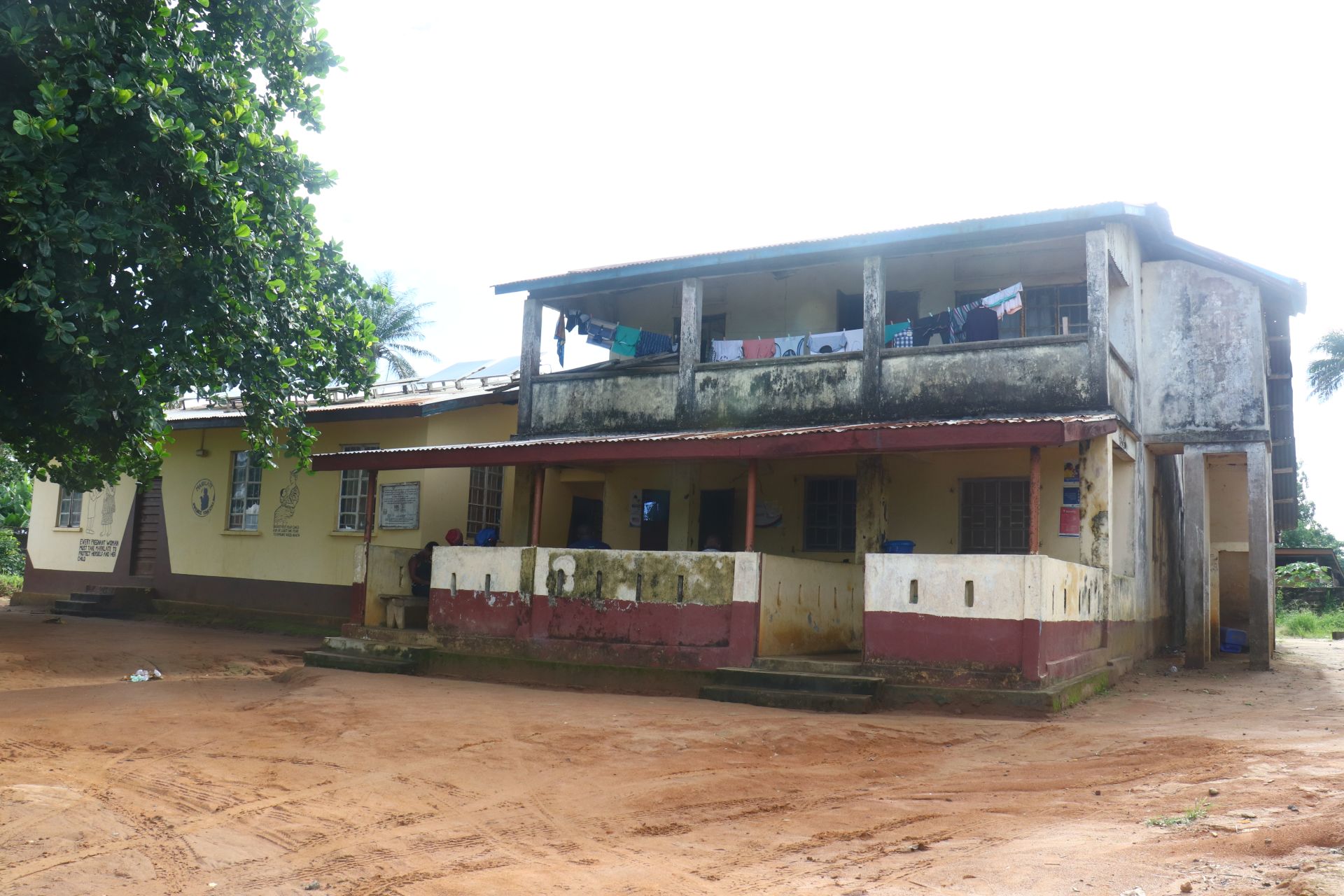
The clinic building.
When the clinic's own supply fails, staff are forced to an unprotected hand-dug well in the community, more than 500 meters away. There, they draw water the way generations before them have: with a rope tied to a rubber container, lowered by hand into an open well. It is a method Adiatu has come to see as genuinely dangerous.
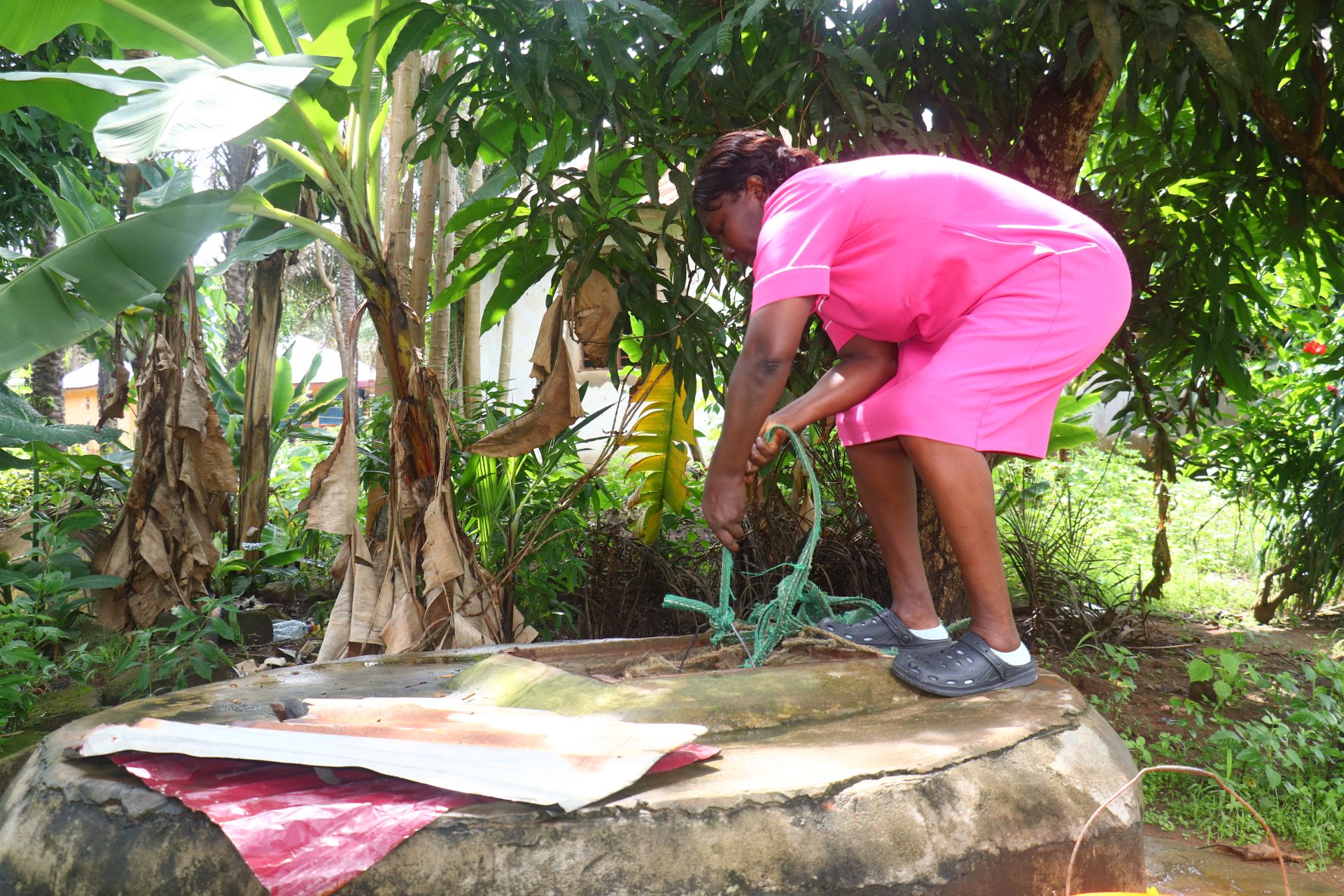
"I am concerned about safety in my current water point because it is risky to draw water from a well using a rope. The rope easily gets cut, and the slightest mistake, one can easily fall inside the well, especially children. If a woman is on her menstrual period, bending down to fetch water from the well is quite painful and strainful."
That risk falls on staff at the exact moments they can least afford to step away. Adiatu described what happens when a patient needs water and there is none on hand.
"Patient will find it difficult to take oral drugs and other treatments if water is not available. I remember the time a pregnant woman came to the health facility. She felt uneasy and decided to use the restroom. Unfortunately, we have no water unless one of the nurses hurried to fetch water outside. All this affects our operations because some patients will no longer visit the health facility or recommend another person to us. They will recommend them to another health facility."
The proposed project would rehabilitate the well into a borehole, powered by a solar submersible pump, feeding a new elevated storage tank and a water kiosk that pipes treated water directly into the clinic. For Adiatu, the difference this would make is not abstract. It shows up in the smallest tasks of her day and in the most serious ones.
"It will make me do the work easily, as water will be available for us mostly when I am attending to patients. I can clean the bed, wash the bedspread, and wash my hands after attending to a patient. Having water alone will make the work easier. We will be able to attend to more patients if water is available."
She sees the same change reaching further, into the outcomes that matter most at a facility that handles labor and delivery.
"With access to safe water through the conversion of [a] hand-dug well to a borehole with [a] solar-powered submersible pump, patient care at our clinic would improve significantly. It would lead to improved maternal and newborn care. Safe water will be available for labor and delivery, cleaning newborns, and preparing infant formulas, which will lower risks of water-related illnesses. More effective treatment, as medications can be prepared safely, rehydrate patients, and manage wound care without relying on unsafe water sources."
Asked simply what water means to her, Adiatu didn't separate her work from her home life.
"Water is a prime necessity of life, and we cannot live or do without it. As a nurse, water plays a significant role in helping me attend to patients and do things correctly. At the quarters, I will not be able to cook or do anything without water."
The clinic is already trying to improve on every front it can, from its services to its physical condition, and the field team's assessment was that none of it will fully succeed without water first being solved. Adiatu was just as direct about what's at stake if nothing changes.
"I want to ensure that the health facility is always clean and tidy. This can only happen with access to water. In addition, it is my dream that we serve many patients. Honestly, we are losing patients to other health facilities because of the water constraints and the facilities that are lacking here."
Steps Toward a Solution
For health care settings, immediate access to a large quantity of clean water is crucial for handwashing, sterilization of equipment, cleaning, and safe childbirth. Water that is off-site creates delays, impacts patient care, and increases the risk of hospital-acquired infections.
Our coverage goals aim for all health centers to have an on-premises water source that will sufficiently serve the patients, healthcare providers, and staff to ensure accessibility, reliability, and safety. With more water available, healthcare workers do not have to ration water, worry about purchasing water with their limited funds, or make tough decisions about when to wash their hands or equipment.
Reliable, clean water ensures that healthcare workers have sufficient water so they can provide excellent patient care!
Our technical experts worked with the health center leadership and the local community to identify the most effective solution to their water crisis. They decided to drill a borehole well, construct a platform for the well, and attach a hand pump.
Well
Abundant water often lies just beneath our feet. Aquifers—natural underground rivers—flow through layers of sediment and rock, offering a constant supply of safe water. A borehole well is drilled deep into the earth to access this naturally filtered and protected water. We penetrate meters, sometimes even hundreds of meters, of soil, silt, rock, and more to reach the water underground. Once found, we construct a platform for the well and attach a hand pump. The community gains a safe, enclosed water source capable of providing approximately five gallons of water per minute. Learn more here!
Handwashing Stations
Alongside each water source, we install two gravity-fed handwashing stations, enabling everyone at the health center to wash their hands. Handwashing is crucial for preventing water-related illnesses within the health center and community. Health center staff will maintain the stations, fill them with water, and supply them with soap, which we often teach them how to make.
Latrines
We ensure there are Ventilated Improved Pit (VIP) latrine blocks that effectively prevent the transmission of fecal diseases. Each latrine will boast a durable cement floor for easy use and maintenance. We’ll ensure at least one stall is reserved for staff, along with gender-separated toilets that include menstrual hygiene facilities and accessible options for individuals with limited mobility.
Health Care Staff and Community Education & Ownership
Hygiene and sanitation training are integral to our water projects. Training is tailored to each community's specific needs and includes key topics such as proper water handling, improved hygiene practices, disease transmission prevention, and care of the new water point. Safe water and improved hygiene habits foster a healthier future for everyone in the community.
Encouraged and supported by our team's guidance, the health center staff elects a water user committee representative of its diverse members. This committee assumes responsibility for maintaining the water point, organizing community efforts, and gathering fees to ensure its upkeep.